
Mobile RV Detailing
The living space and the full exterior of your motorhome or trailer — cleaned with equipment sized for large recreational vehicles, wherever it is parked or stored.
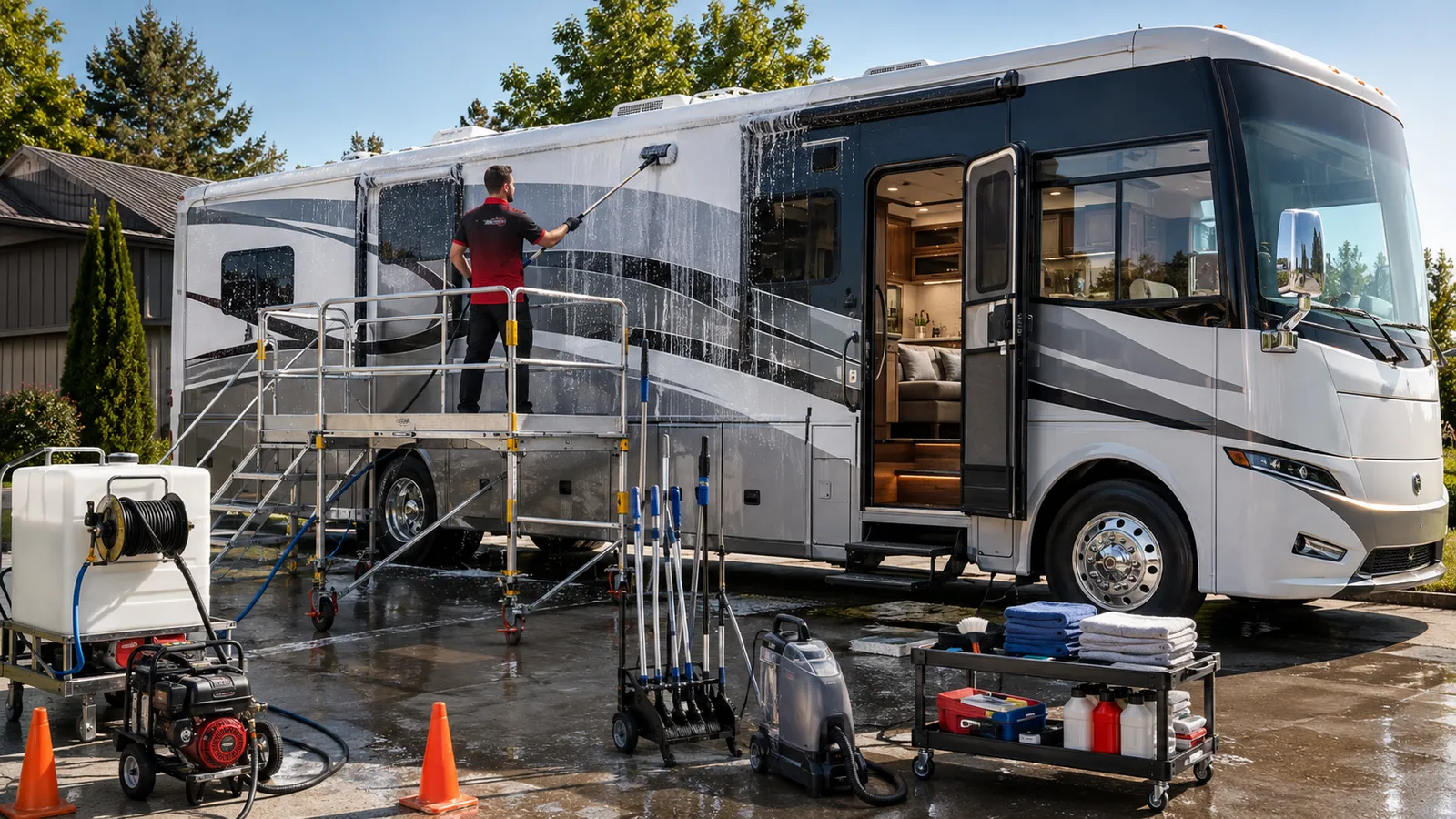
A vehicle and a room, at once.

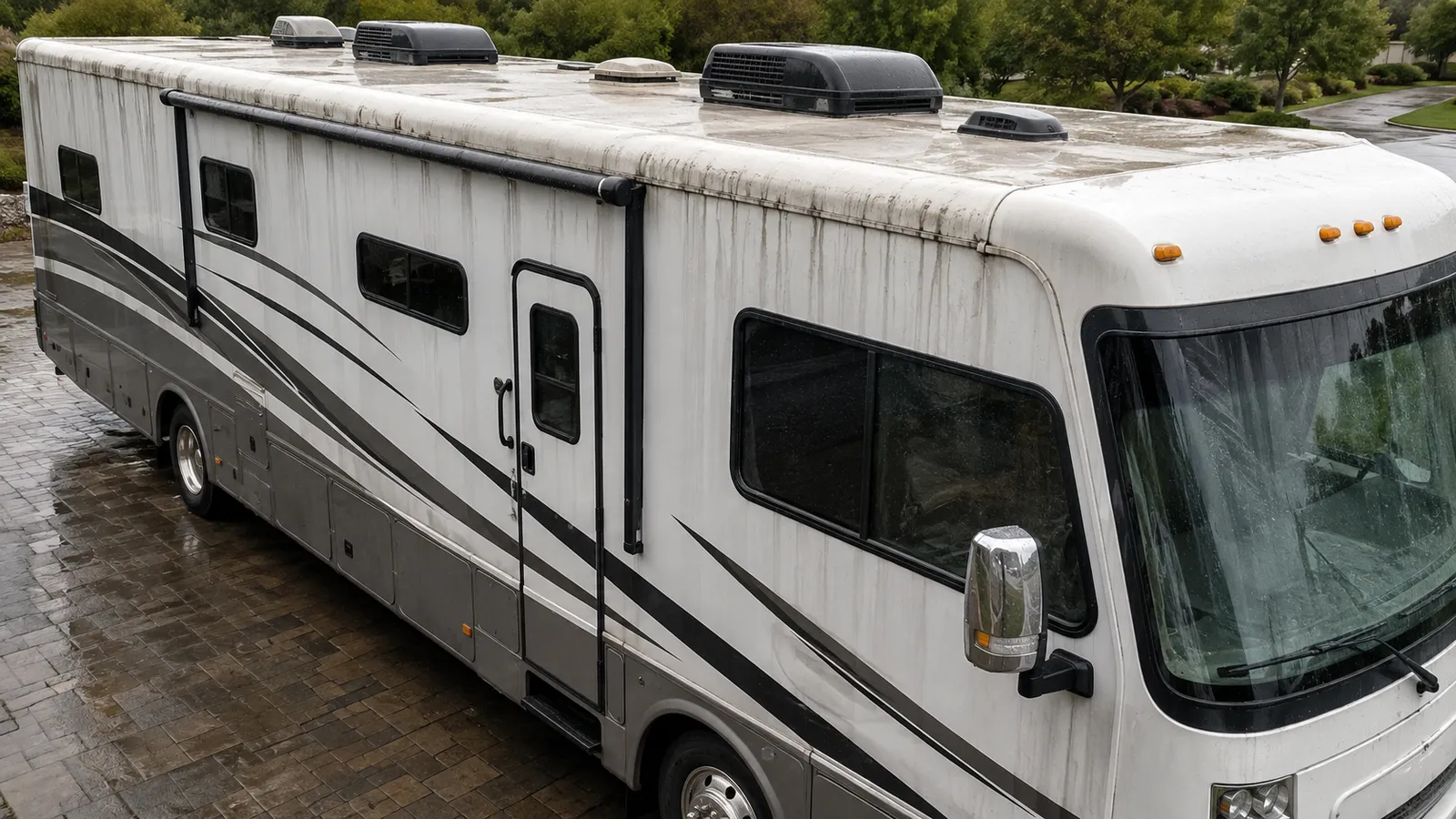
The roof is why the sides look like that.
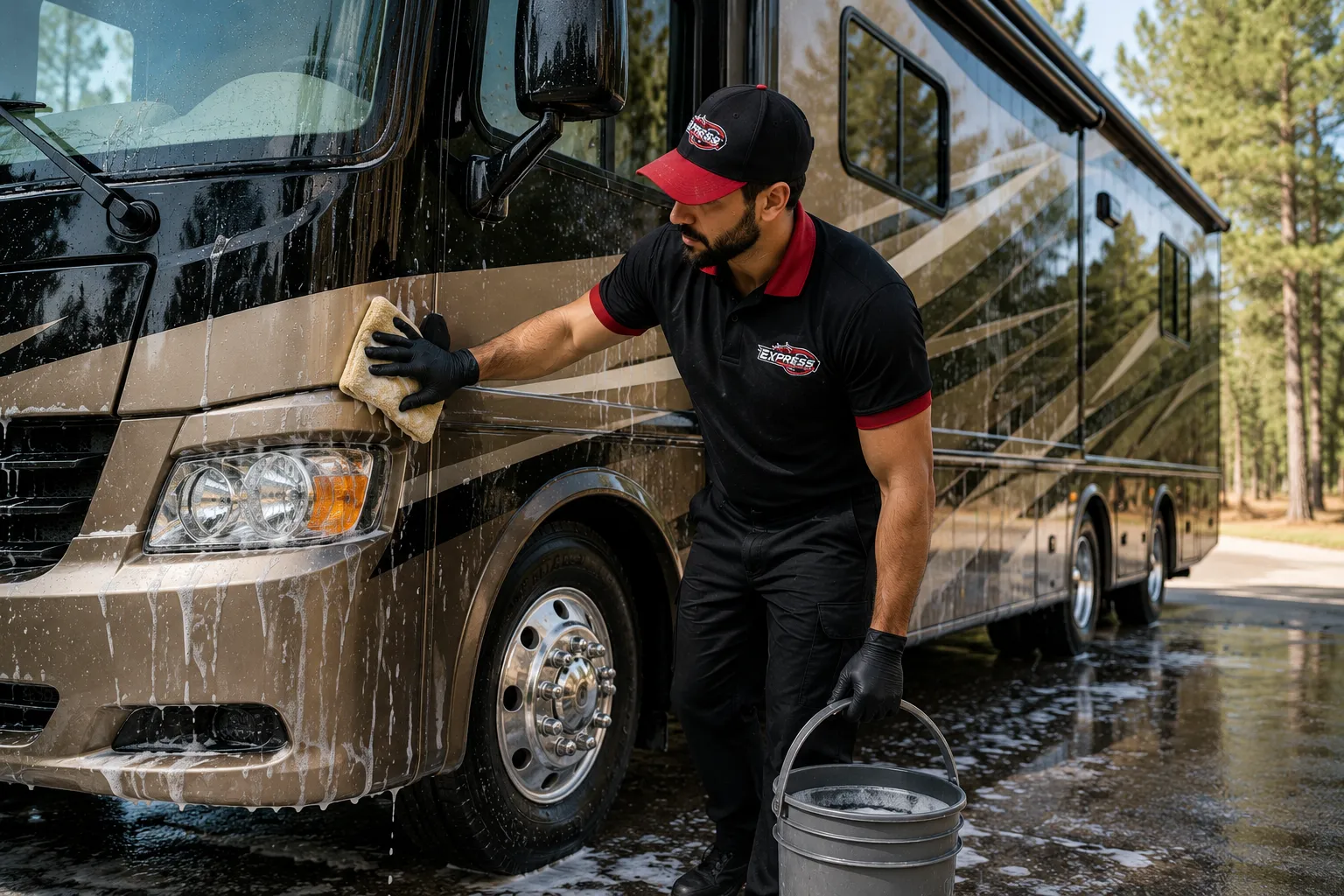
Black streaking down an RV sidewall almost always starts at the roof. Dirt and oxidised sealant wash down every time it rains, and cleaning the walls without dealing with the roof simply resets a problem that returns with the next storm.
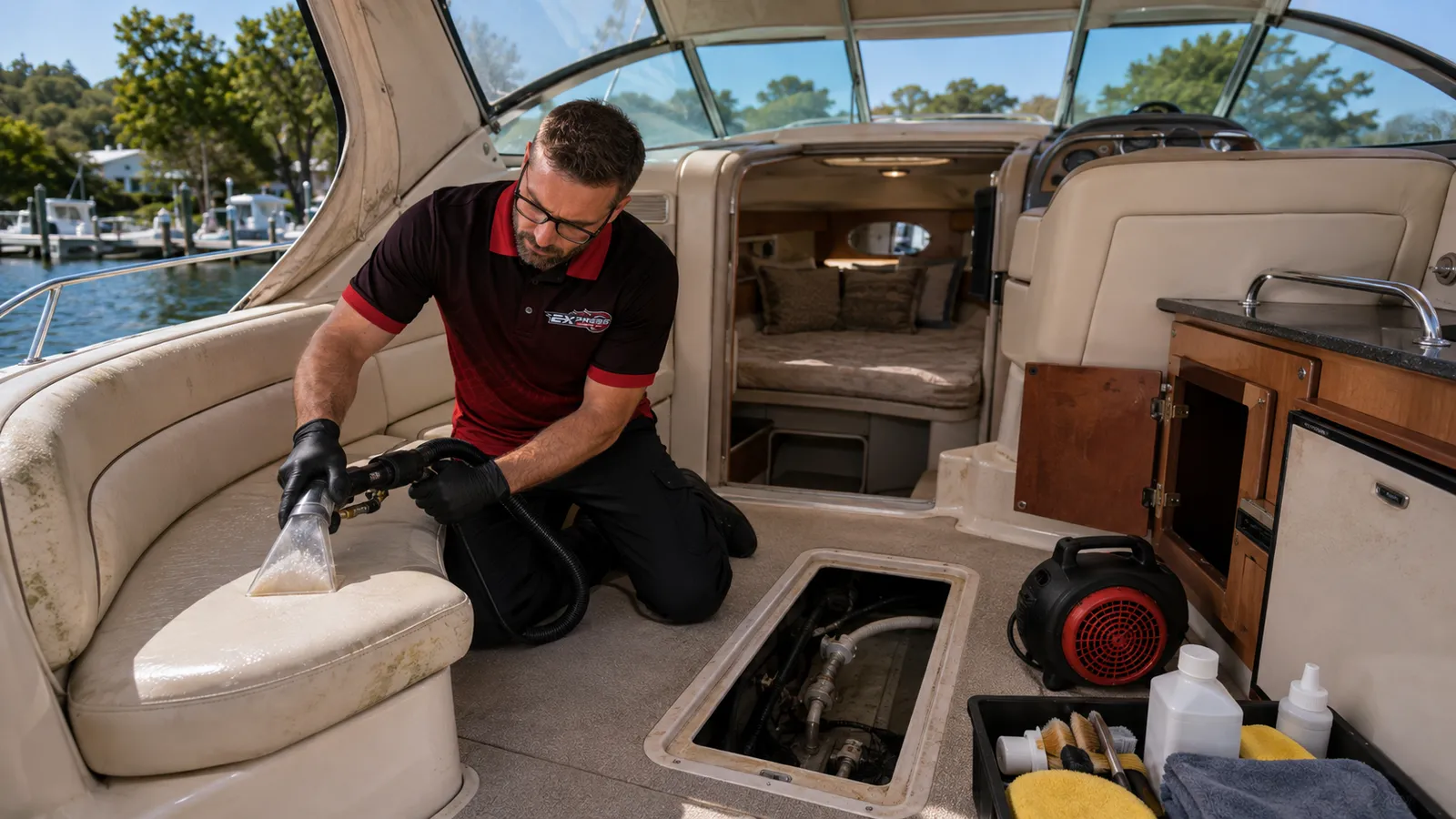
An interior that is lived in, not driven in.
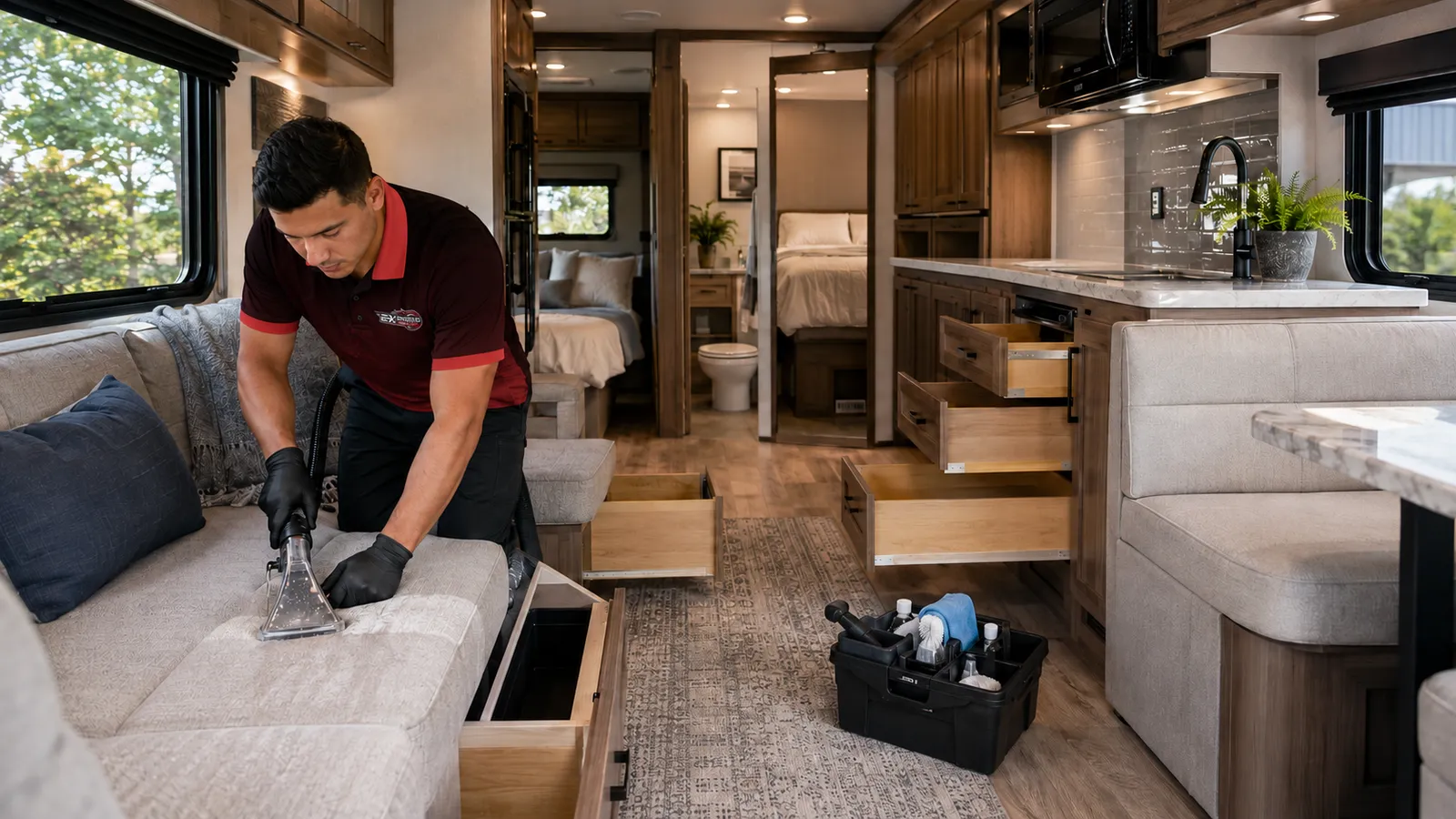
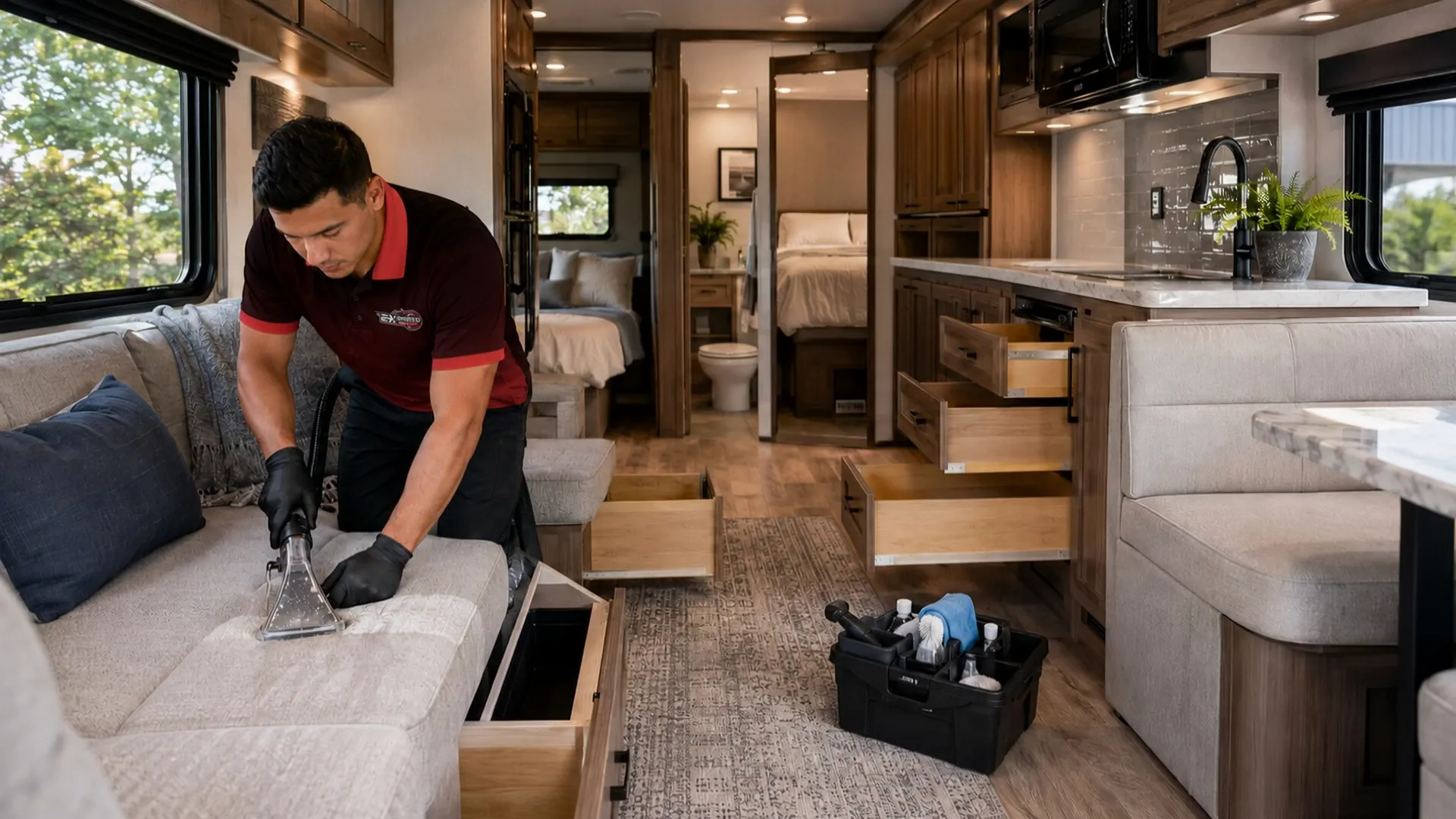
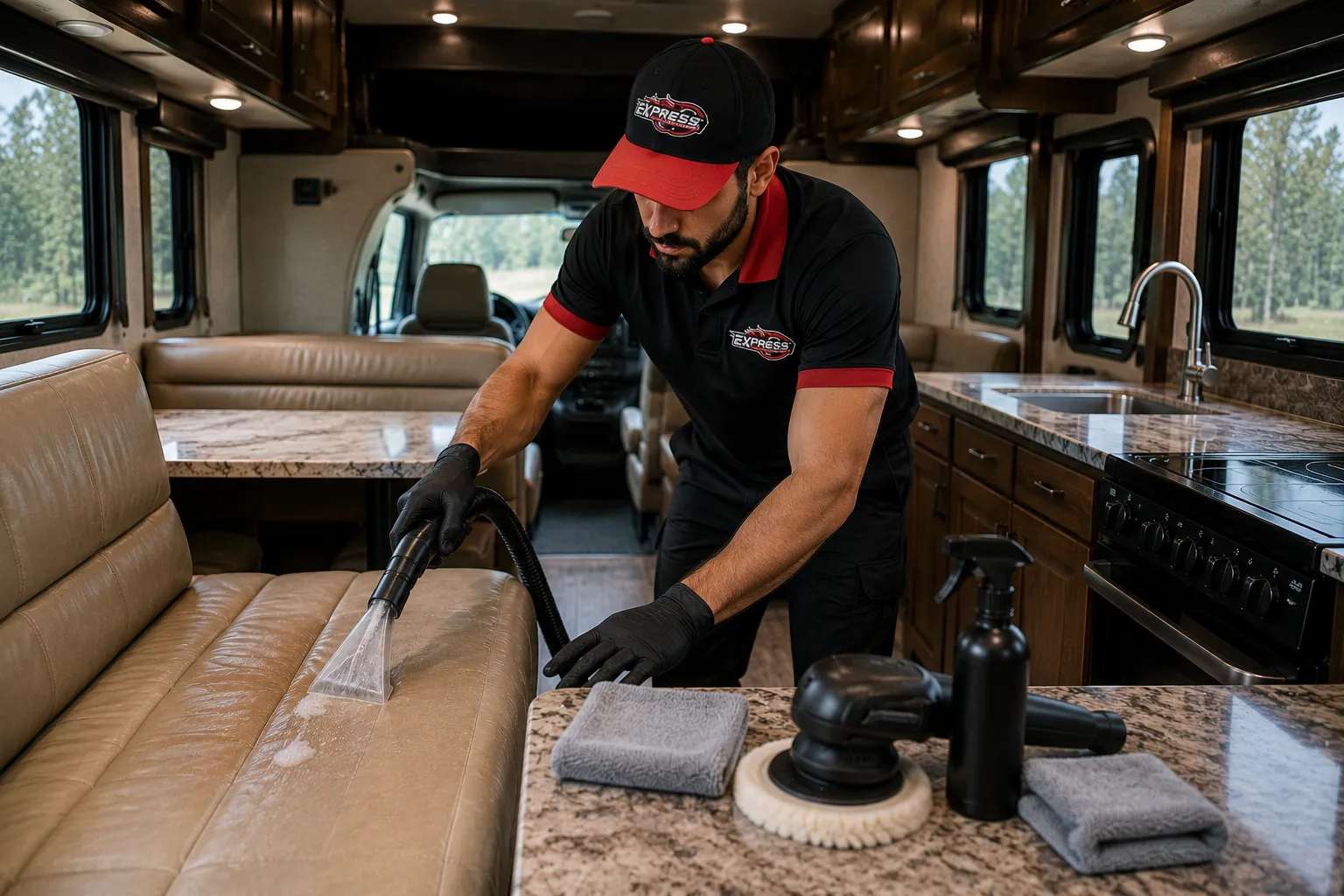
An RV interior has soft furnishings, a kitchen, a washroom and storage — it is closer to a small home than a car cabin. Upholstery and mattresses need extraction, hard surfaces need cleaning rather than a wipe, and the storage voids need emptying to be done properly.
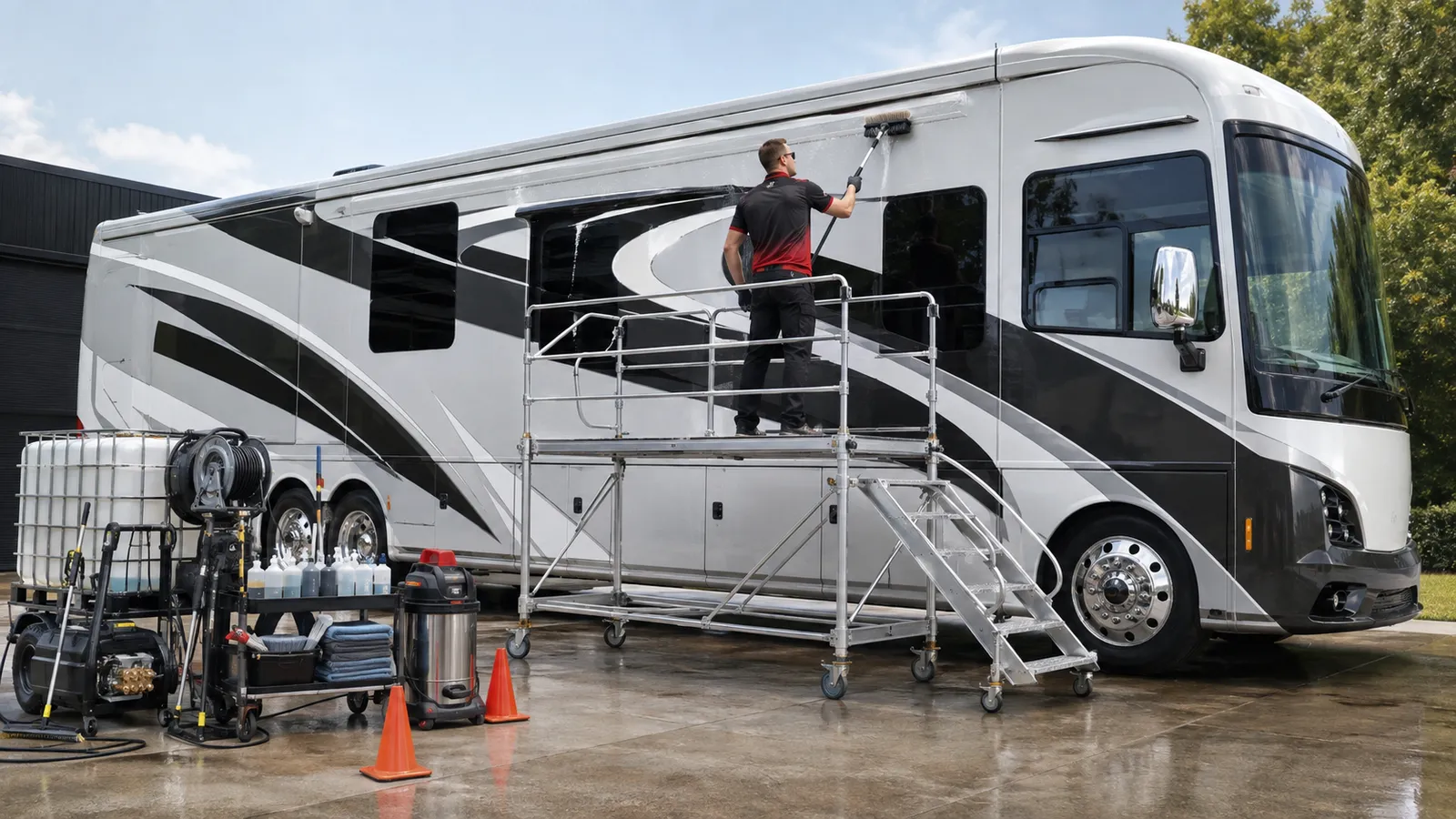
Sized for the vehicle.
A motorhome has several times the surface area of a car and a working height a domestic ladder does not reach safely. The equipment, access and time all scale with it, which is why an RV appointment is planned rather than slotted between cars.
Four moments worth booking rv detailing for.
The work is the same either way — these are the times it makes the most difference.

It has just come out of winter storage
Six months under a cover leaves black streaking down the sidewalls, oxidation on the roof and whatever grew in the damp inside. Deal with it before the first trip.
Book the spring service →
The first trip of the season is booked
The living space decides whether a trip is pleasant, and it is the part that sat closed since autumn. Extraction through the upholstery, galley and washroom, done at the yard.
Get it trip-ready →
It is going away for the winter
What goes under the cover is what comes out in spring, only worse. Salt keeps working in the dark, and sealed-in damp has months to establish itself.
Book before storage →
You are selling it or trading it in
An RV is judged on its roof, its sidewall streaking and how the living space smells. Buyers read a streaked sidewall as deferred maintenance on everything else.
Book before you list it →
Why an RV is not just a large car.
The surface area is several times a car's, the roof is a working height a domestic ladder does not safely reach, and the materials are different — gelcoat and painted fibreglass sidewalls, a membrane roof, seals and awning fabric, each with its own tolerance for pressure and chemistry. That is why an RV appointment is planned around access and time rather than slotted between two cars.
Build your price →
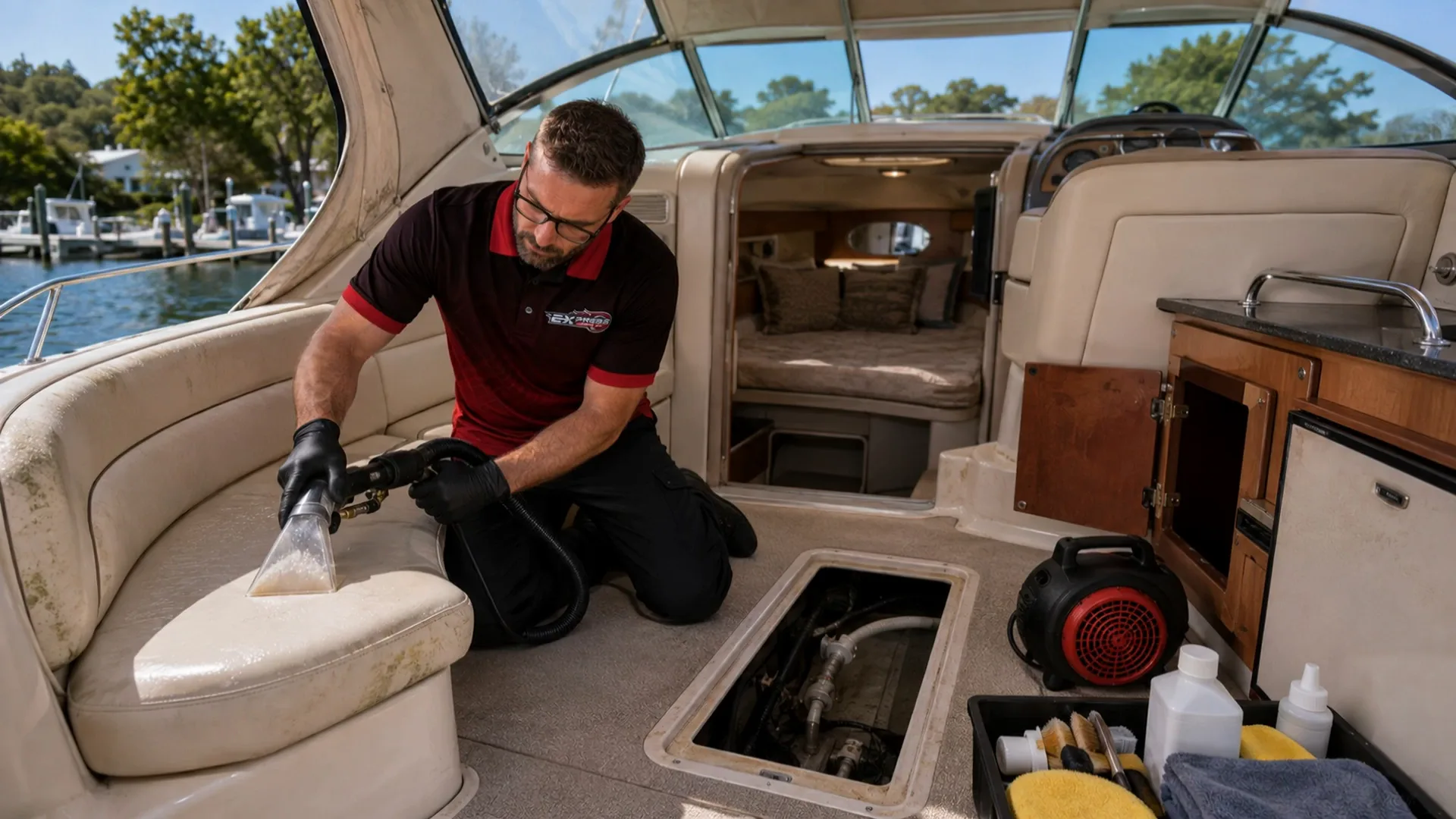
It gets done where it is parked
Storage yards, driveways and seasonal sites all work. Access, height clearance and how long the vehicle can stay put are the three things worth confirming at booking — moving a motorhome across town to suit a schedule rather defeats the point of a mobile service.
The parts that decide the result.
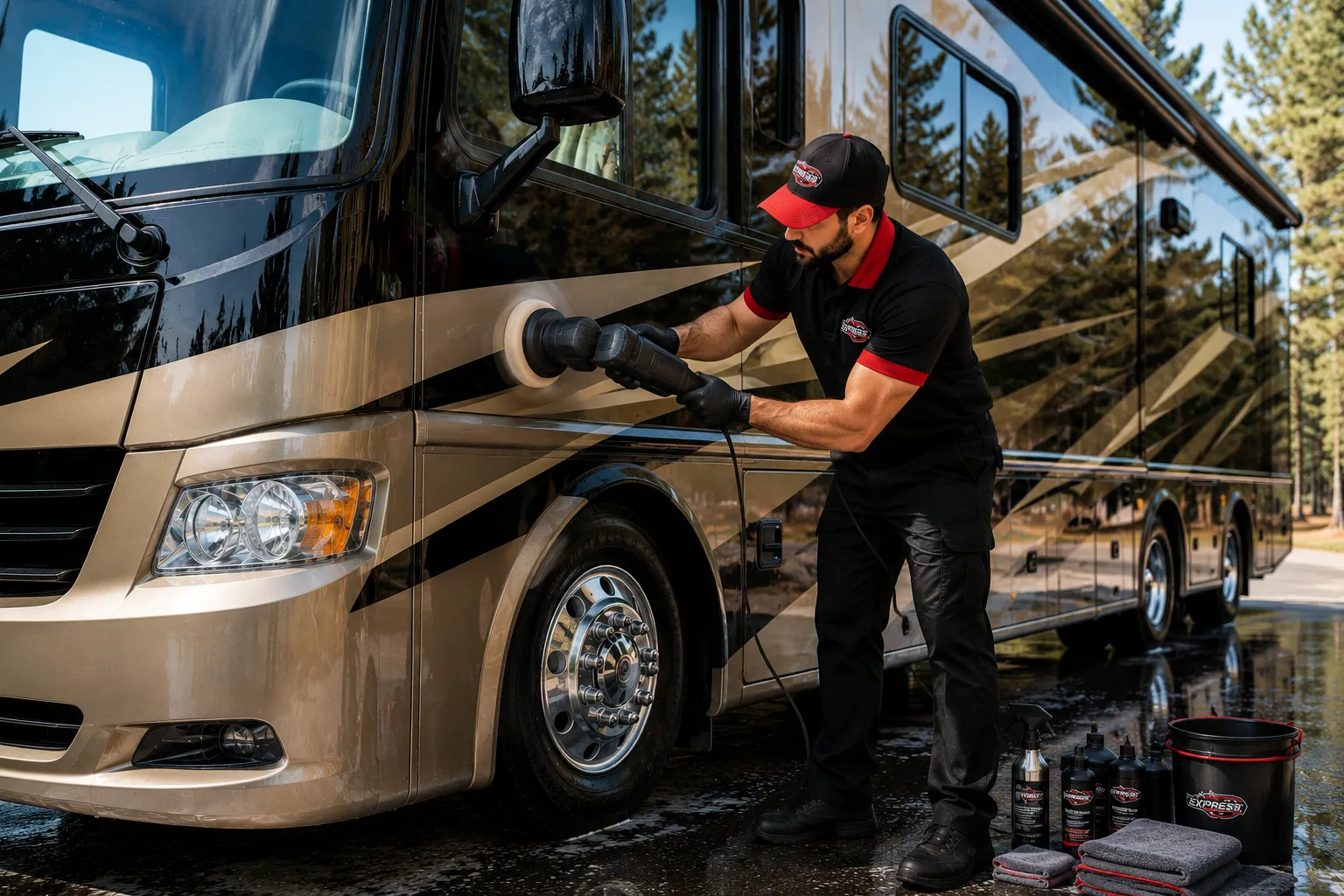
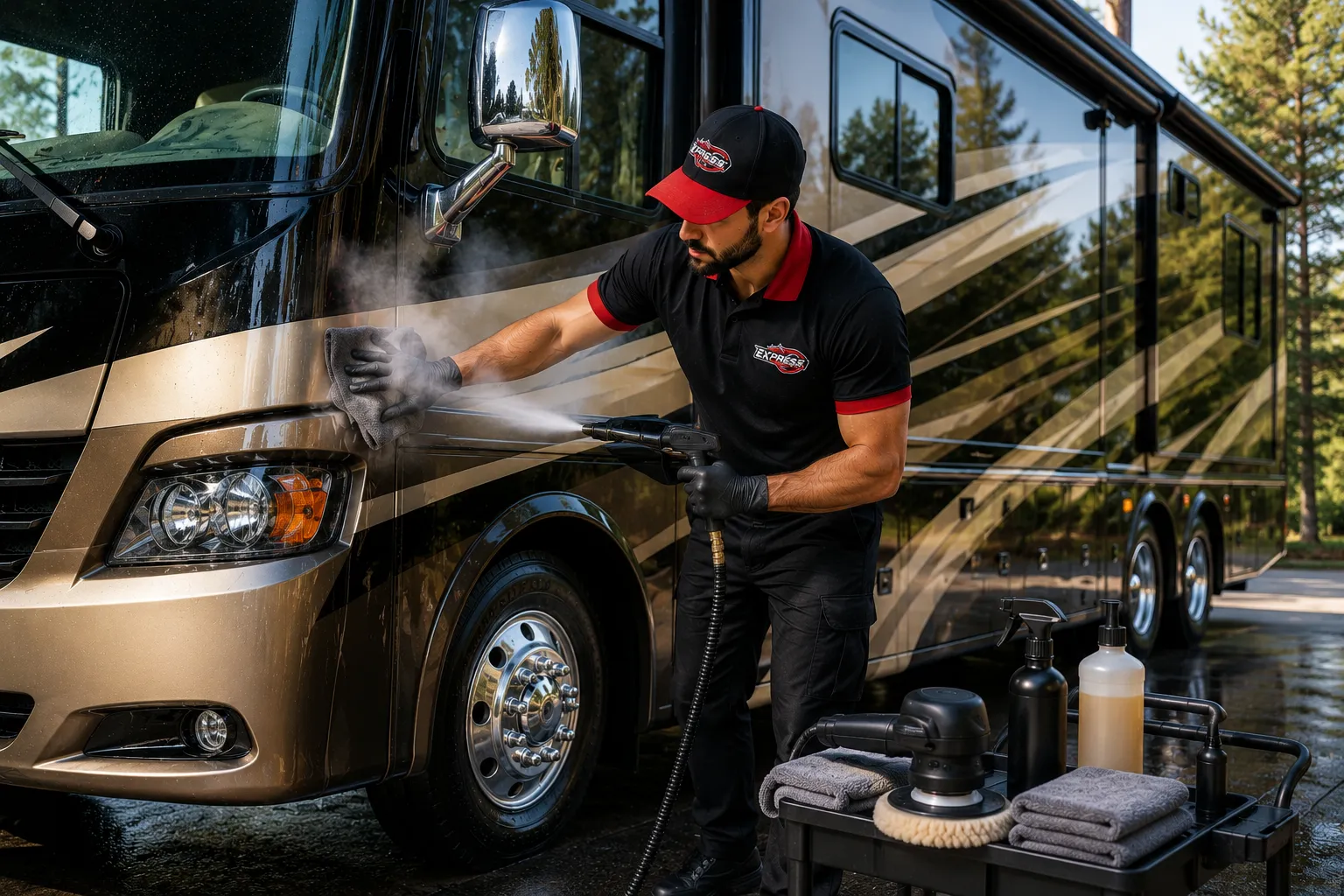


Where it is parked is where it gets done.
Storage yards, driveways and seasonal sites all work. Access, height clearance and how long the vehicle can stay put are the things worth confirming when the appointment is booked, because moving an RV to suit a schedule defeats the point.
Before you book.
Can you detail my RV in a storage yard?
Usually yes, provided we can access the whole vehicle and the yard allows contractors on site. Confirm both at booking so nothing is a surprise on the day.
Do you clean the roof?
Yes, and it matters — most black streaking down the sidewalls originates there. Cleaning the walls without the roof means the streaking comes back with the next rain.
How long does an RV take?
Considerably longer than a car, because it is a large exterior plus a lived-in interior. The window is set against your specific vehicle when the appointment is booked.
Do you do trailers as well as motorhomes?
Yes. Travel trailers, fifth wheels and motorhomes are all handled, with the appointment scaled to the size and layout.
Can you get rid of the black streaks?
In most cases yes — they are treated directly rather than just washed. How completely they clear depends on how long they have been baking into the sidewall.
How much does it cost?
It depends on the size and condition of the vehicle and your city. The exact total is shown and agreed in the booking flow before anything is confirmed.
When is the best time to book — spring or autumn?
Both, for different reasons. Autumn matters more: whatever is left on the roof and sidewalls when the cover goes on has all winter to work on the surface. Spring is about getting it presentable and checking what the winter did. If you only do one, do the one before storage.
Do you clean awnings and slide-outs?
Awning surfaces are cleaned as part of the exterior. Slide-out roofs and seals collect debris and are worth attention, though anything that looks like failing sealant is flagged to you rather than worked around — that is a repair, not a clean.
What every mobile rv detailing includes.
- Full exterior washSidewalls, front cap, rear and awning surfaces, washed by hand.
- Roof cleaningThe source of most sidewall streaking, cleaned rather than ignored.
- Streak treatmentExisting black streaking treated directly on the sidewalls.
- Wheels and skirtsWheels, wheel arches and lower skirts cleaned separately from the body.
- Interior living spaceUpholstery and soft furnishings extracted, hard surfaces cleaned.
- Kitchen and washroomSurfaces, fittings and fixtures cleaned throughout.
- Storage and voidsInterior storage emptied and cleaned rather than cleaned around.
- Final inspectionWalked with you before we leave, inside and out.
What mobile rv detailing actually looks like.
The living space and the full exterior of your motorhome or trailer — cleaned with equipment sized for large recreational vehicles, wherever it is parked or stored.
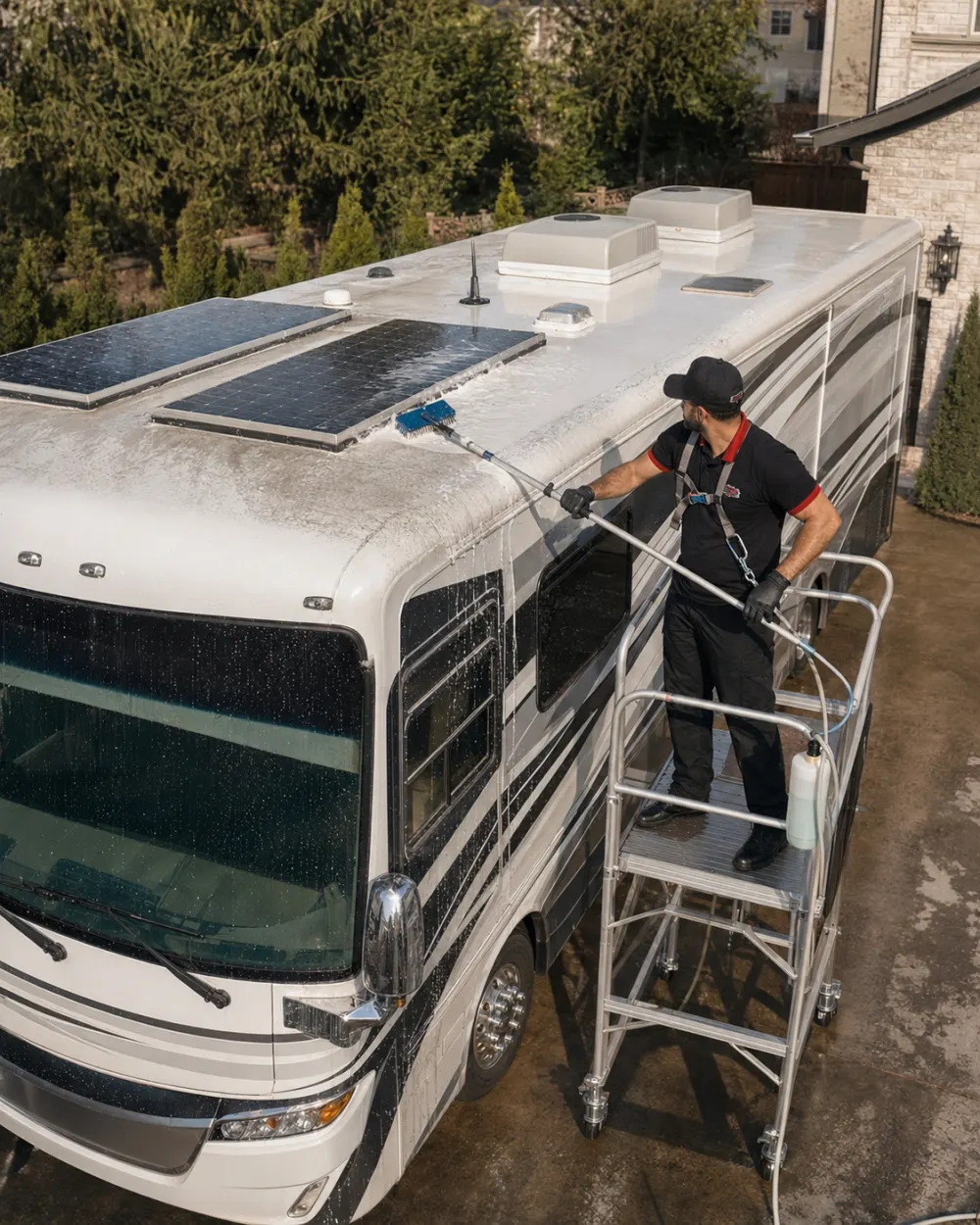

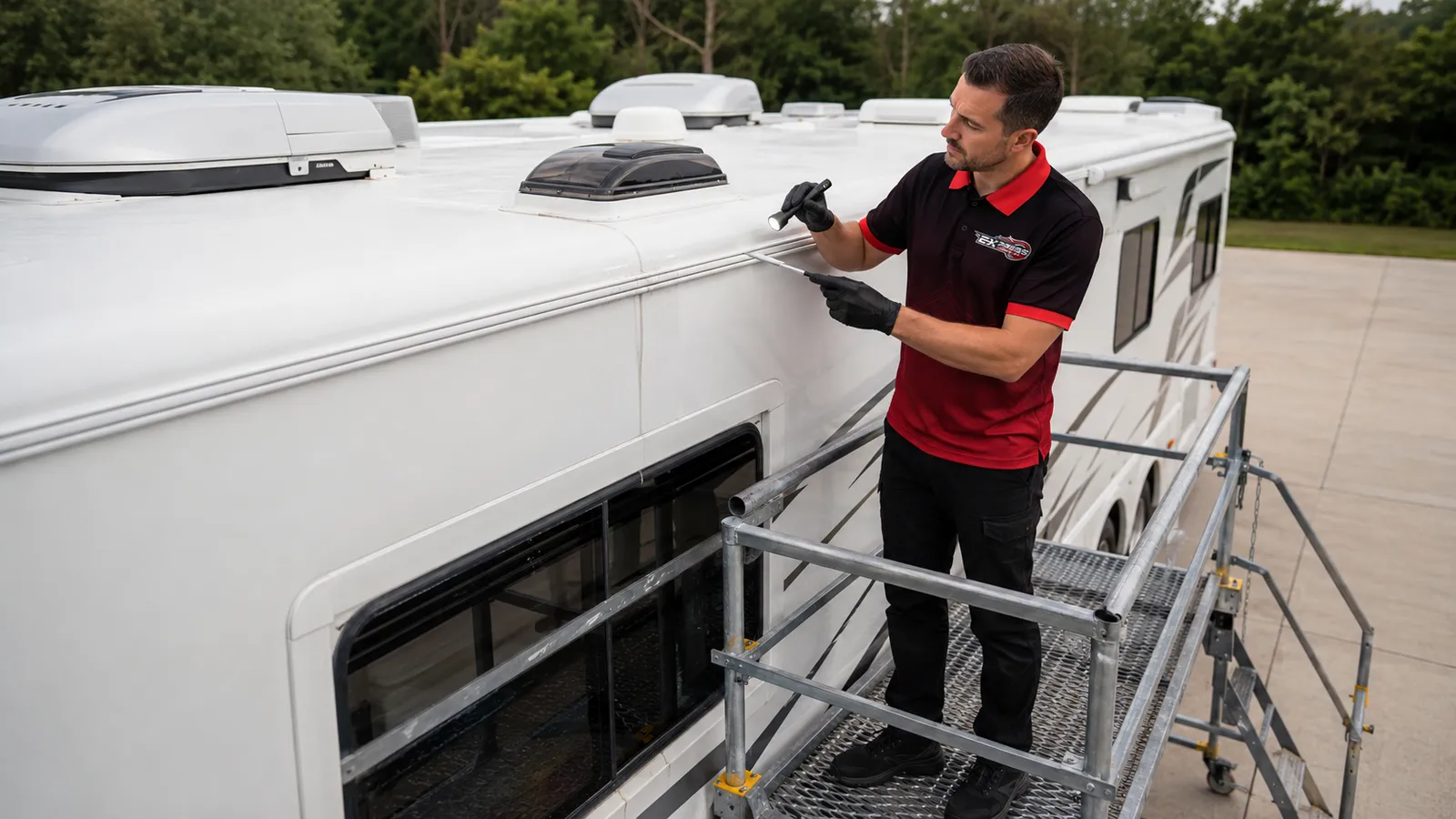
Check the roof each season
Almost every sidewall problem starts up there. A look at the roof twice a year catches sealant that is starting to go before it becomes streaking, and long before it becomes water ingress.
What actually happens on the day.
The appointment follows the same order every time, because the order is what makes the result last.
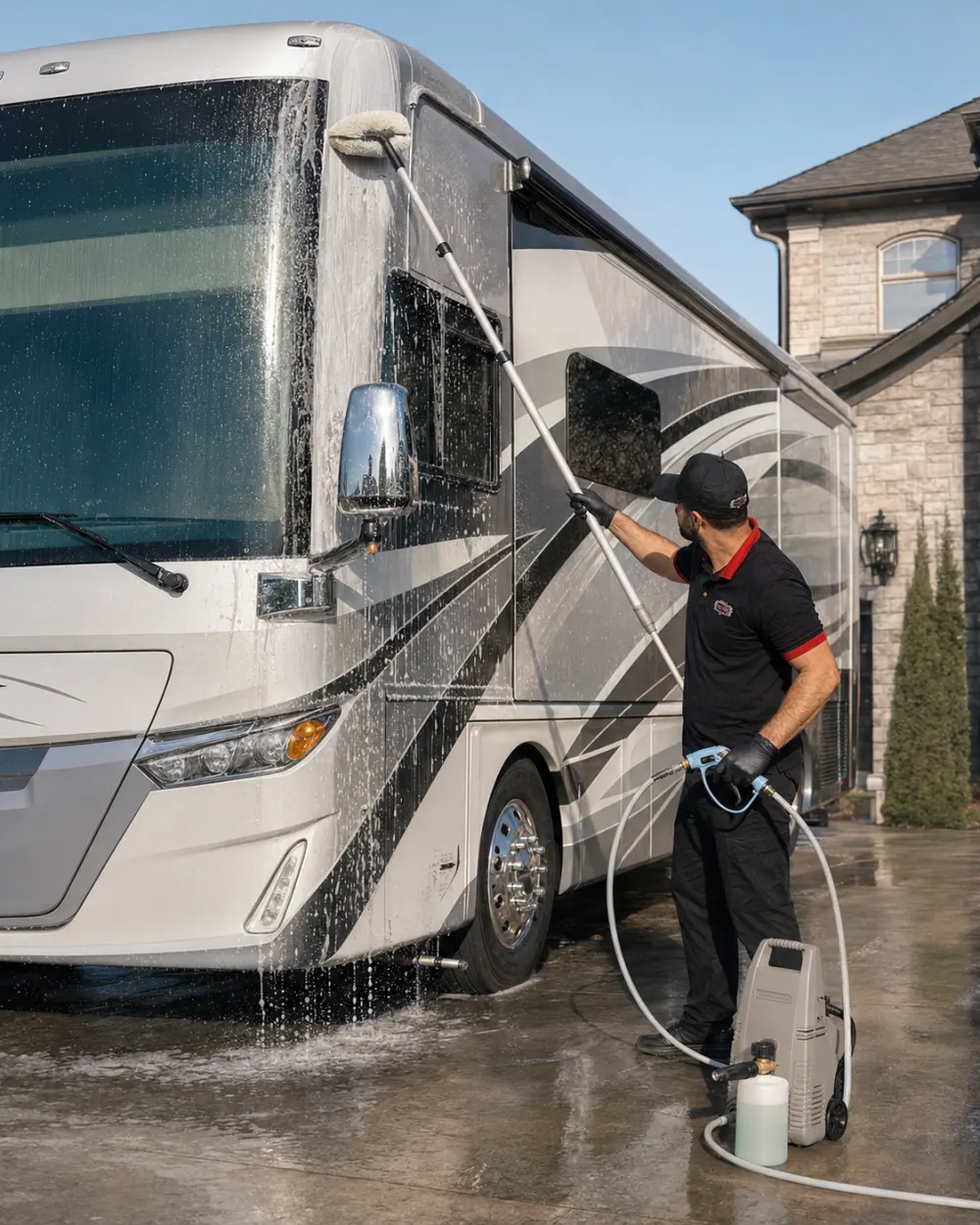
RVs are planned appointments. We confirm where it is stored, whether we can get all the way around it, and how much working height there is before the day.
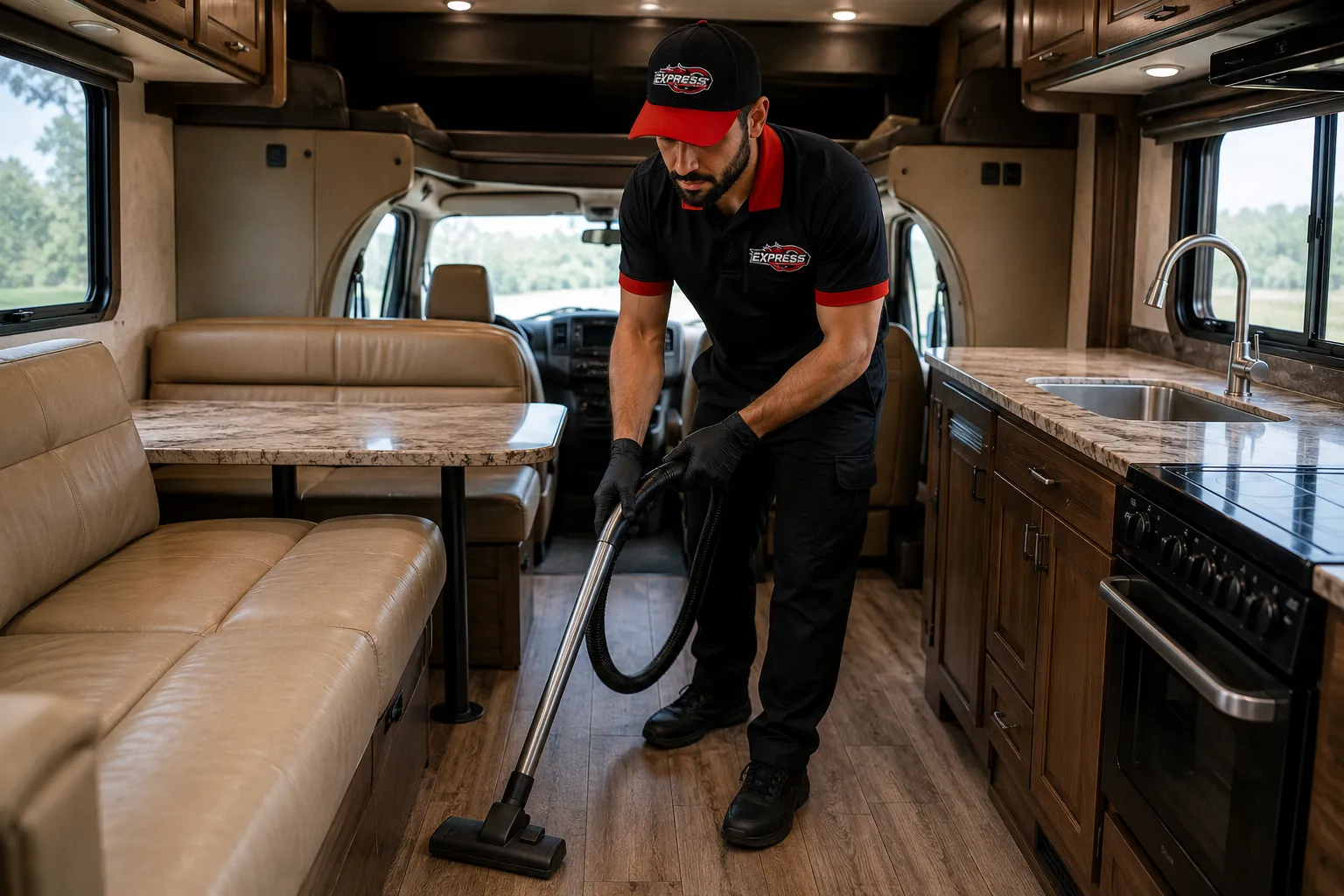
The living space is done first, so anything disturbed inside is not landing on freshly washed sidewalls.
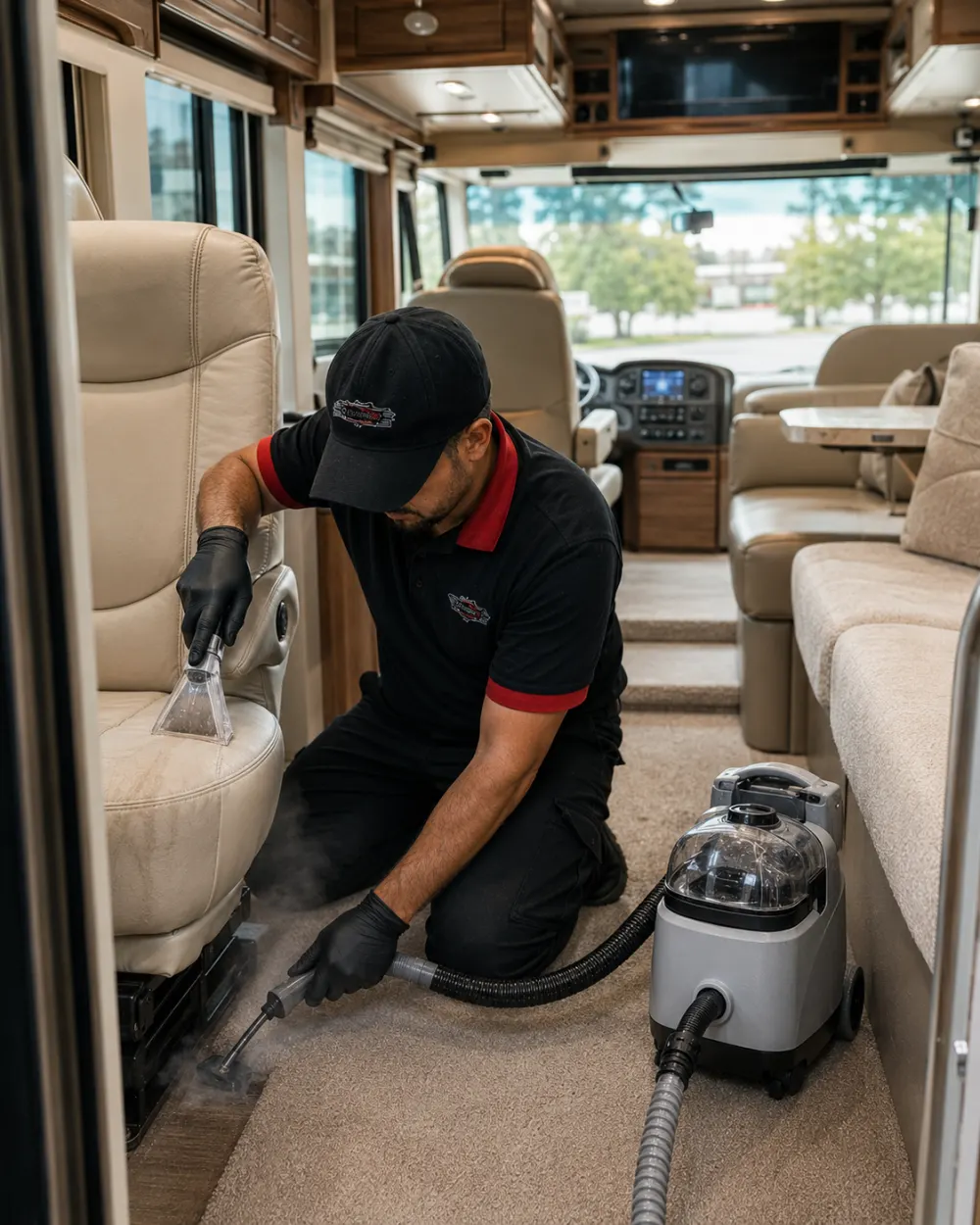
The roof is cleaned before the walls, because doing it the other way round means washing the walls twice.
- Sidewalls, wheels, inspectionStreak treatment and hand wash down the sides, wheels and skirts last, then a walk-through with you.
What mobile rv detailing fixes — and what it doesn't.
- Comes offRoad film, black streaking, general oxidation film, bug and tar spotting, and interior soiling in upholstery and soft furnishings.
- Usually improvesHeavily oxidised or chalky gel coat improves noticeably with cleaning, though heavy oxidation is a restoration job rather than a detail.
- Needs specialist workFailed roof sealant, delamination, water ingress and soft spots in the floor are structural. We will flag them if we see them, but they are a repair, not a clean.
Every appointment is carried out by Express Mobile Detailing's own trained technicians — not subcontracted — and every mobile visit is fully insured. The company has been detailing vehicles for over ten years and now covers 97 cities across British Columbia, Alberta, Ontario and Nova Scotia.Page reviewed 6 August 2026
How to keep it.
None of this is a warranty — it is just what actually makes the result last, from having watched what undoes it.
- Check the roof each seasonAlmost every sidewall problem starts up there. A look at the roof twice a year catches sealant that is starting to go before it becomes streaking, and long before it becomes water ingress.
- Treat streaks earlyBlack streaking is far easier to remove in its first weeks than after a summer of baking into the sidewall. Catching it early is the difference between a wipe and a restoration.
- Store it so it can breatheA cover that traps moisture does more damage than no cover. Airflow underneath, and a vehicle that went into storage dry, is what prevents the interior damp problems that surface in spring.
- Leave the interior ventilatedSoft furnishings and mattresses hold moisture through a whole season. Cracking a vent, using a moisture absorber, and not sealing the vehicle up completely damp all pay off.
- Do not let the tyres and seals sit forgottenSidewalls crack from UV and from standing in one spot under load for months, and door and window seals dry out and then leak. Both are cheap to protect and expensive to discover in spring, and both are easy to overlook on a vehicle that is only used a few weeks a year.
Build your price.
Pick your service, city and vehicle. The exact total is shown before anything is confirmed.
Other services we bring to you
Useful reading, not written by us
- Transport Canada — road transportationFederal guidance covering vehicle standards and safe road use in Canada.
- Canadian Automobile AssociationIndependent Canadian consumer guidance on vehicle care and ownership.
External links open in a new tab and are not affiliated with Express Mobile Detailing.
