Mobile detailing across Canada

Mobile Paint Correction

Dual-action machine polishing removes the swirl marks, light scratches, water spotting and oxidation sitting in your clear coat — the haze that makes a dark car look grey.
µmmeasuredClear coat is finite — how much is removed matters
DApolisherDual-action, the safer tool for mobile correction work
97citiesAcross British Columbia, Alberta, Ontario and Nova Scotia
7days8:00 AM – 6:00 PM, including weekends
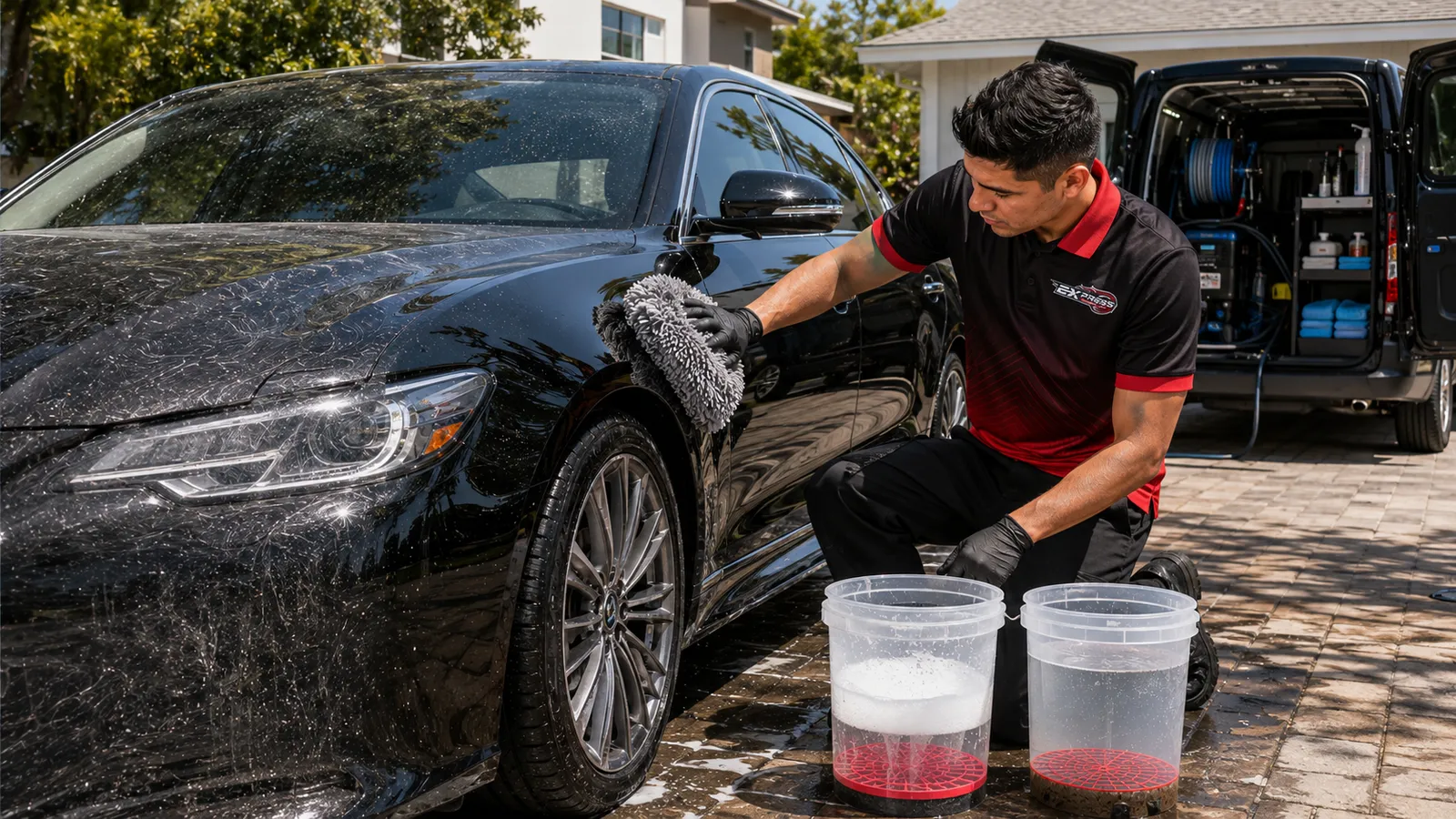
A technician hand-washing a black car using separate wash and rinse buckets

What a swirl mark actually is.

It is a scratch — thousands of them, fine enough that you only see them as a haze when light hits the panel directly. Most come from wash technique: automatic tunnel brushes, a single bucket, a dirty mitt, or drying with the wrong towel. Correction removes them by taking the clear coat down to below the depth of the scratch.
mobile paint correction — A technician machine-polishing the bonnet of a dark car

Why that means clear coat is finite.

Every correction removes a small amount of clear coat, and clear coat does not grow back. A panel can only be corrected so many times before it needs repainting. That is why we assess first and why aggressive one-pass 'restoration' promises are worth being sceptical about.
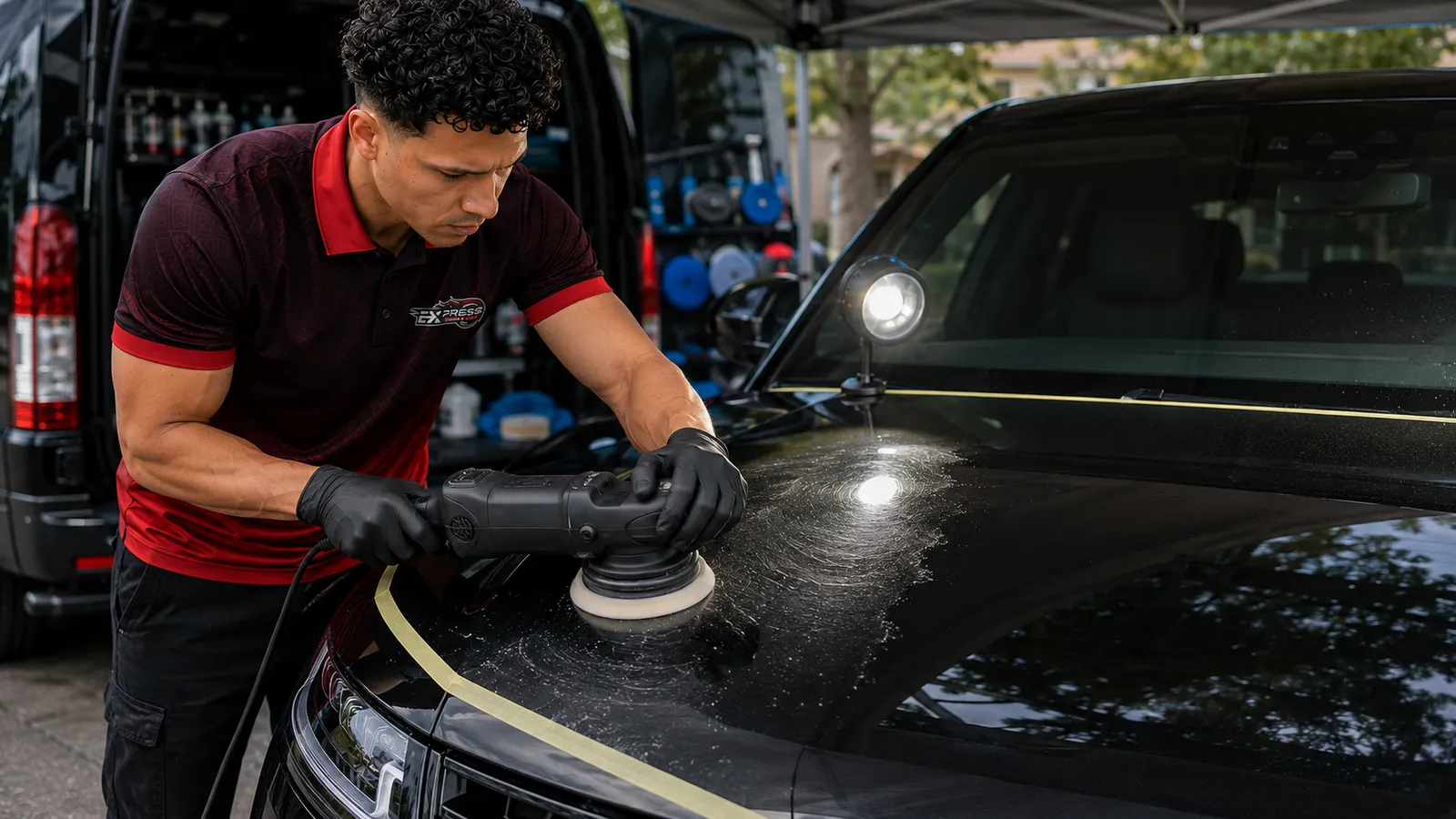
A technician machine-polishing a bonnet under an inspection light

Correct, then protect.

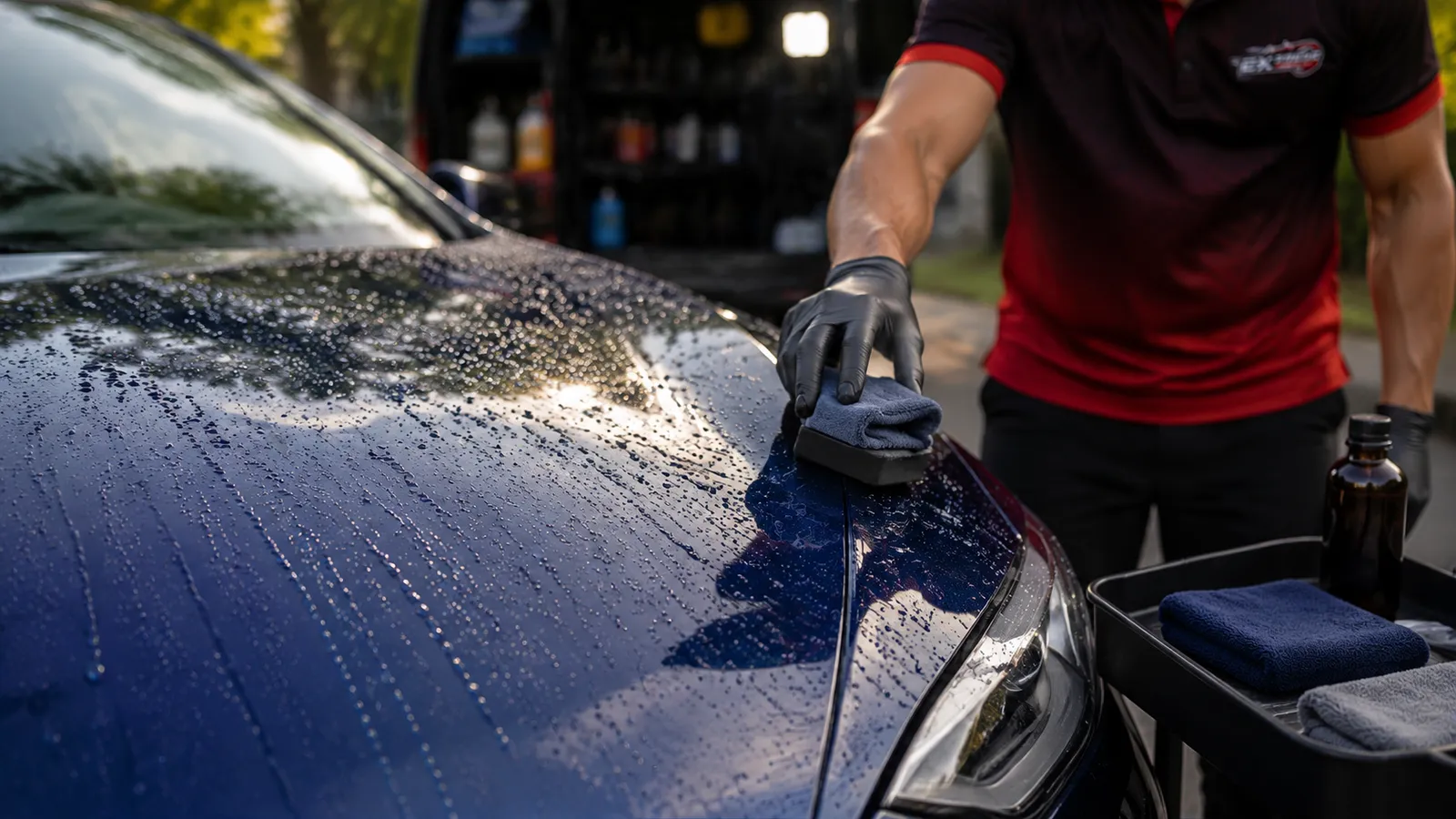
Freshly corrected paint is bare and unprotected. Leaving it that way wastes the work, so correction is normally followed by a sealant or a ceramic coating to hold the finish and slow the return of the swirls that were just removed.
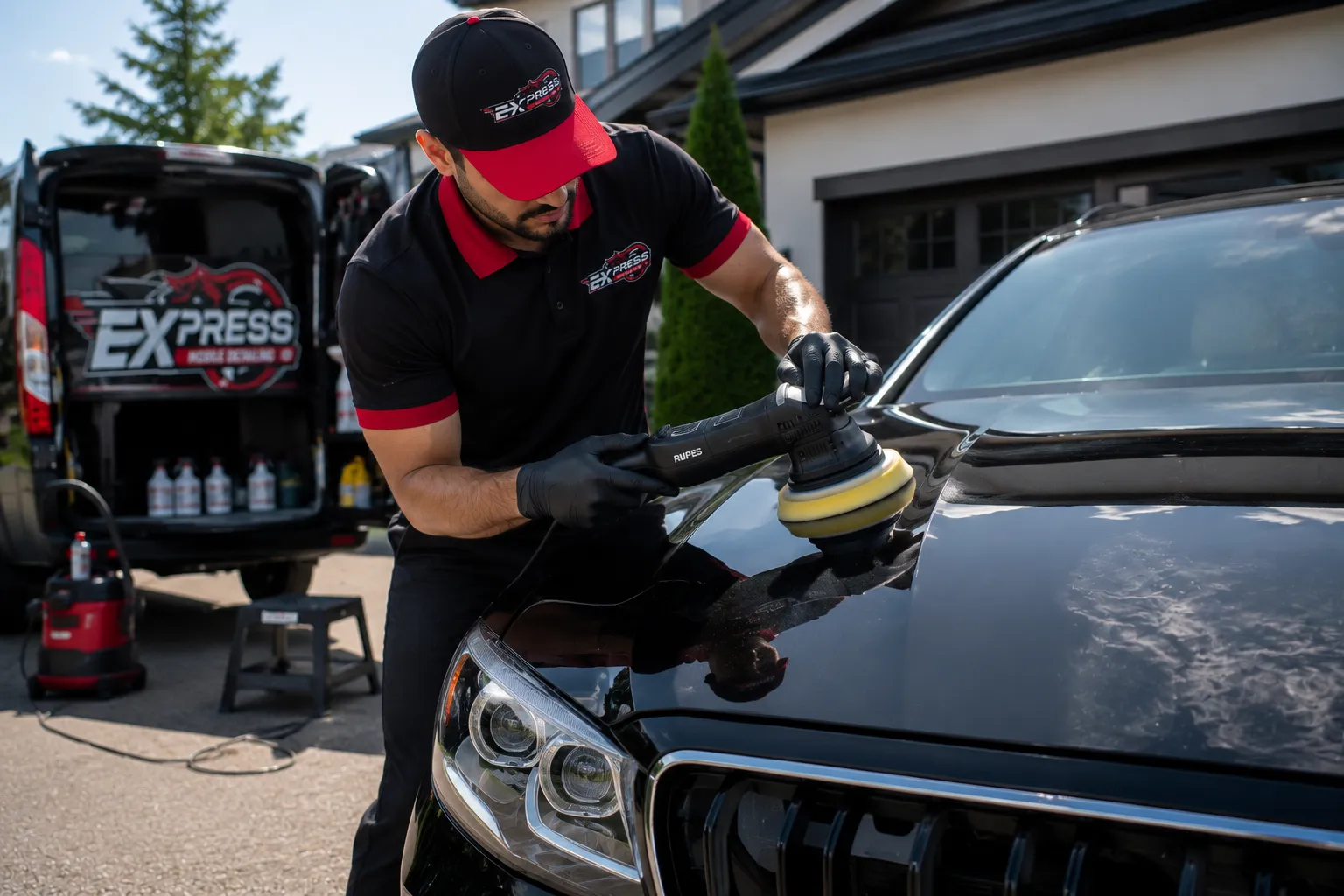
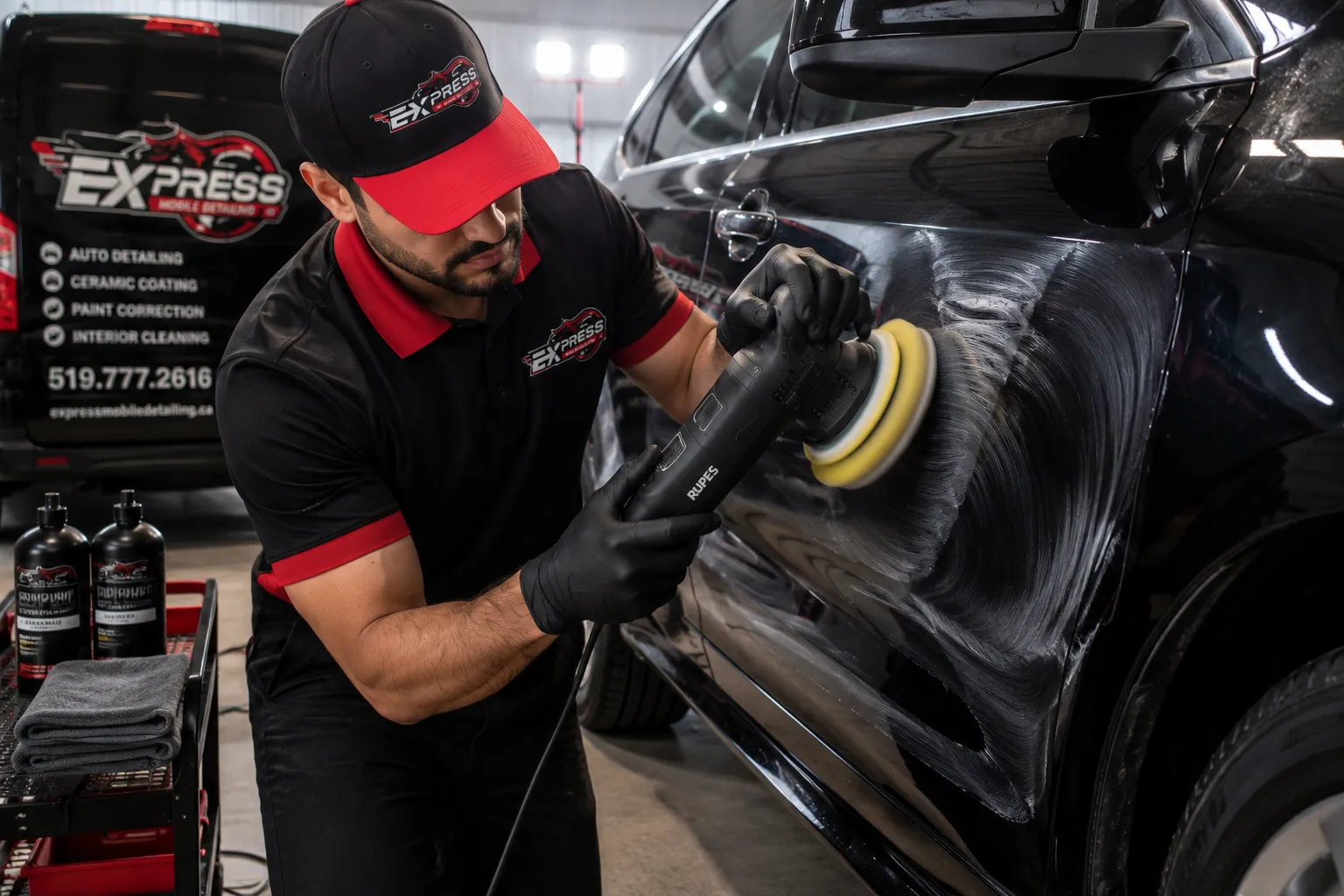
Professional mobile paint correction technician machine polishing a black vehicle to remove swirl marks and paint defects at a customer location in Canada
The difference
mobile paint correction in progress
Professional paint correction technician removing swirl marks from black vehicle paint using machine polishing equipment

Polishing removes. Filling hides.

A glaze or an all-in-one product fills defects with something that washes out over the following weeks, which is why a car can look transformed on collection and ordinary again by the second wash. Machine correction removes a measured amount of clear coat so the defect no longer has an edge to catch light on. What comes out stays out — and what cannot safely come out, we tell you about beforehand.

Build your price →
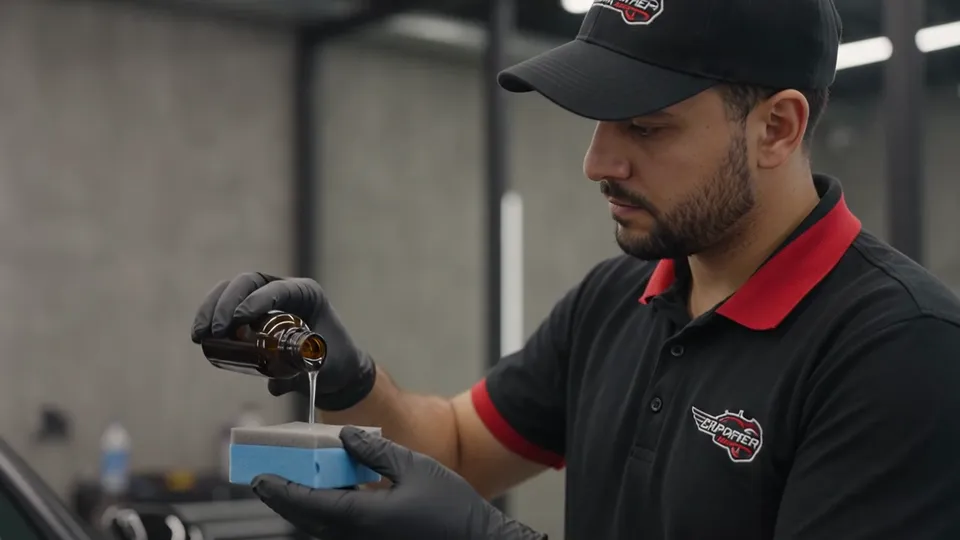
Ceramic Coating by Express Mobile Detailing

There is a finite amount of clear coat

Correction is subtractive and the material is not replaceable, so the aim is the least aggressive combination that clears the defect, not the most. Anything your fingernail catches in is deeper than the safe working depth and will improve rather than disappear. You are told which is which before anything starts.

Closer in

The parts that decide the result.

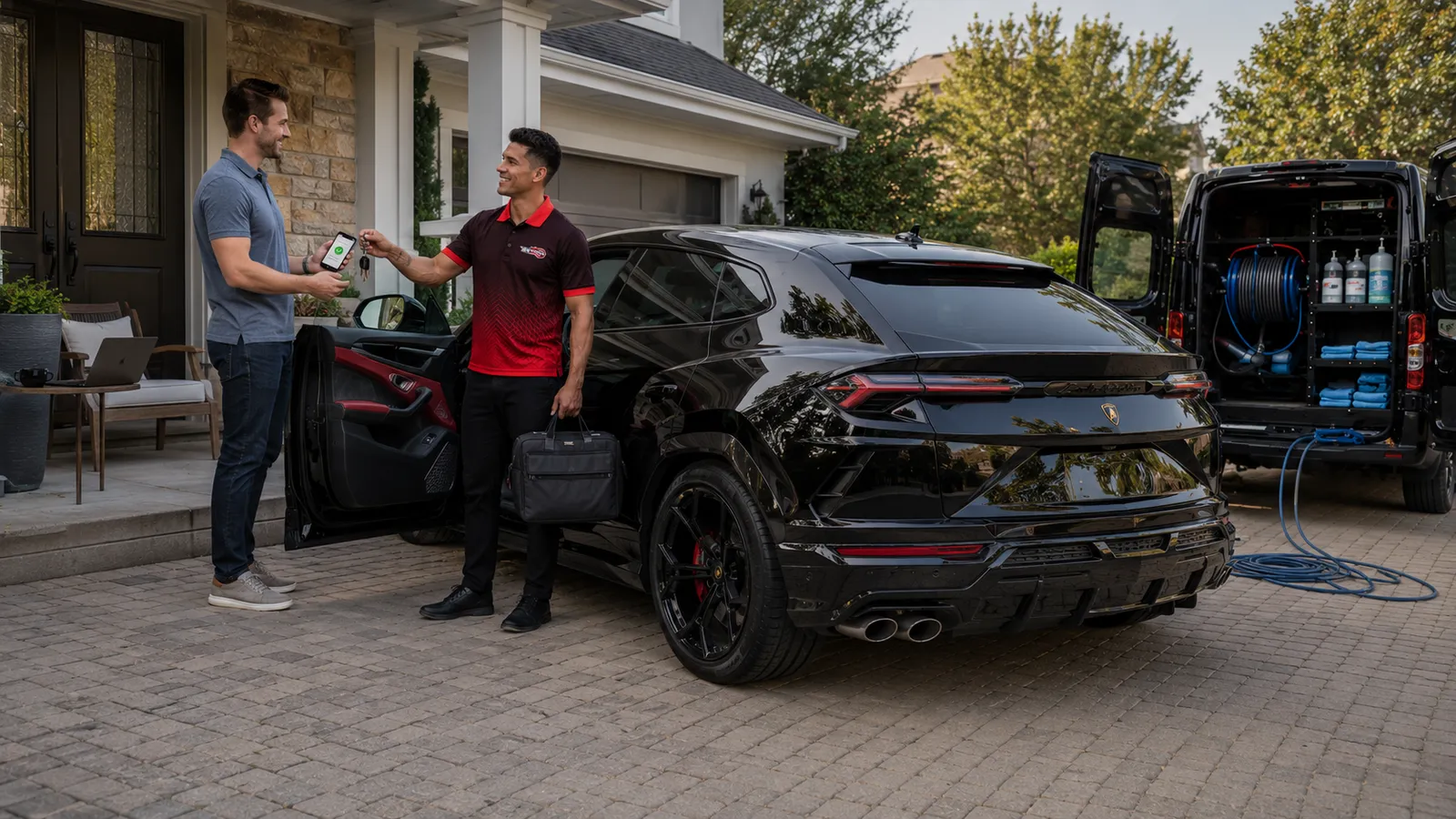
A dark SUV being detailed on a customer's driveway
Before: haze under direct light.
Professional paint correction technician removing swirl marks from black vehicle paint using machine polishing equipment
After: reflection, not scatter.
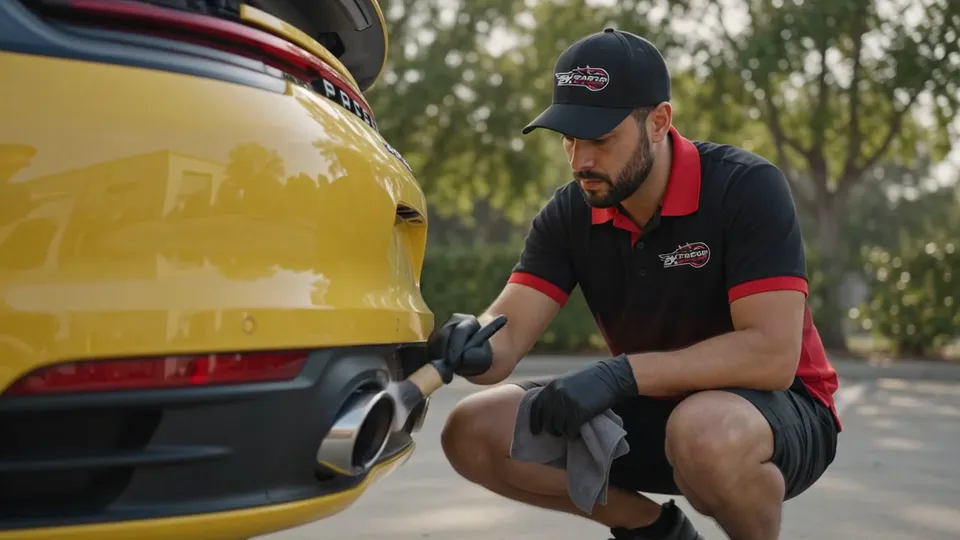
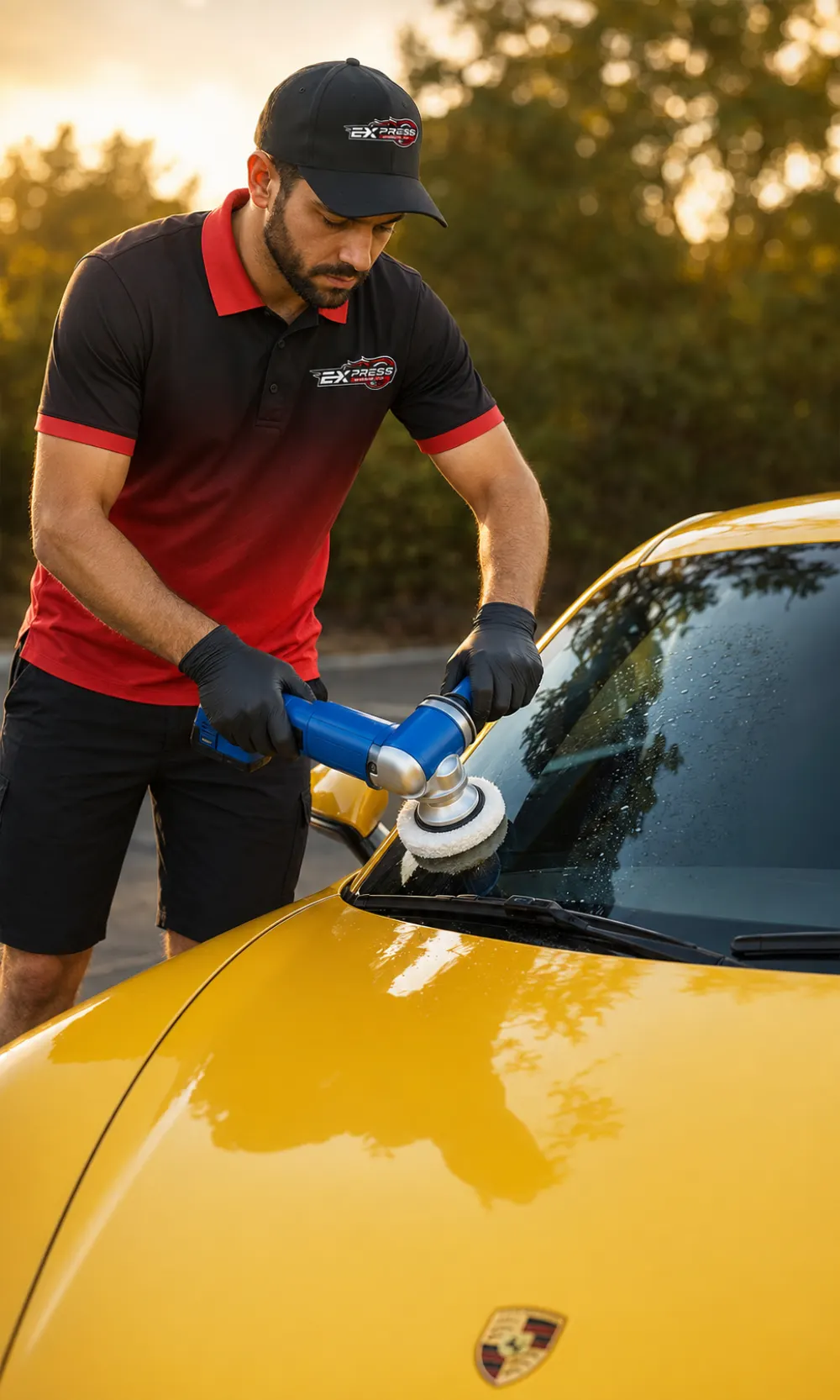
Technician machine-polishing a yellow sports car
Honest about what one pass can do.
mobile paint correction — A technician machine-polishing the bonnet of a dark car
Finished, and walked with you.
A technician machine-polishing a bonnet under an inspection light

Honest about what one pass can do.

Light swirling and holograms usually clear substantially. Deeper scratches — anything your fingernail catches in — sit below the safe correction depth and will improve rather than disappear. We tell you which is which before we start, not after.

Questions

Before you book.

Will it remove every scratch?

No. Scratches your fingernail catches in are usually too deep to remove safely, because correcting to that depth would take away too much clear coat. Those improve rather than vanish, and we identify them with you before starting.

Is machine polishing safe on my paint?

Done properly, yes — we use dual-action polishers and always run a test section first to see how your specific paint responds before committing to the whole vehicle.

How often can a car be corrected?

Not many times. Clear coat is finite and does not grow back. Good wash technique afterwards is what stops you needing correction again, which is why protection is applied at the end.

Do I need a coating afterwards?

Something has to go on. Freshly corrected paint is bare, and leaving it unprotected means the swirls start returning immediately. A sealant is the minimum; a ceramic coating holds it far longer.

Can this be done at my home?

Yes. Correction is done at your address, and the paint is protected before we leave so the drive afterwards is not landing on bare clear coat.

How much does it cost?

It depends on the vehicle, the paint's condition and your city. The exact total is shown and agreed in the booking flow before anything is confirmed.

Why does my black car look worse than my friend's white one?

It does not have more scratches — they are simply visible. Swirl marks scatter light, and on a dark or solid-colour panel that scatter reads as haze against the dark background. The same defects on silver or white are almost invisible, which is why dark cars are the ones that most often prompt a correction booking.

Will the swirls come back?

Only if they are put back. Correction removes what is there; what happens afterwards is wash technique. A corrected car washed in an automatic tunnel will be swirled again within months, and one washed properly by hand can hold the finish for years.

What's included

What every mobile paint correction includes.

  • Decontamination washTwo-bucket hand wash and clay bar so nothing is dragged across the paint.
  • Paint assessmentPanels inspected under direct light with you before any machine touches them.
  • Test sectionA single area corrected first to establish what this paint actually responds to.
  • Machine polishingDual-action correction, panel by panel, at a pace the paint allows.
  • Residue removalPolishing oils removed so the true finish is visible, not a temporary filled one.
  • Protection appliedSealant or coating over the corrected finish so it is not left bare.
  • Trim and glass cleanedCompound residue cleared from surrounding trim, badges and glass.
  • Final inspectionWalked with you under direct light before we leave.
Up close

What mobile paint correction actually looks like.

Dual-action machine polishing removes the swirl marks, light scratches, water spotting and oxidation sitting in your clear coat — the haze that makes a dark car look grey.

Professional paint correction technician removing swirl marks from black vehicle paint using machine polishing equipment
Decontamination wash
Technician machine-polishing a yellow sports car
Paint assessment
mobile paint correction — A technician machine-polishing the bonnet of a dark car
Test section

Wash technique is now the whole game

Correction removed the marks. Only how the car is washed decides whether they return. This is not a small factor — it is essentially the only factor.

How it runs

What actually happens on the day.

The appointment follows the same order every time, because the order is what makes the result last.

A technician hand-washing a black car using separate wash and rinse buckets
Assess under light, with you

Swirls only show under direct light. We look at the panels together first so the starting point is agreed and the realistic outcome is clear.

A dark SUV being detailed on a customer's driveway
Wash and decontaminate

Correction on a contaminated panel drags grit under the pad. Everything is washed and clayed first.

Professional mobile paint correction technician machine polishing a black vehicle to remove swirl marks and paint defects at a customer location in Canada
Test section, then commit

One area is corrected first to see how this specific paint responds. The full approach is set from that result rather than assumed.

  • Correct, remove residue, protectPanel by panel, then residue removed so you see the actual finish, then sealed so the work lasts.
Straight answers

What mobile paint correction fixes — and what it doesn't.

  • Usually removedSwirl marks, holograms, light scratches, water spotting and oxidation held in the clear coat.
  • Usually improvedDeeper scratches will look considerably better without disappearing — beyond a certain depth, removing them would mean removing too much clear coat.
  • Cannot be correctedAnything through the clear coat into the base or primer, stone chips, and cracked or failing paint. Those need bodywork, and we will say so.

Every appointment is carried out by Express Mobile Detailing's own trained technicians — not subcontracted — and every mobile visit is fully insured. The company has been detailing vehicles for over ten years and now covers 97 cities across British Columbia, Alberta, Ontario and Nova Scotia.Page reviewed 6 August 2026

Aftercare

How to keep it.

None of this is a warranty — it is just what actually makes the result last, from having watched what undoes it.

  • Wash technique is now the whole gameCorrection removed the marks. Only how the car is washed decides whether they return. This is not a small factor — it is essentially the only factor.
  • Two buckets and a grit guardOne bucket for soap, one to rinse the mitt, a guard in the bottom of each so the grit that settles stays settled. Cheap, and it is what professional results are actually built on.
  • Retire the old drying towelDropped, stiff or gritty towels put fine scratches straight back into freshly corrected paint. Use a clean plush microfibre, laid flat rather than dragged.
  • Keep protection on topBare corrected clear coat is vulnerable. Whatever went on at the end — sealant or coating — needs to still be there. When water stops beading, it is time to renew it.

Build your price.

Pick your service, city and vehicle. The exact total is shown before anything is confirmed.