
Mobile Boat Detailing
Hull, deck and cabin cleaned with marine-safe products and techniques — built for an environment that attacks gel coat, upholstery and metalwork all at once.
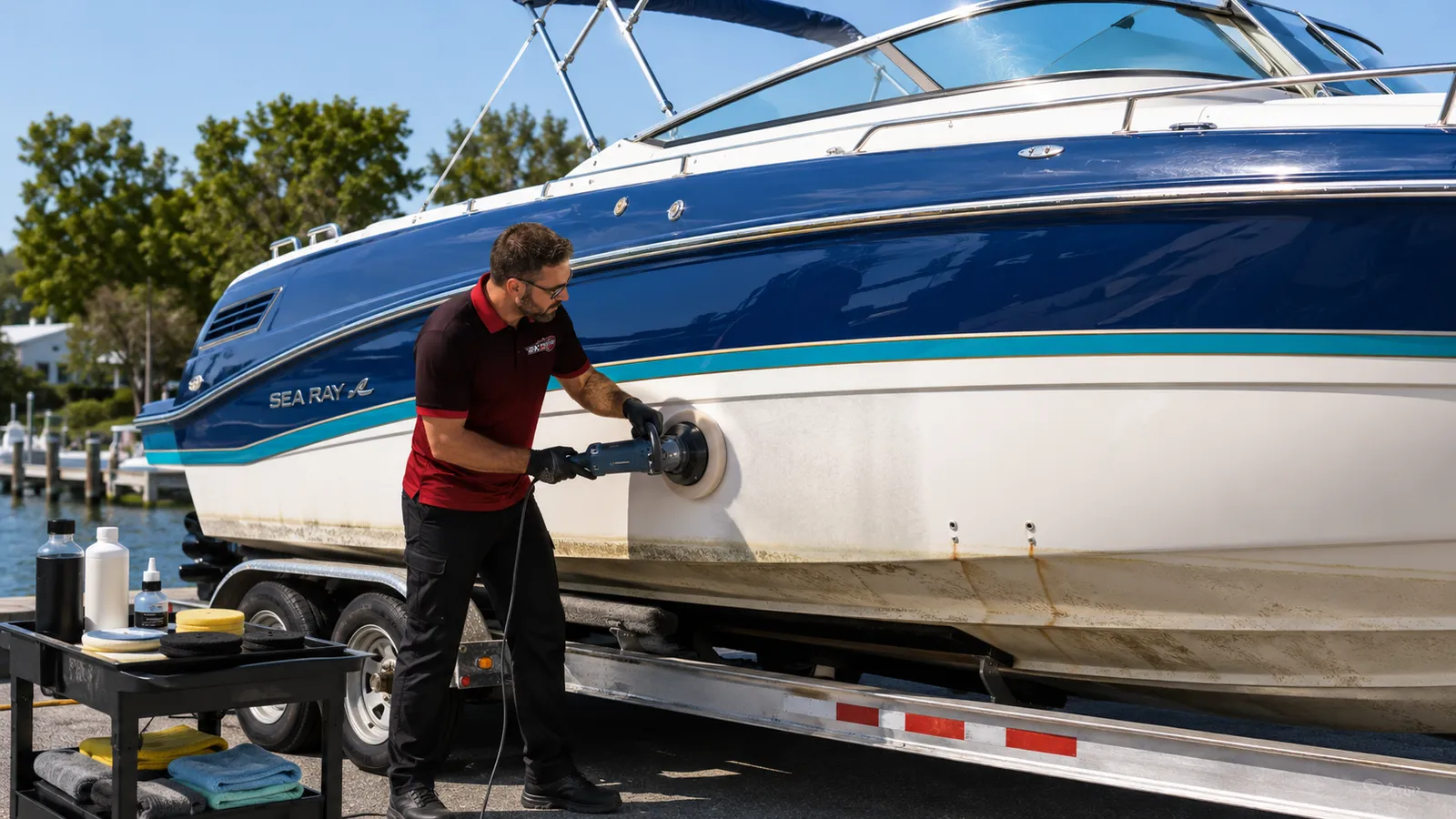
Gel coat is not car paint.
Gel coat is thicker, more porous and oxidises differently to automotive clear coat. It chalks under UV rather than swirling, and it stains from waterline scum and rust runs in ways paint does not. The products and the technique both change accordingly.
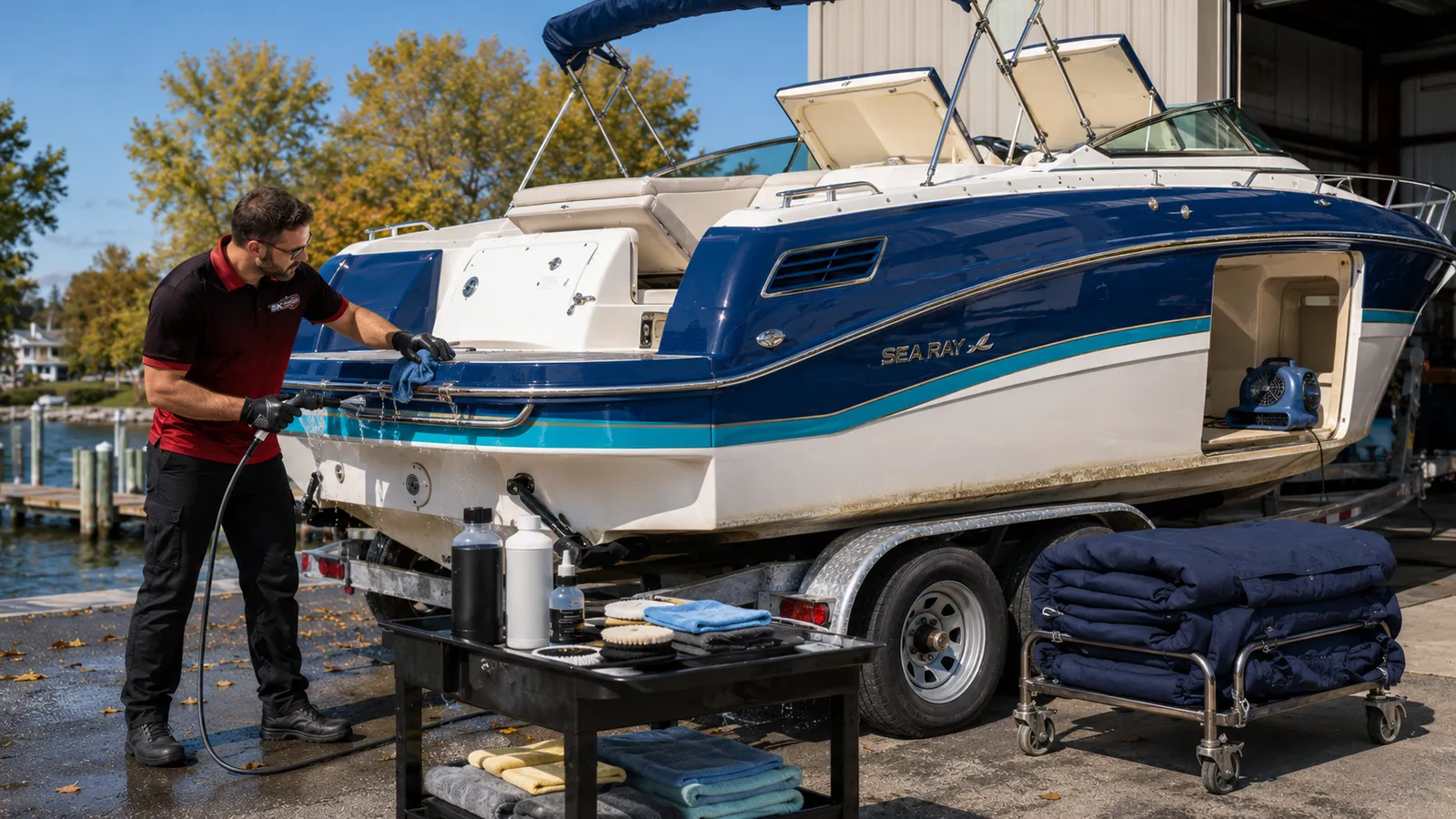
The waterline tells the truth.
Whatever the water has been doing to the hull shows in a band at the waterline — scum, staining and growth, depending on where the boat sits and for how long. It is the hardest part of the hull to bring back and the most obvious one when it has not been touched.
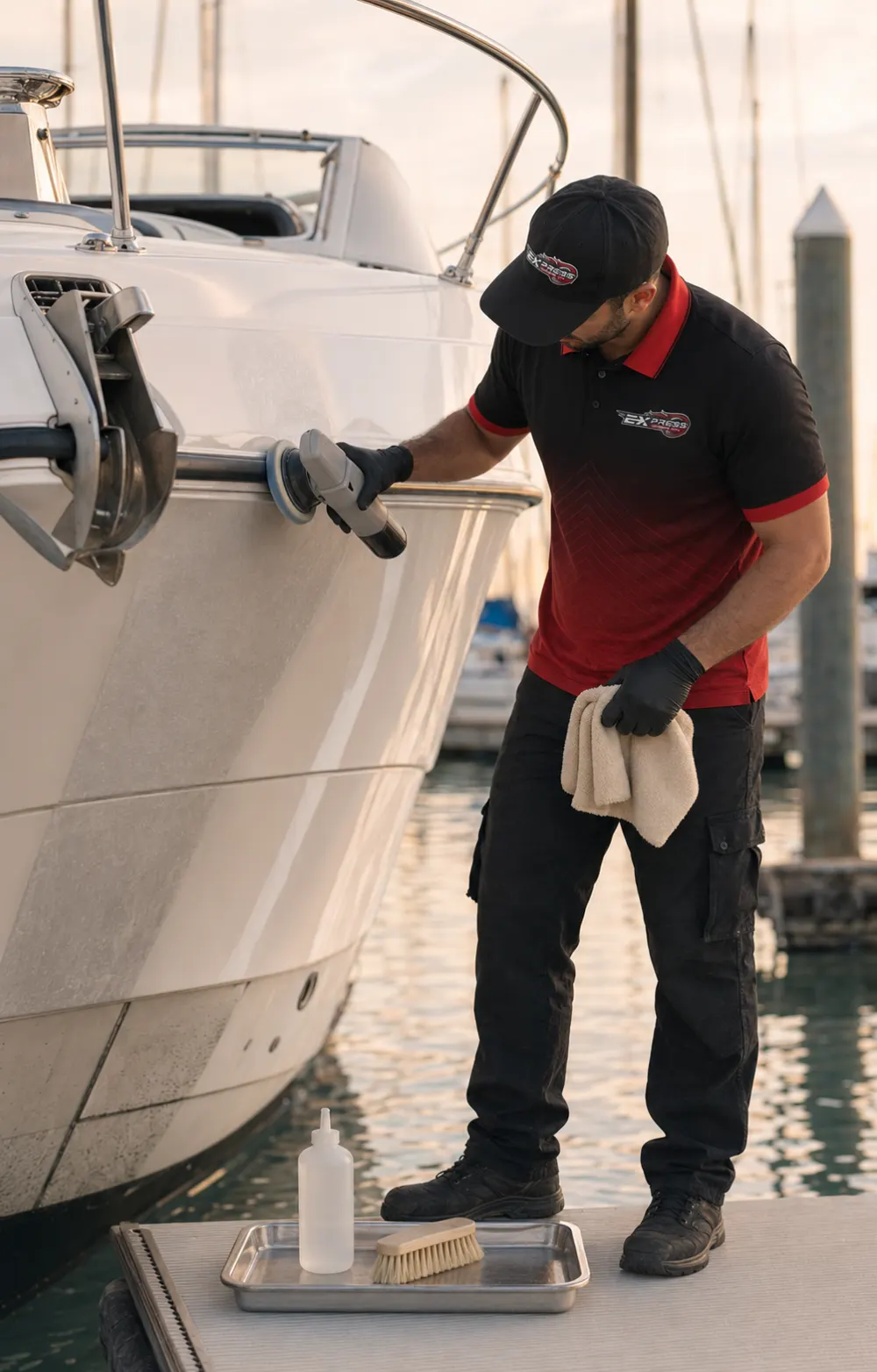
A cabin that never fully dries.
Marine interiors deal with damp constantly. Upholstery holds moisture, vinyl and canvas mildew, and the lockers and bilge areas are where a smell starts long before anyone notices it in the cabin. Cleaning the visible surfaces alone does not solve it.
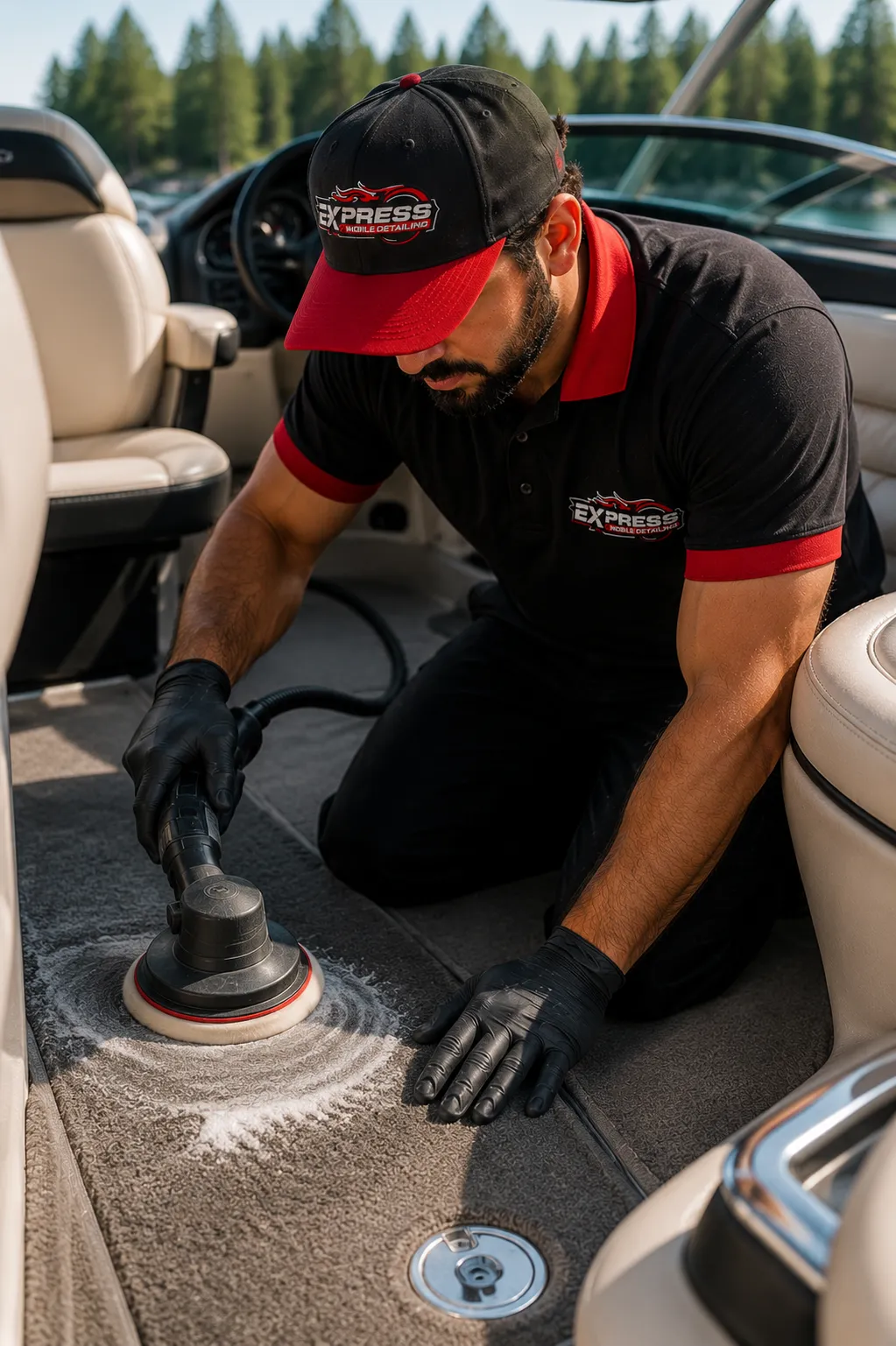
Timing matters more than it does on a car.
A boat cleaned before it goes under a cover for the season is a very different job from one cleaned after. Salt left on metalwork over winter keeps working, damp trapped under a cover grows what it is going to grow, and a hull put away with a scum line comes out in spring with a stain rather than a mark. If the appointment is going in ahead of storage, say so when you book — the order of work changes.
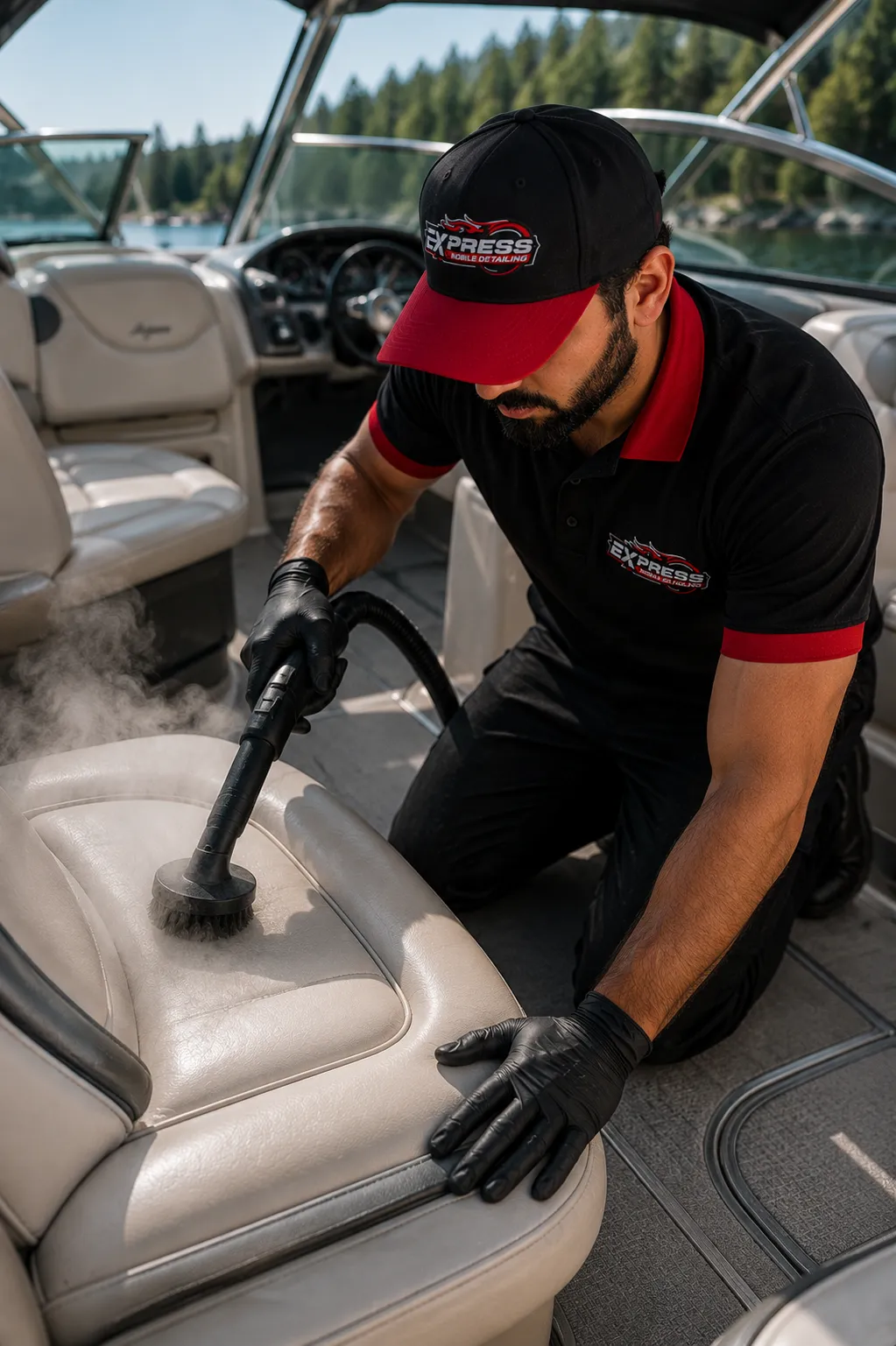
Four moments worth booking boat detailing for.
The work is the same either way — these are the times it makes the most difference.
It is going under a cover for the winter
A hull put away with a scum line comes out with a stain. Salt keeps working in the dark, and damp under a cover grows whatever it is going to grow.
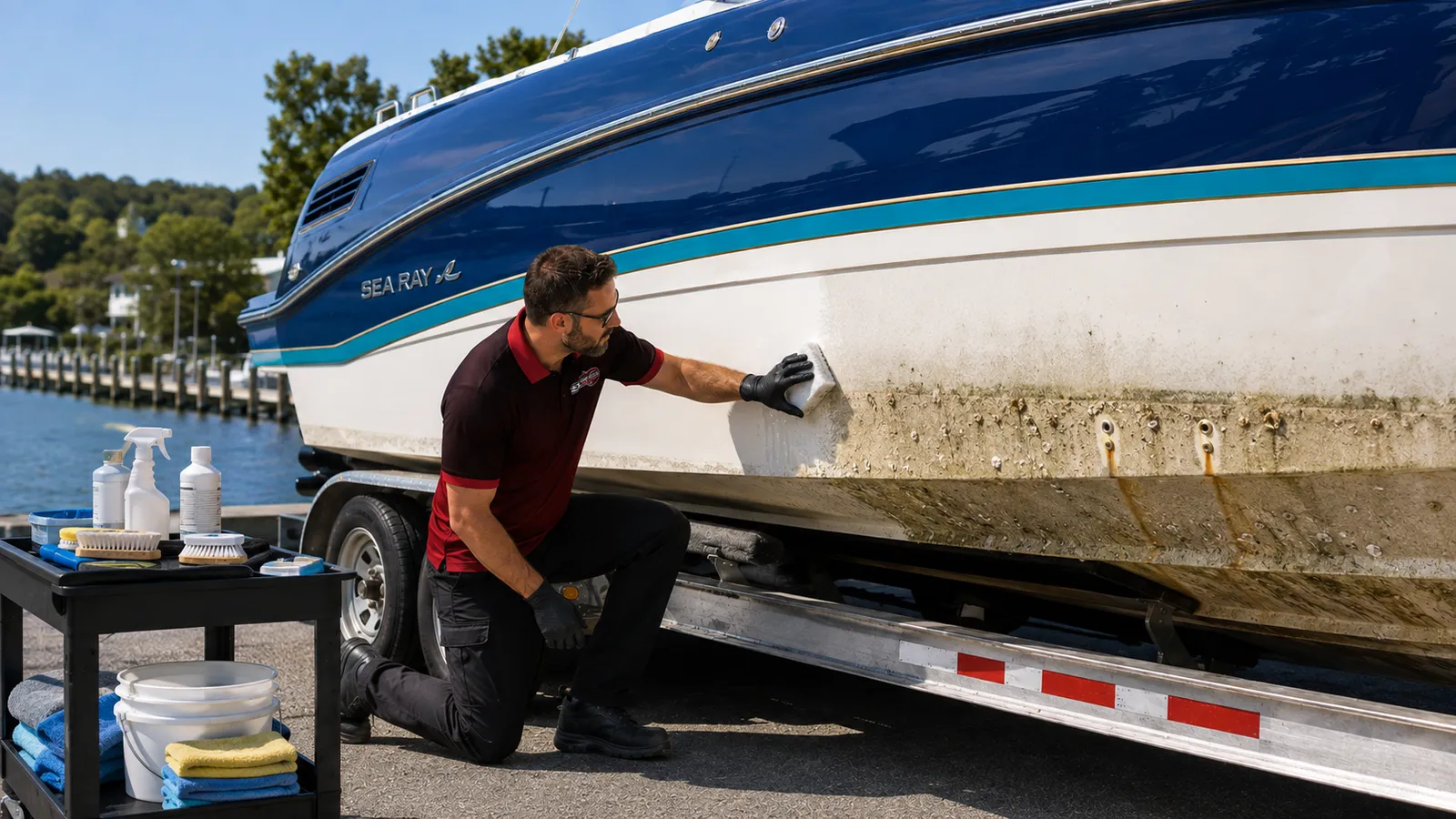
Book before haul-out →There is a brown line along the waterline
Waterline staining is mineral and biological, keyed into the gelcoat while the boat sat in the water. It responds to the right product and dwell time, not to scrubbing harder.
Deal with the waterline →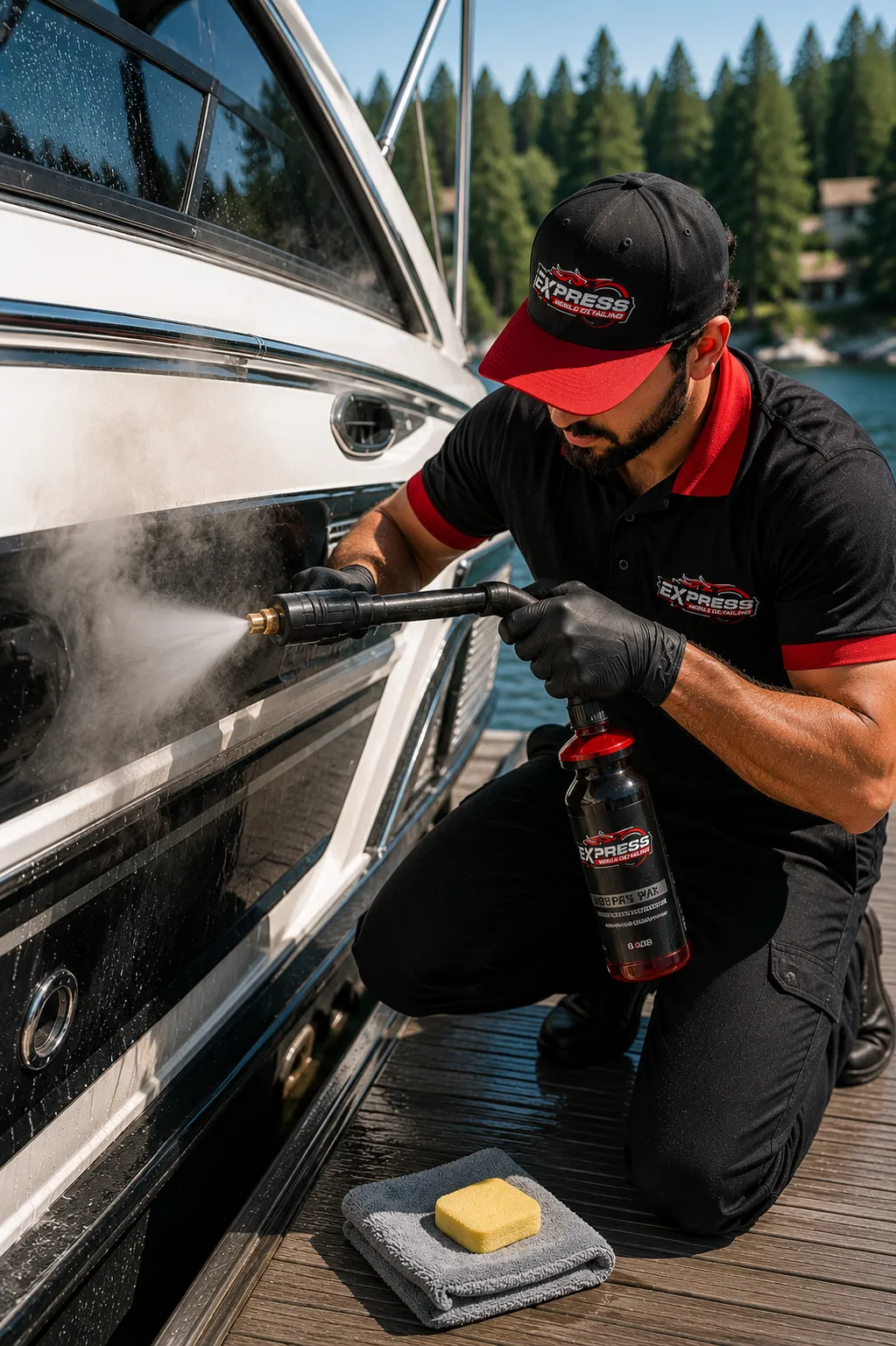
Launch day is coming and it has sat all winter
Six months covered leaves chalky oxidation on the topsides, mildew on canvas and vinyl, and a cabin that smells shut up. Far easier on the hard than in the slip.
Book the spring prep →It is going on the market or up for survey
A buyer forms their opinion from the topsides and the cabin smell before they ask about engine hours. Chalky gelcoat reads as neglect even where the mechanicals are perfect.
Book before the survey →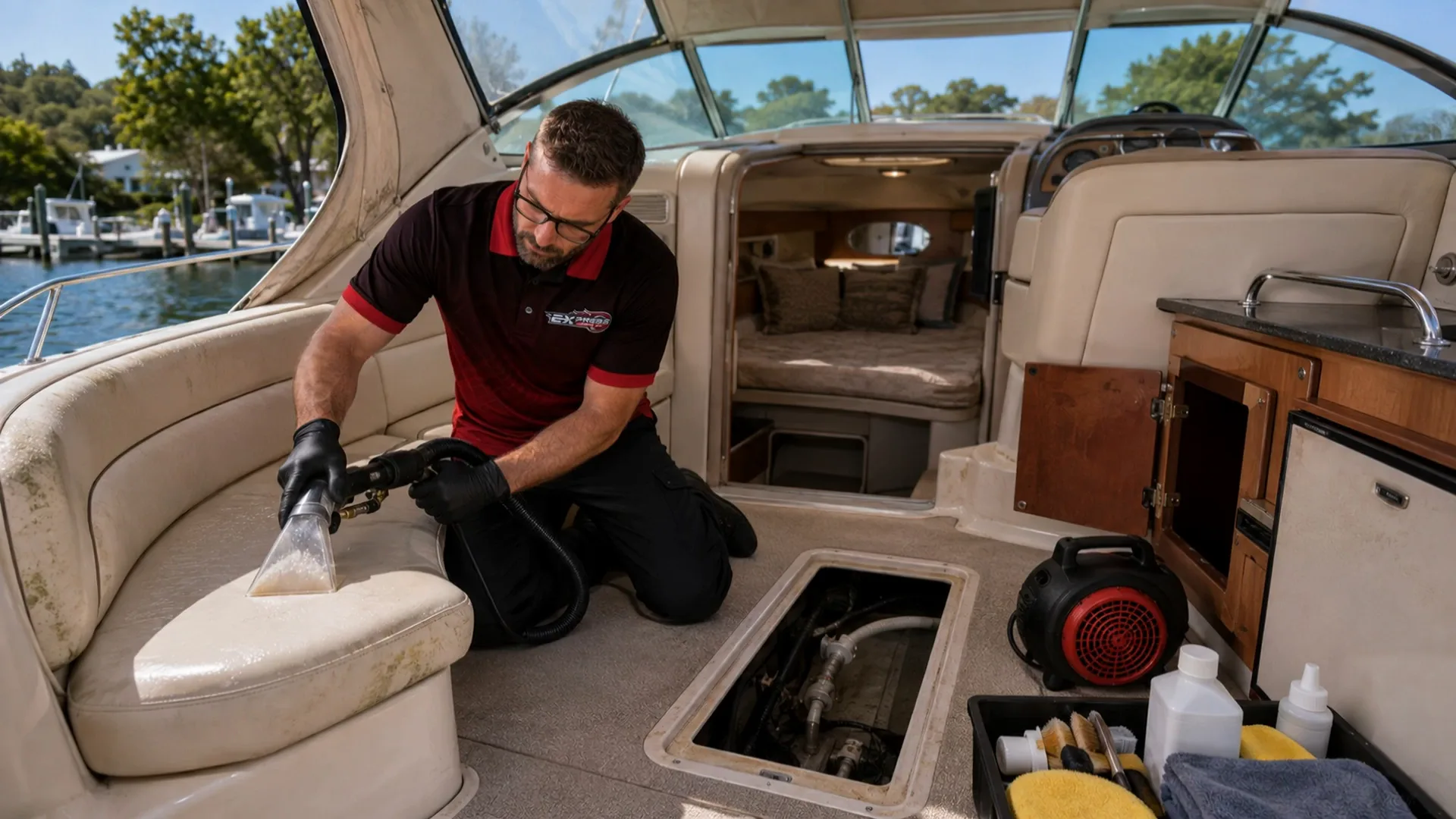
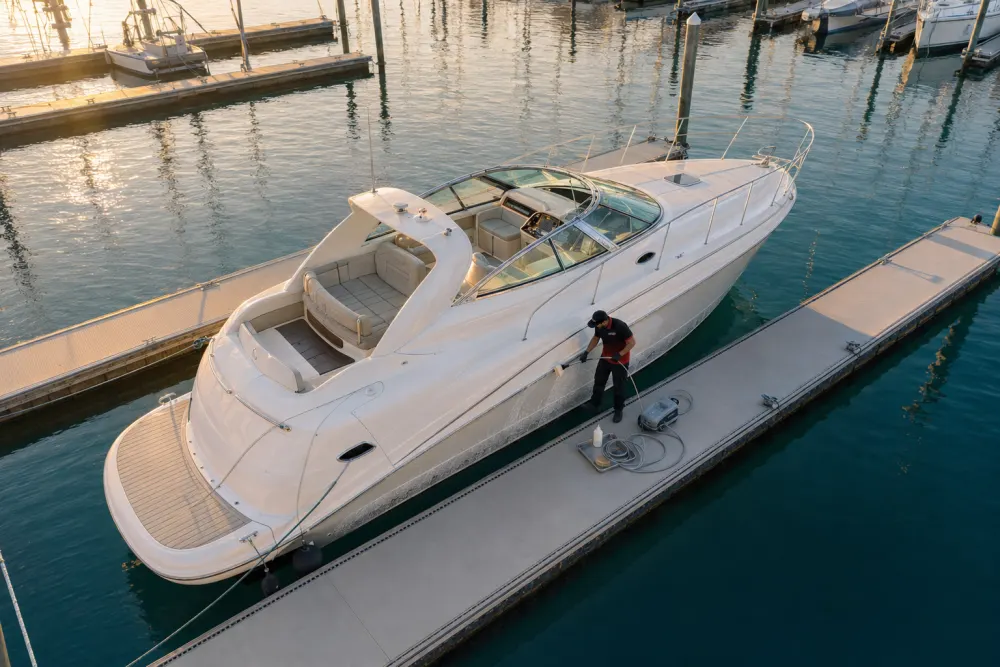
Marine surfaces do not behave like automotive paint.
Gelcoat is porous and it chalks as it oxidises rather than dulling the way a clear coat does, so it takes a different compound and a different pace. Add canvas, vinyl, non-skid and stainless — four more materials with four different tolerances — and the reason a boat is not simply a large car with a pointed end becomes clear. Using automotive product on gelcoat is how people end up with a hull that looks worse afterwards.
Build your price →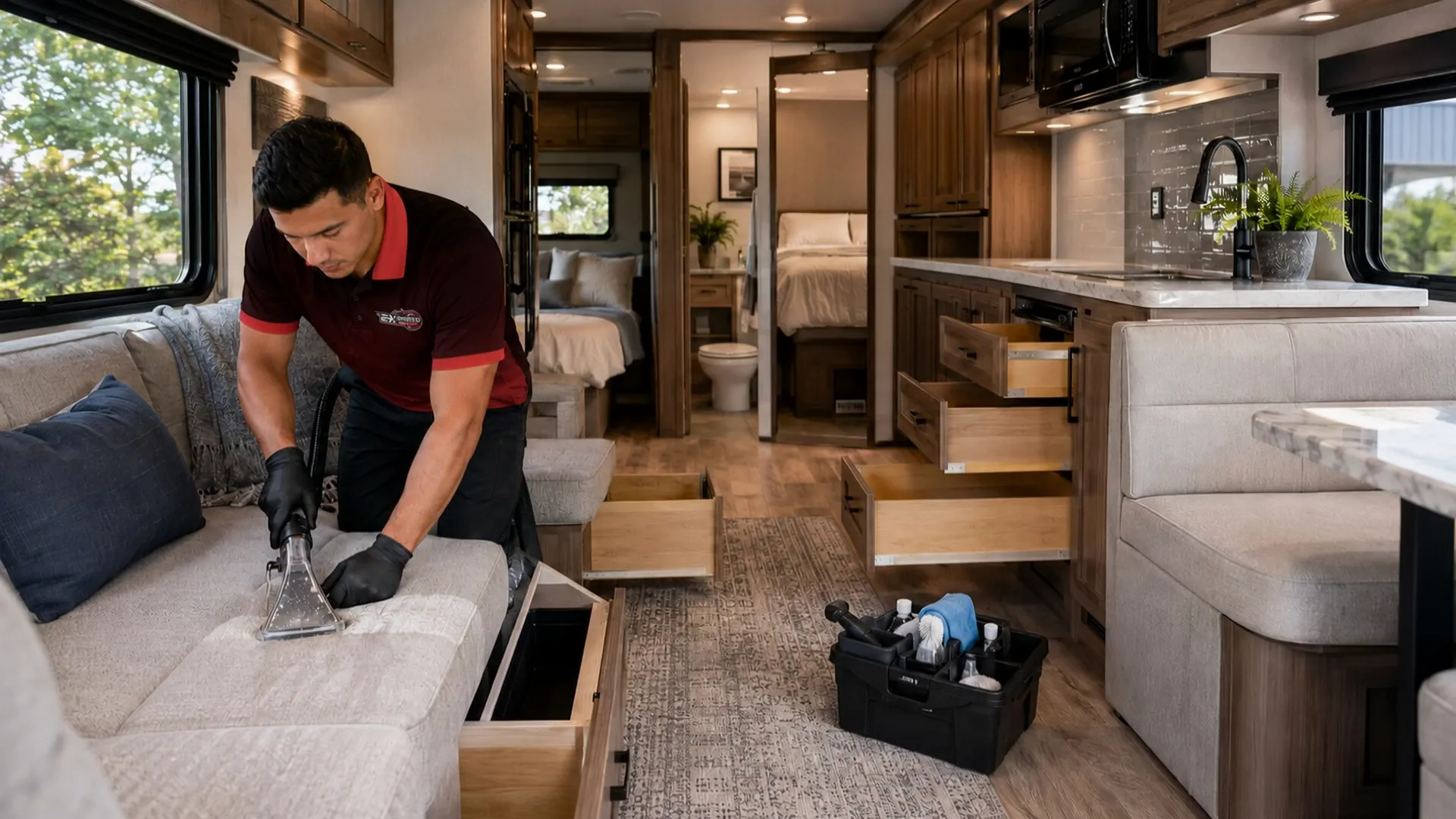
In the slip, on the hard, or on the trailer
Which of the three it is decides what can actually be reached — the bottom and much of the topsides are only properly accessible out of the water. Telling us which at booking is what stops half the job being impossible on arrival.
The parts that decide the result.
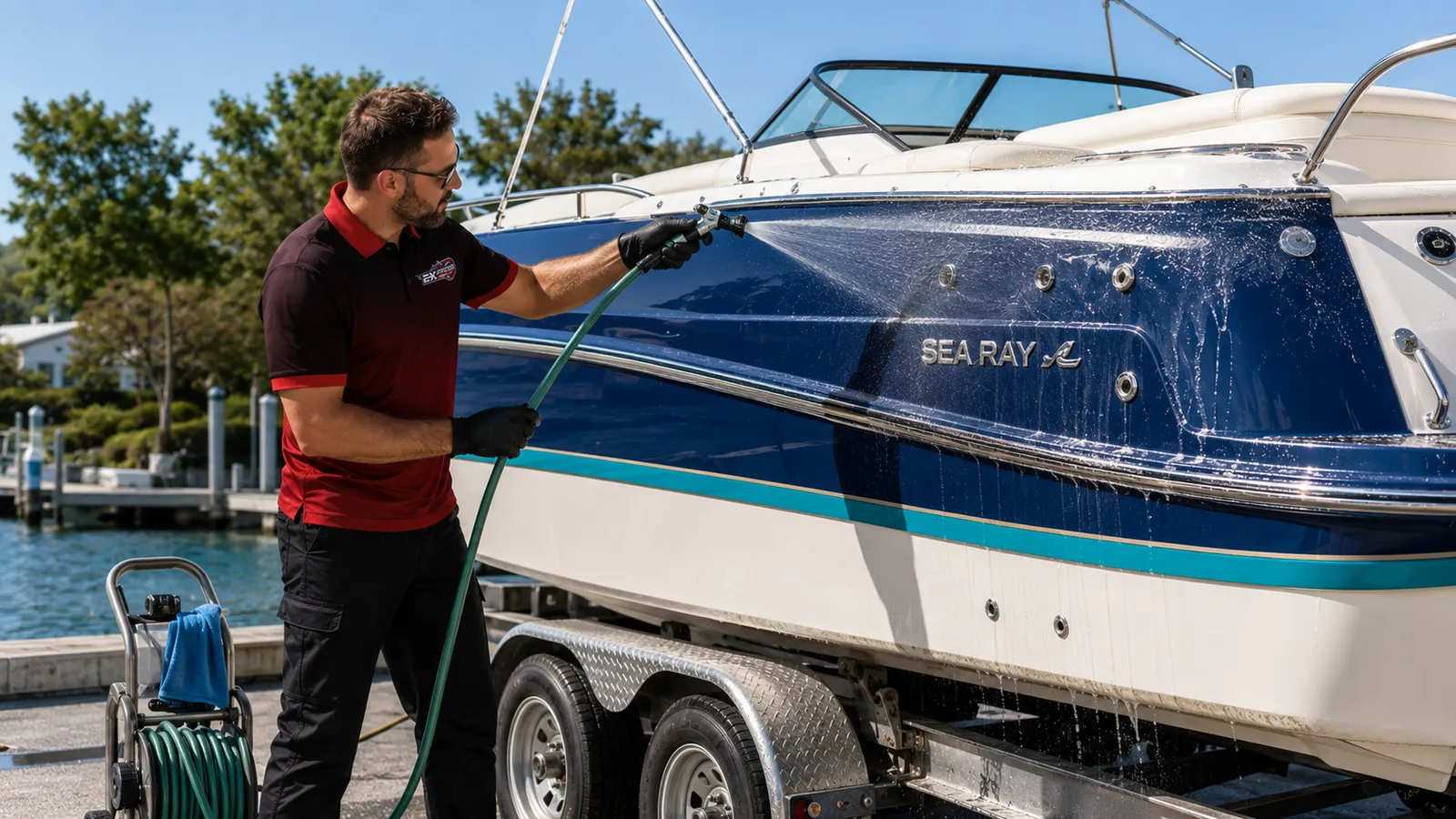
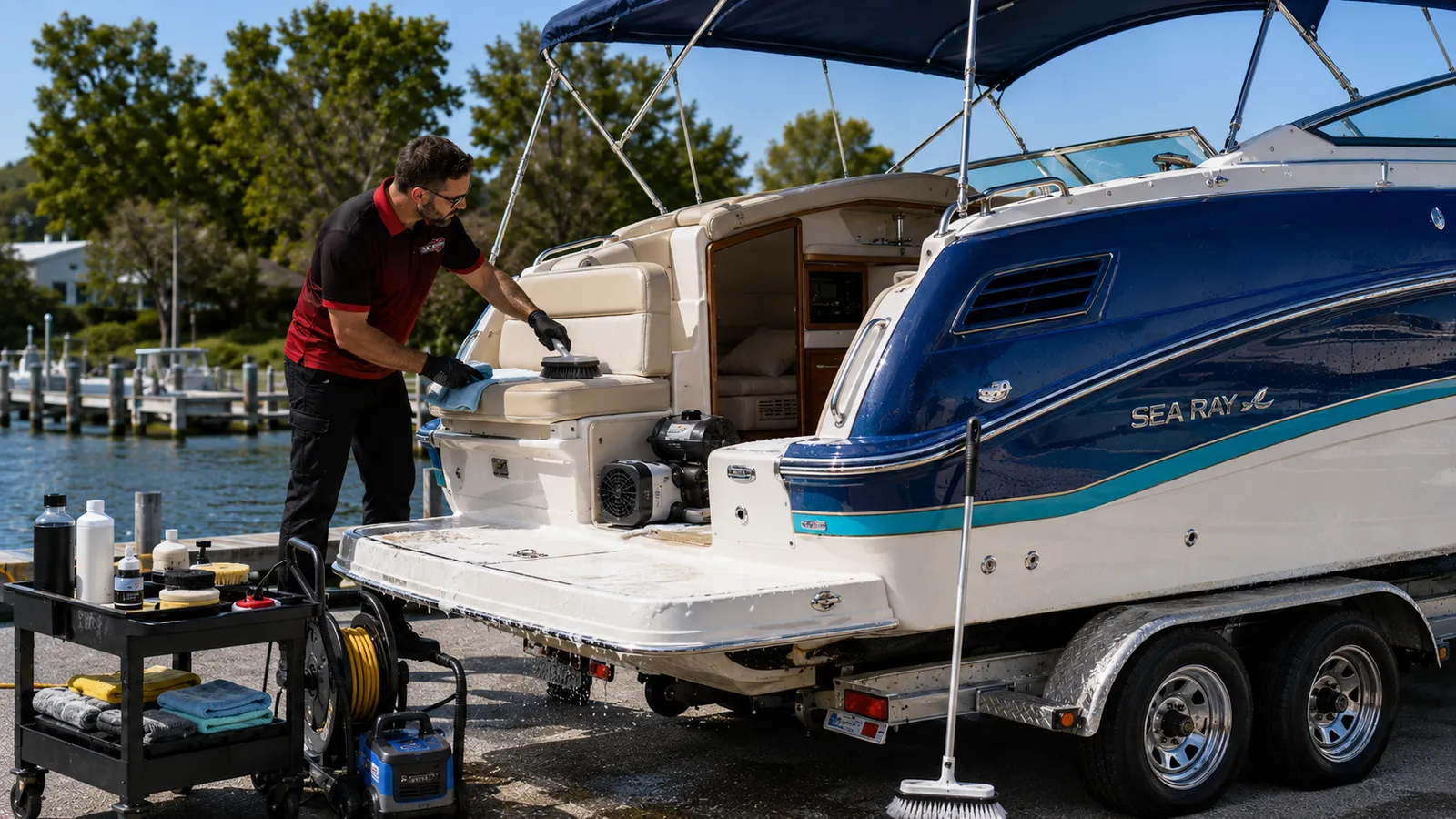
At the marina or on the trailer.
Boats get detailed where they are — in the slip, on the hard, or on a trailer in a driveway. Which of those it is changes what can be reached, so it is worth settling when the appointment is booked rather than on arrival.
What mobile boat detailing actually looks like.
Hull, deck and cabin cleaned with marine-safe products and techniques — built for an environment that attacks gel coat, upholstery and metalwork all at once.
Rinse after every salt outing
Fresh water over the hull, deck and especially the metalwork after saltwater use. This one habit prevents more corrosion damage than anything a detailer can do afterwards.
What actually happens on the day.
The appointment follows the same order every time, because the order is what makes the result last.
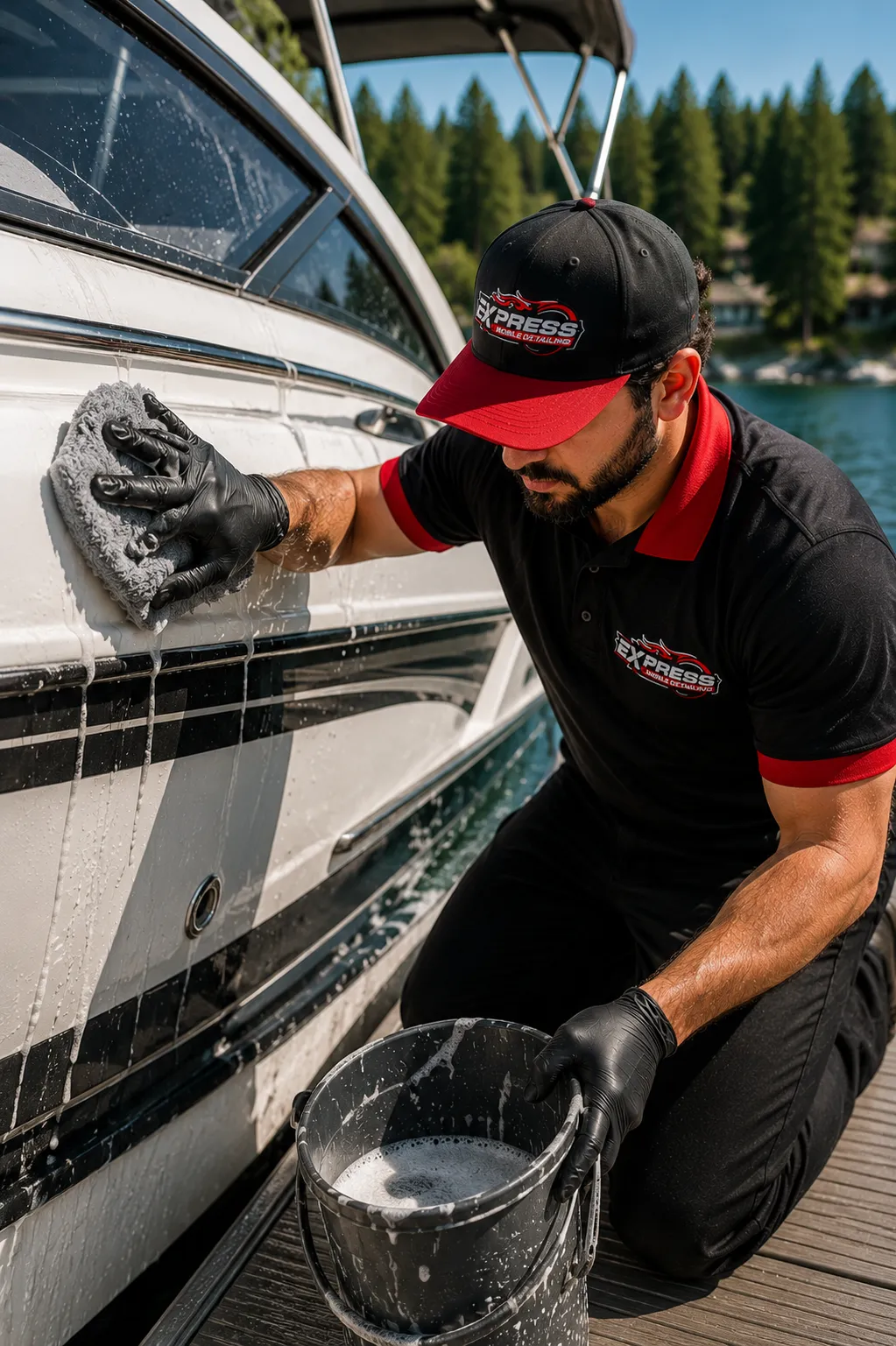
In the slip, on the hard or on a trailer — each gives different access to the hull. This is agreed before the appointment rather than discovered on the day.
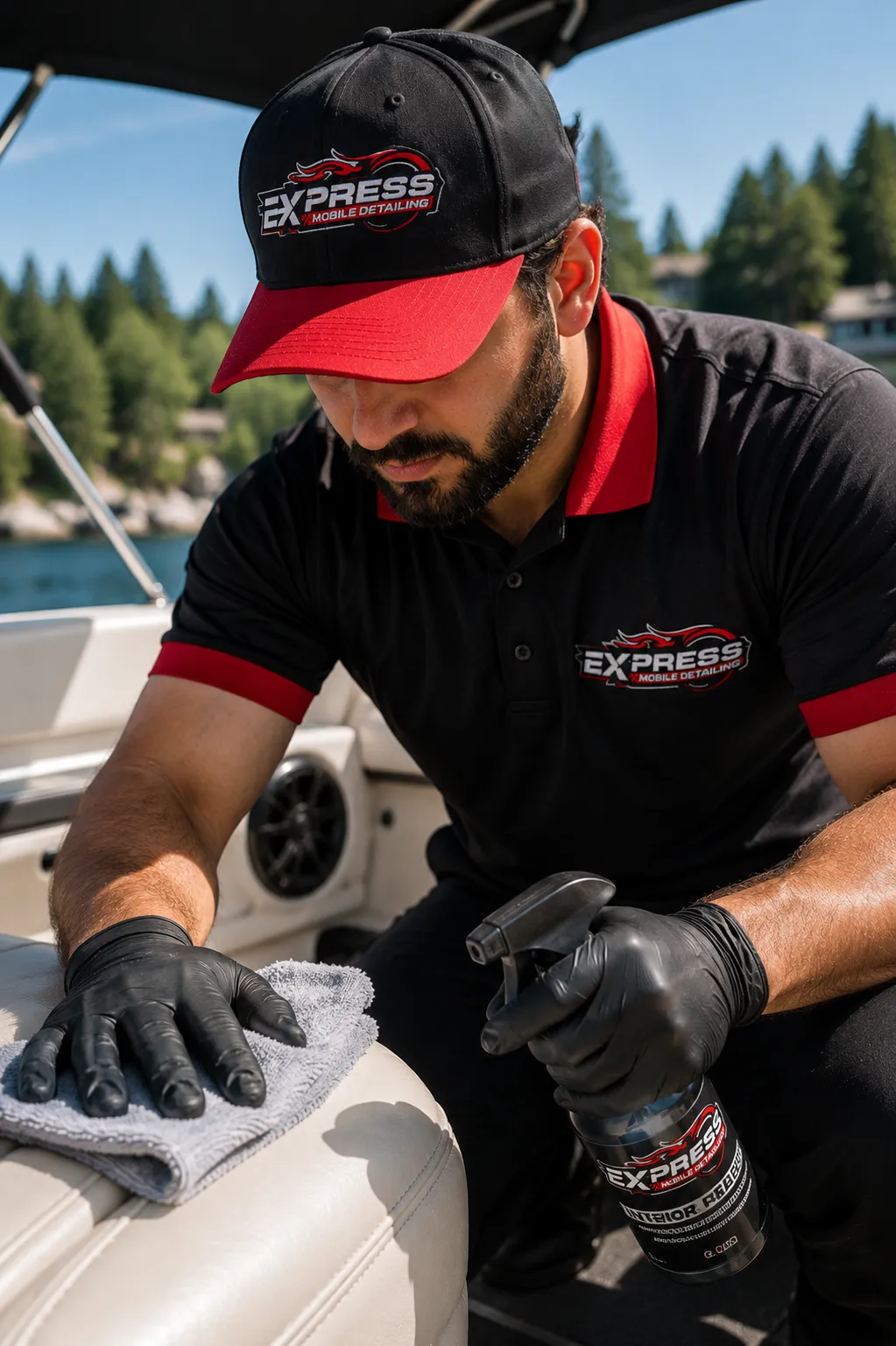
The interior is done before the exterior, so nothing brought out of the cabin lands on a cleaned deck.
Deck and fittings, then down to the hull sides and the waterline last, where the heaviest work is.
- Inspect togetherA walk-through covering hull, deck and cabin before we leave.