
Mobile Car Exterior Detailing in Pickering
Exterior Detailing at your home or office in Pickering, Ontario. We cover Pickering and the rest of Durham Region as part of our regular service area — Ajax and Whitby included.
Why Mobile Car Exterior Detailing in Pickering is different
What this place does to a vehicle, and what that changes about the work.
Highway 401 does most of the damage.
Pickering sits on Highway 401, and that mileage is what shows up on the paint. Sustained highway speed drives grit into the front bumper and the leading edge of the bonnet far harder than town driving does, and it lays a bonded road film across the lower panels that an ordinary wash lifts off the surface while leaving the rest keyed in. Cars here need decontaminating more often than their mileage alone suggests.
Winter salt, and the weeks after it.
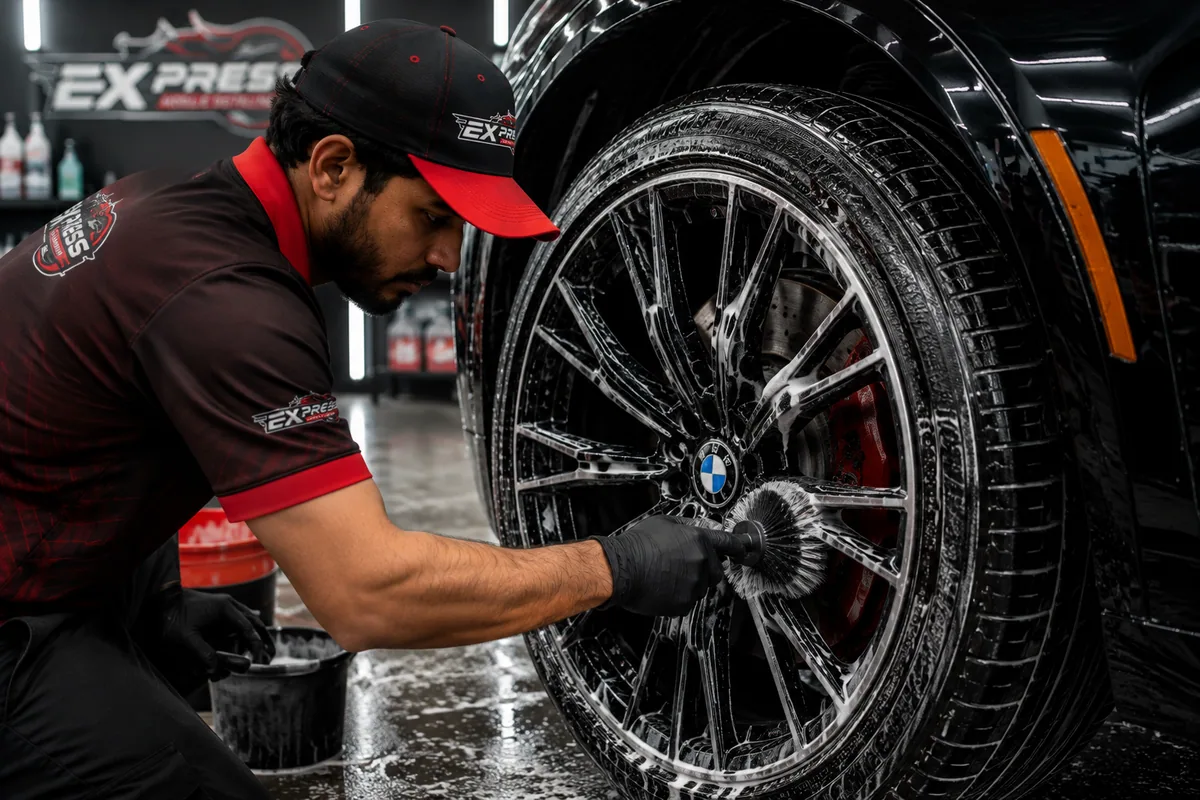
Ontario salts heavily and Durham Region gets a full season of it. Salt does its worst work where nobody inspects — inside the wheel arches, along the lower valance, in the seams under the doors — and it keeps working through the first warm weeks after the roads are clear, which is when most people assume the risk has passed. On a vehicle doing motorway miles all winter that is a corrosion timeline rather than a cosmetic one.

Outdoor parking, most of the year.
Housing in Pickering usually means a driveway rather than a garage, so paint takes UV through the summer and freeze-thaw through the winter without a break. That is what dulls a clear coat over three or four years, and it is why protection applied here earns its keep faster than it would on a garaged car.

Salt goes down before the snow, and keeps coming round.
Sodium chloride is applied to selected main roads here when snow is merely forecast within the next two days, to stop snow and ice bonding to the pavement in the first place. Each salt route then takes something like four to six hours to complete, and clean-up carries on for up to two days after the event has ended. The practical effect on a vehicle is not one dose in one storm — it is repeated light treatment spread across several days, which is what builds a film rather than a splash.
Ploughing waits for a real snowfall.
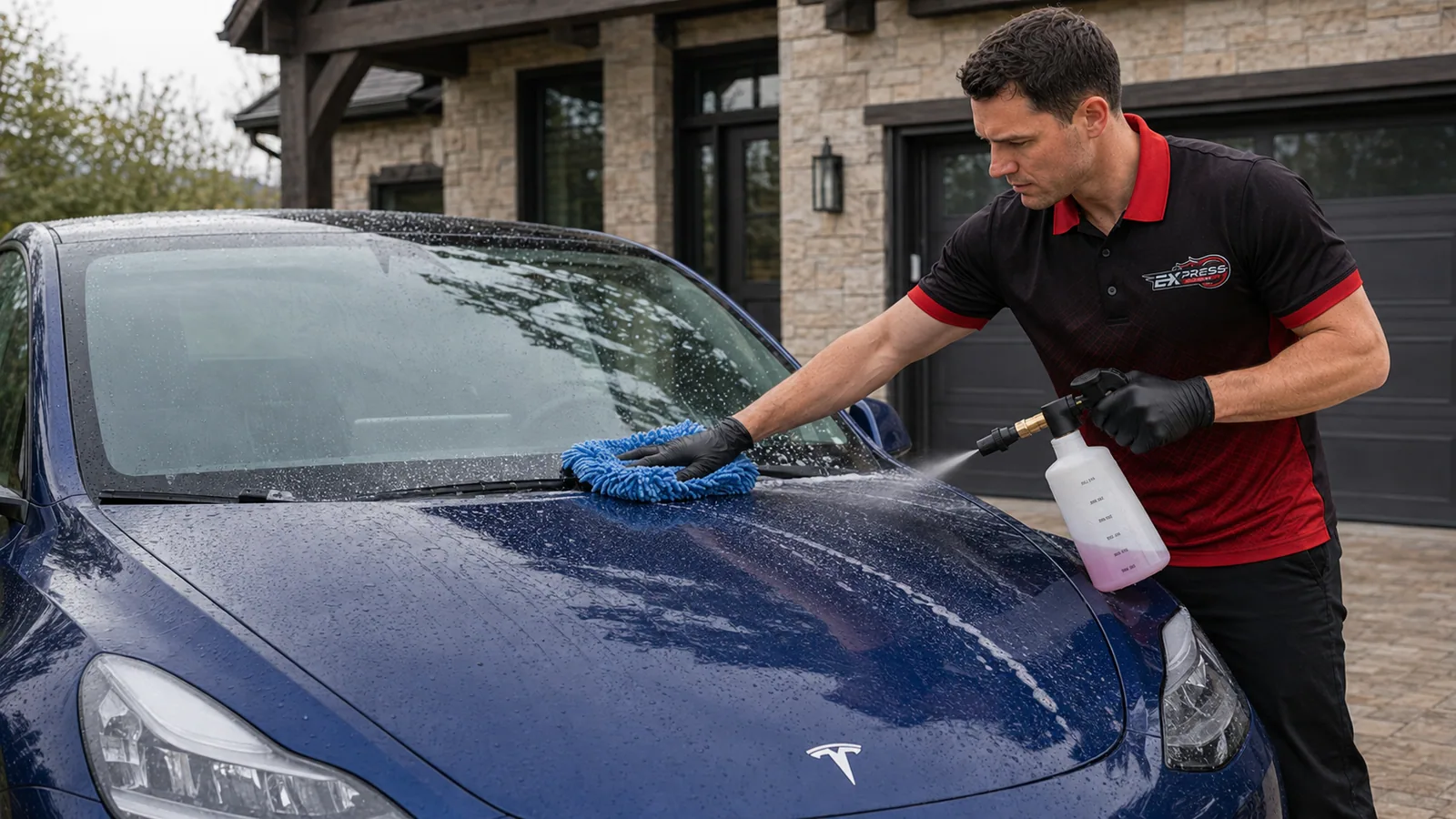
The decision to plough is generally taken at around seventy-five millimetres of snow or more, so a run of smaller falls can be salted without ever being ploughed. That combination — treated, not cleared, repeatedly — is what leaves the lower panels and the arches under a layer that keeps being dampened and re-dried. That layer bonds. It is a decontamination stage rather than something a wash lifts, and we will tell you honestly which one the car in front of us actually needs.
Four moments worth booking for.
The work is the same either way — these are the times it makes the most difference in Pickering.
The roads have just been cleared
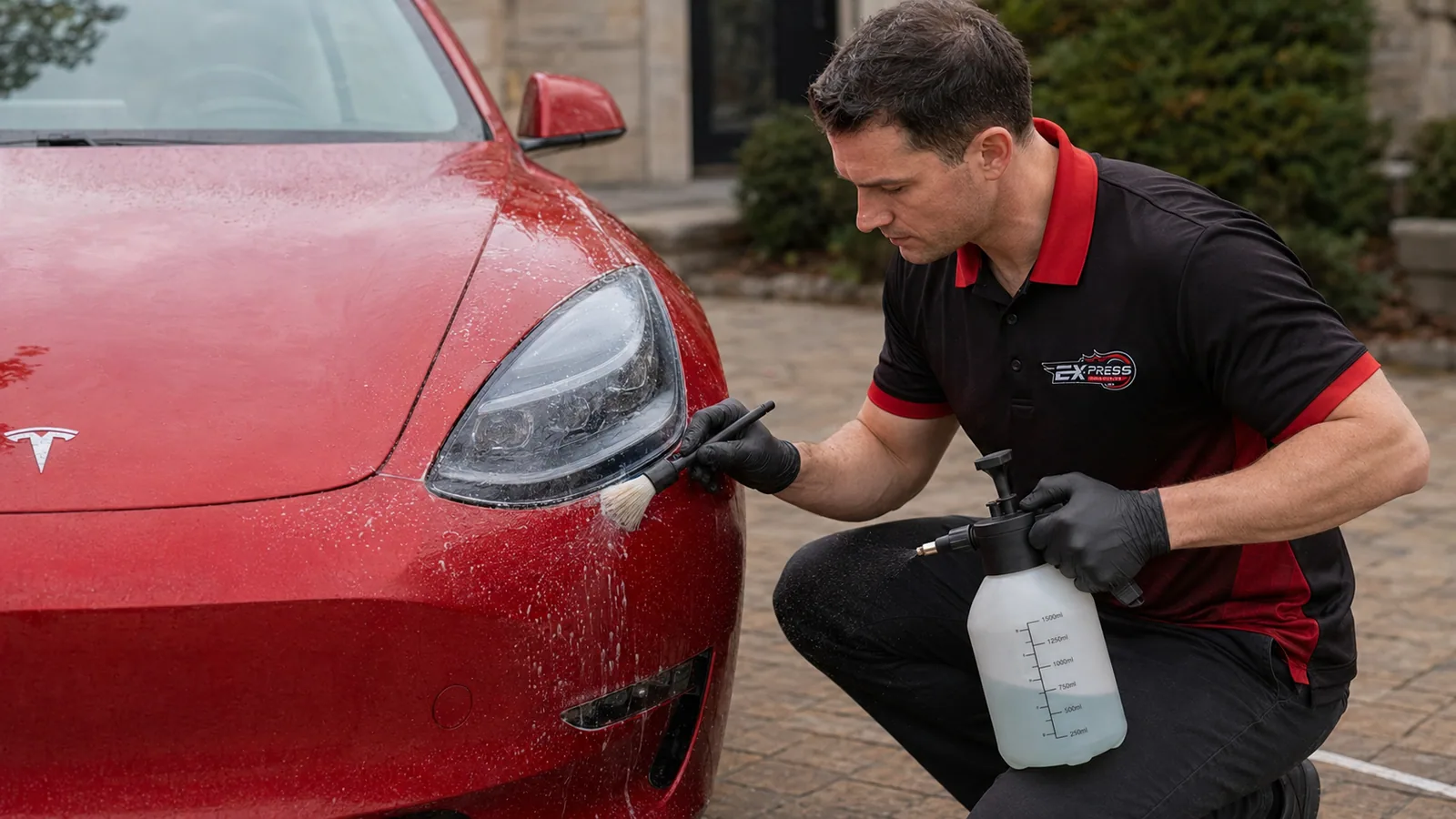
The best appointment of the year in Durham Region, and the one most people miss. The winter's residue is still in the arches and the door seams, working long after the roads look clean. On a Highway 401 vehicle there is simply more of it.
Book the spring appointment →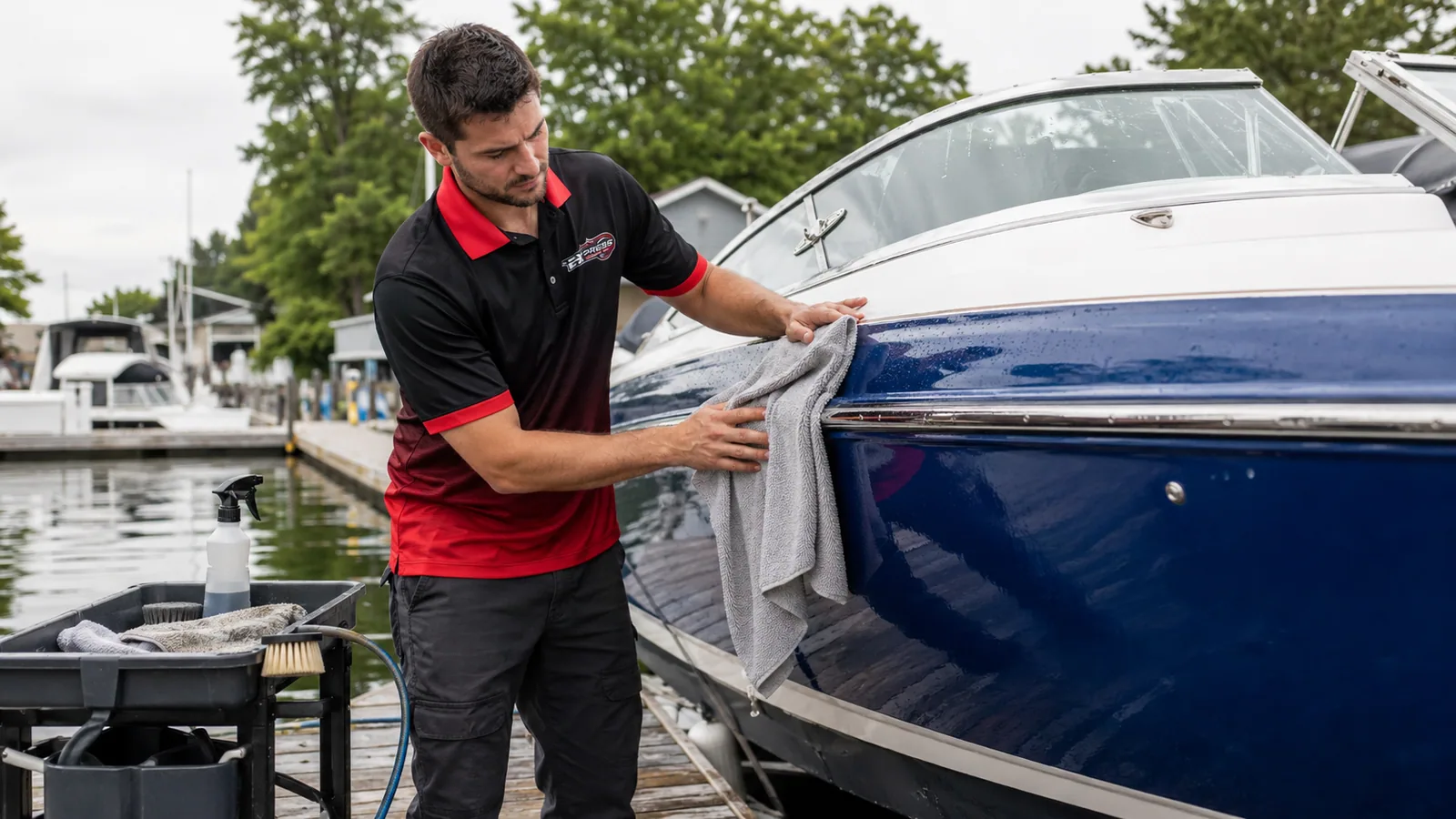
You would rather not lose the afternoon
Detached and semi-detached housing with a driveway is the norm in Pickering, which is the easiest case there is — the technician works around the vehicle exactly where it already sits and you carry on with your day indoors. The exceptions worth flagging are the newer condo and townhouse developments, where parking is assigned or visitor-only.
Book at your address →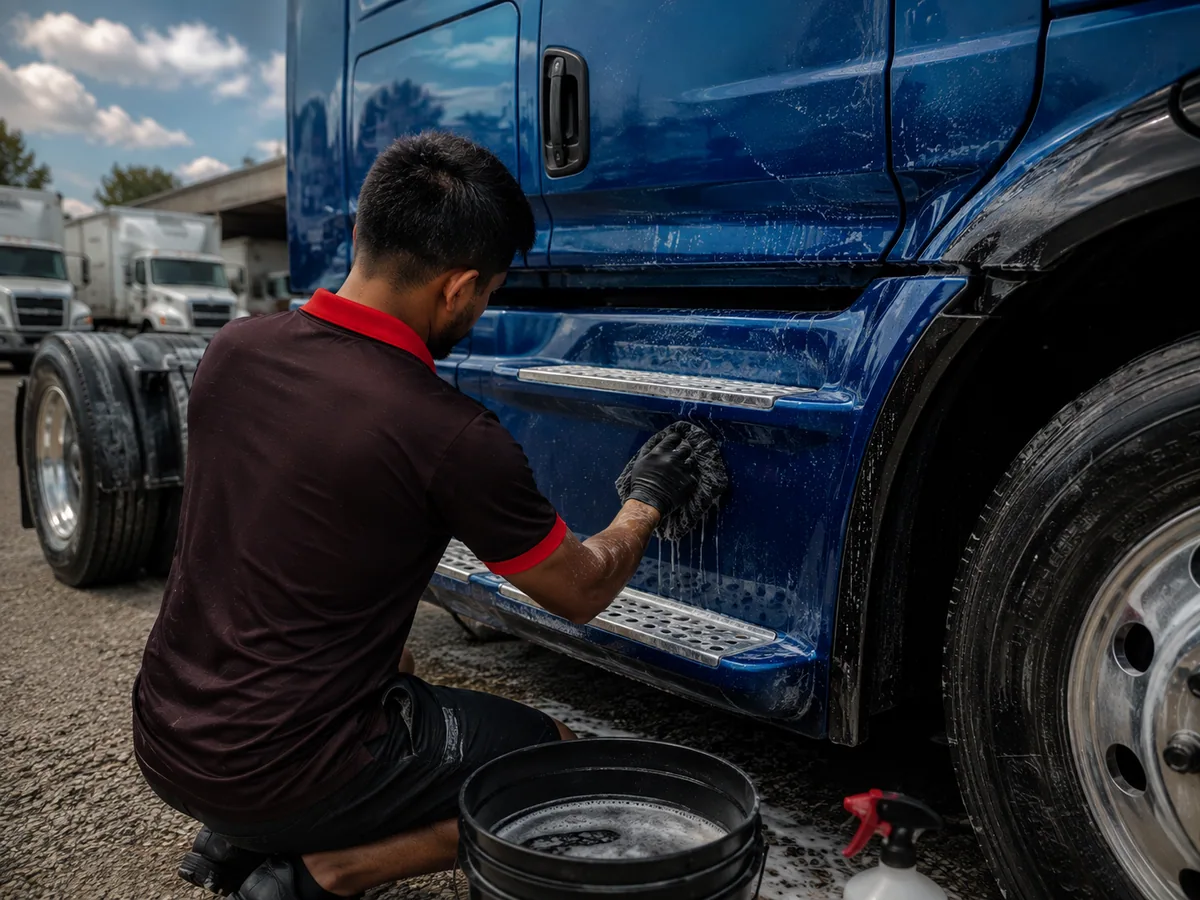
It is outside twelve months a year
Housing in Pickering usually means a driveway rather than a garage, so paint takes UV all summer and freeze-thaw all winter. That is what flattens a clear coat in a few years. Which is why decontamination and protection twice a year is the rhythm that actually holds here.
Book protection →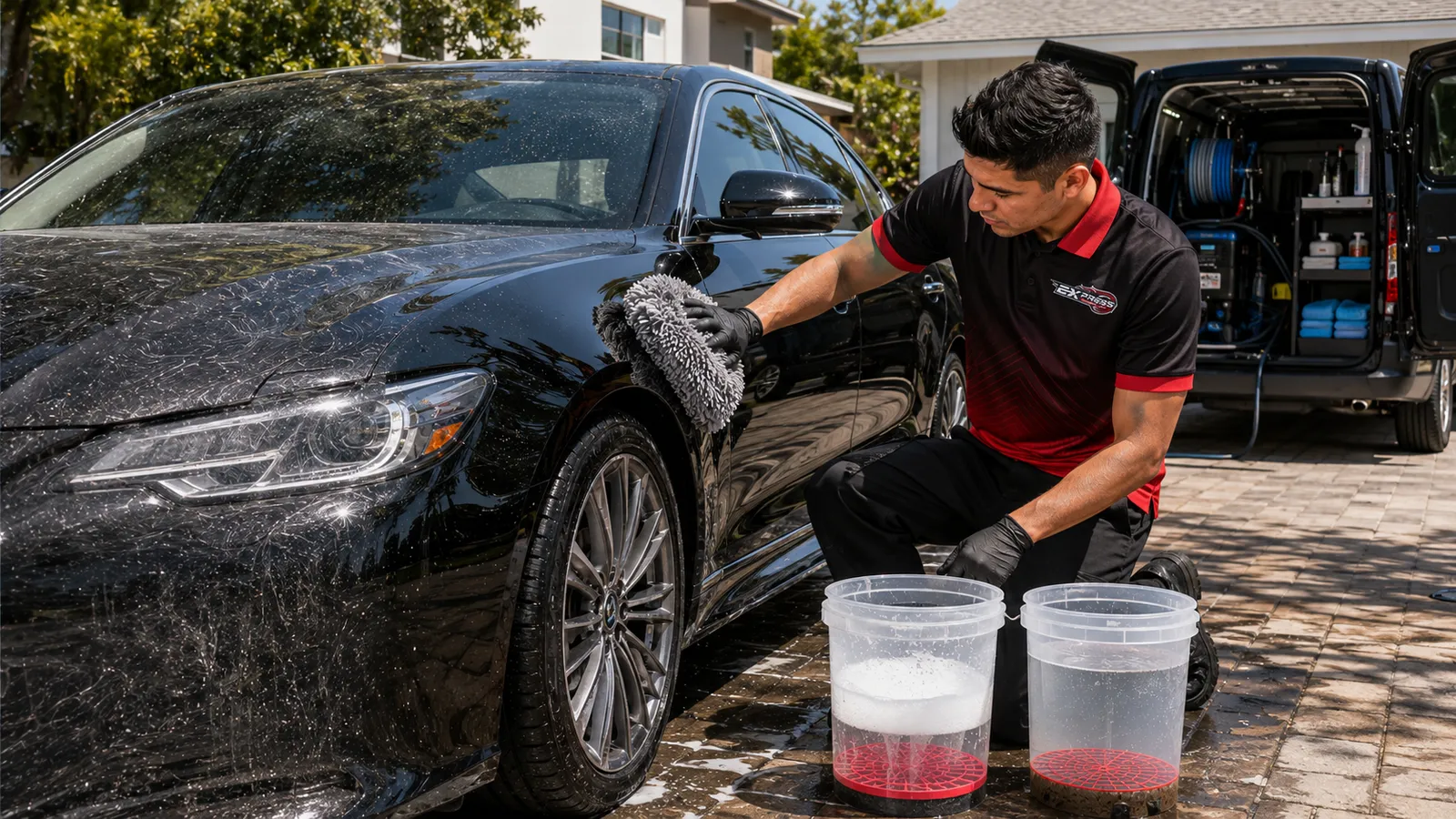
You just bought it and don't know its history
A used car almost never arrives decontaminated, and there is usually bonded film across the lower panels that feels like paint until clay comes off it black. Doing this first tells you what the paint in front of you actually is — before you spend anything on protecting or correcting something you have not properly seen.
Start with a proper wash →What Mobile Car Exterior Detailing in Pickering looks like up close
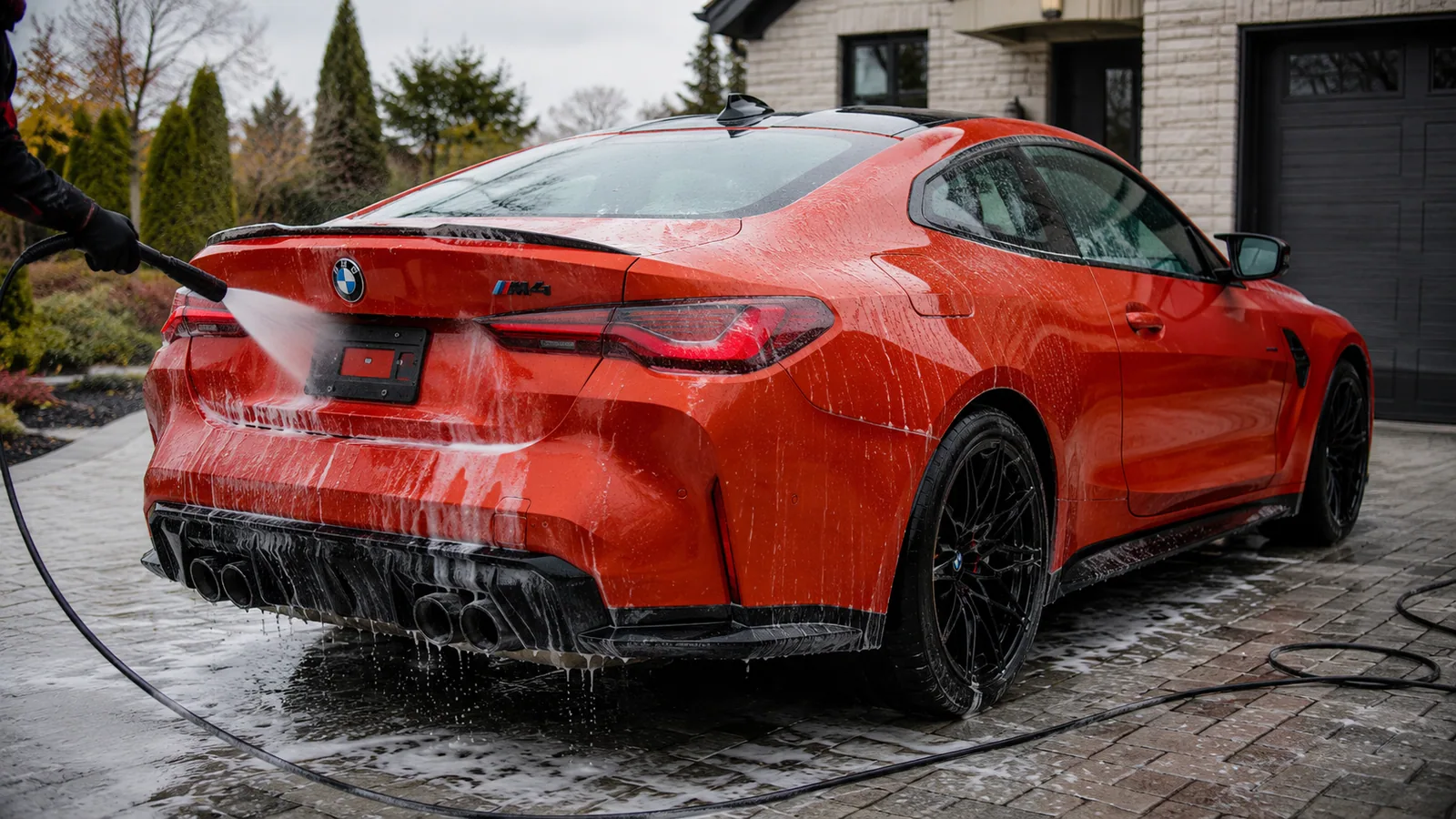
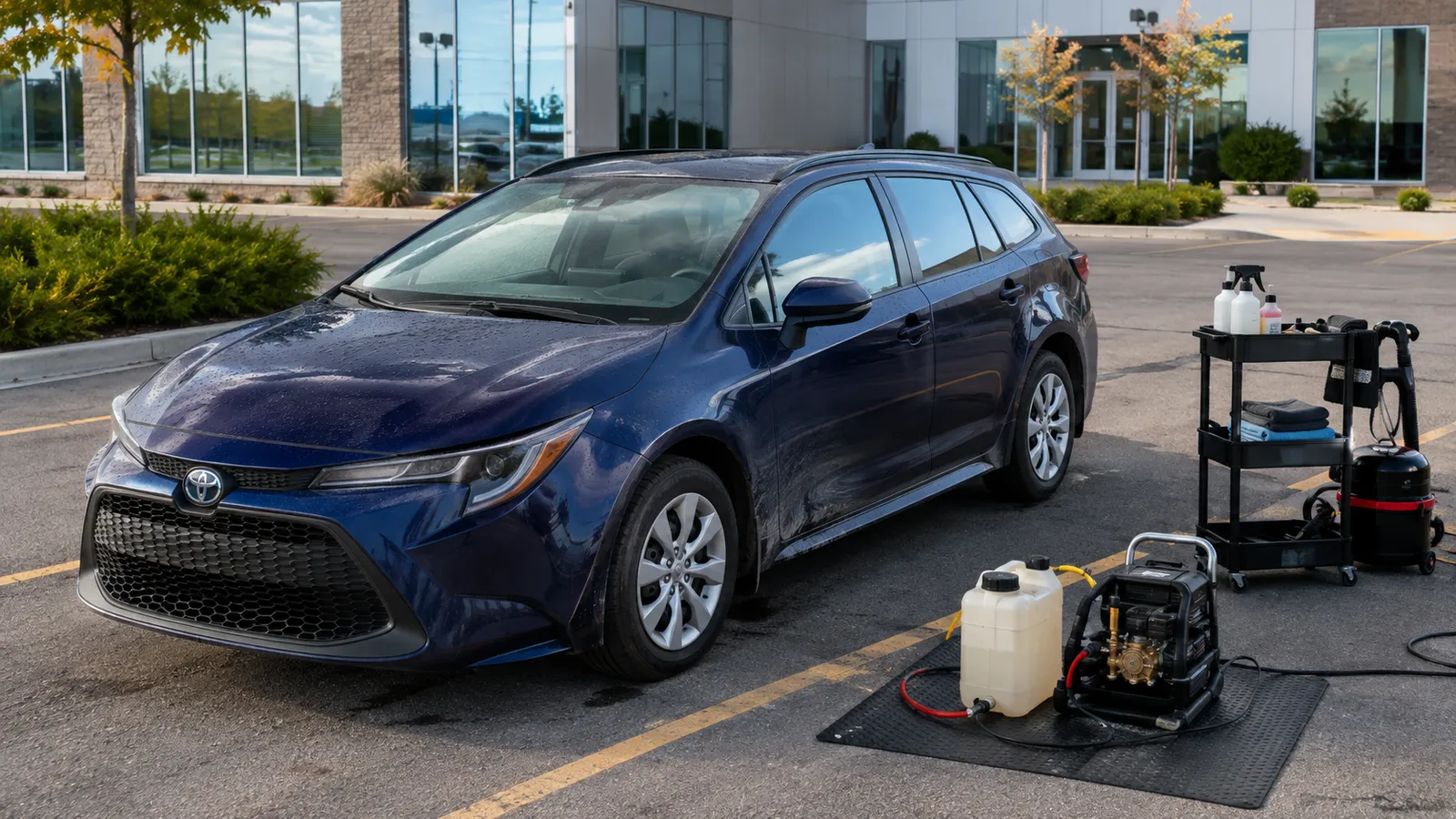
Detached and semi-detached housing with a driveway is the norm here, which is the easiest case — the technician works around the vehicle where it already sits. The exceptions worth flagging are the newer condo and townhouse developments, where parking is assigned or visitor-only. One point specific to exterior work here: salt is laid pre-emptively on main roads and each route takes hours to come round, so the film is usually more bonded than a single storm would explain.
Stay out of the tunnel
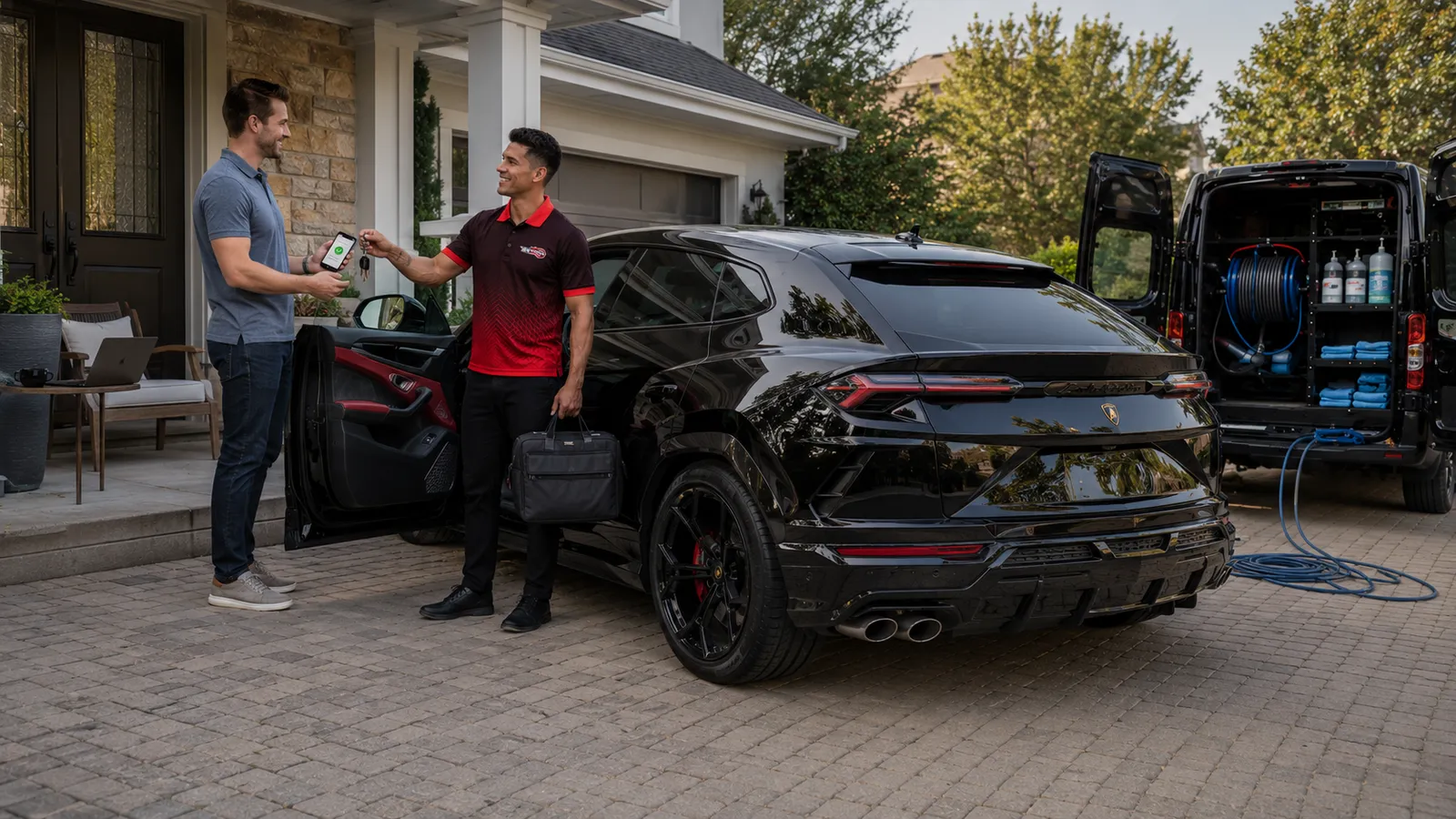
This matters more than anything else on this list. One trip through an automatic wash with spinning brushes undoes months of careful work and starts the swirl marks that eventually need machine correction to remove.

Highway 401 is why the tunnel is not enough.
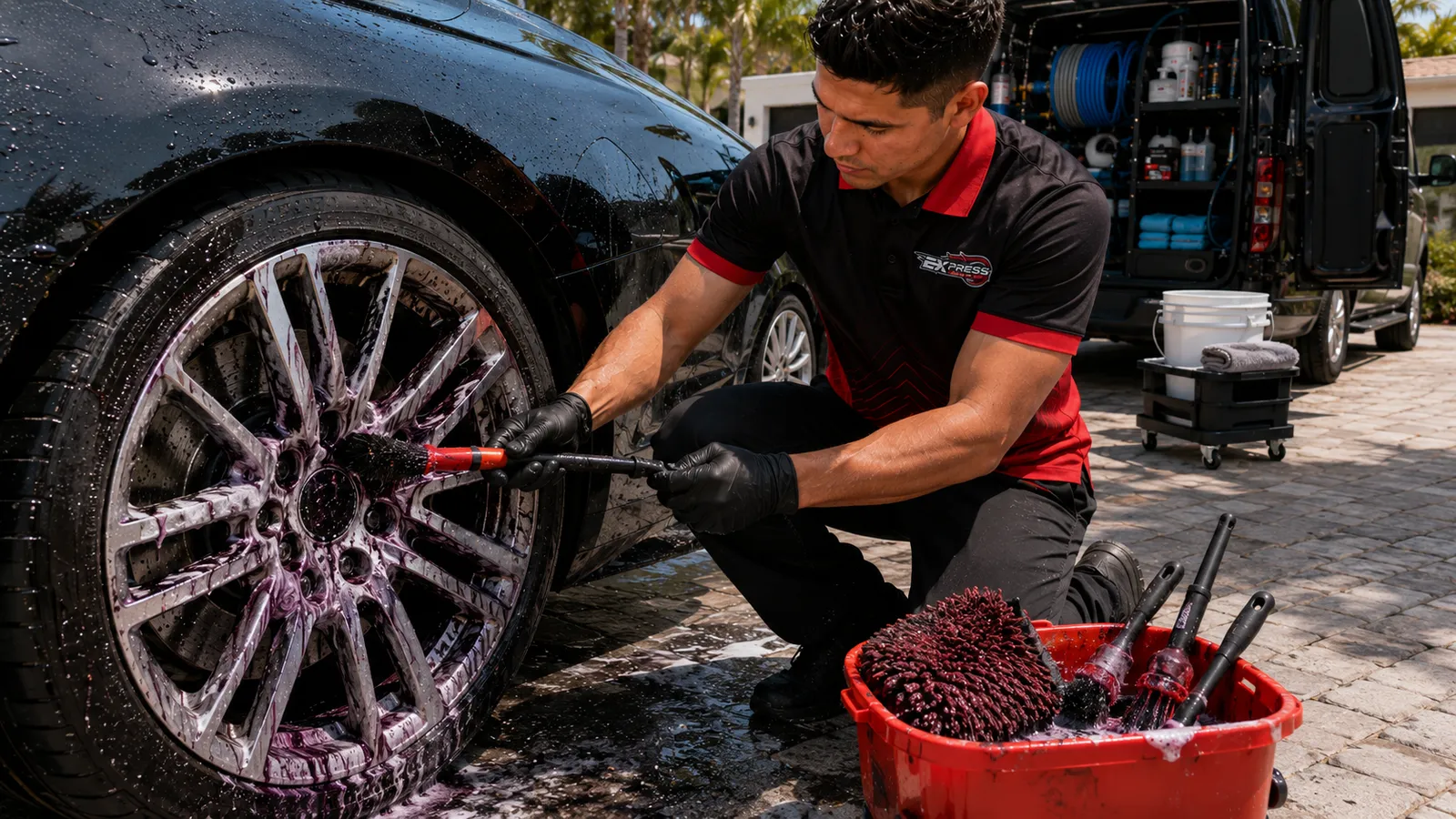
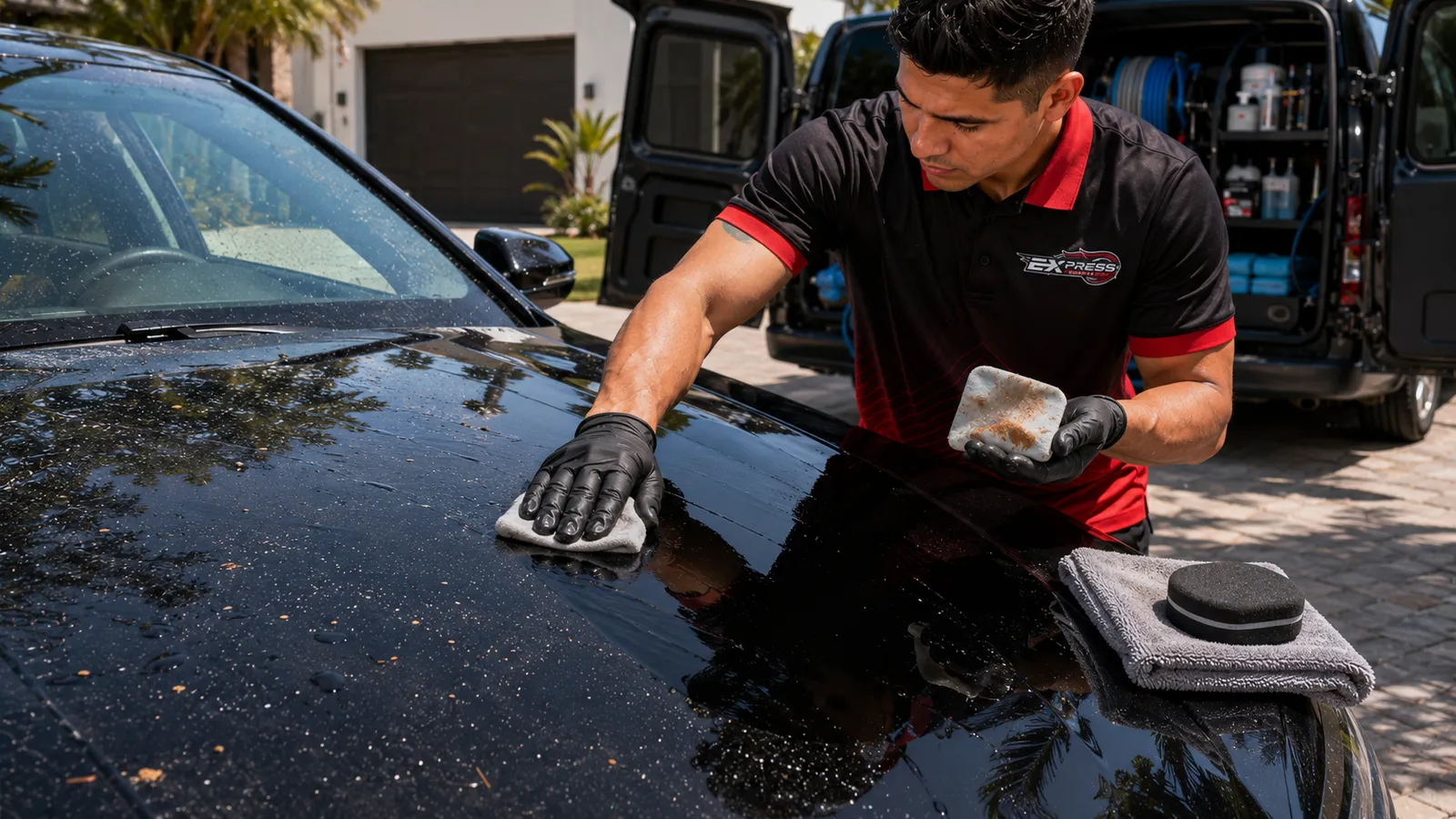
An automatic wash removes loose dirt and it is genuinely fast. What it cannot do is separate the grit it just collected from the next car's paint, and it cannot touch anything chemically bonded — which on a Highway 401 vehicle is most of what is actually on it. Sustained highway speed lays road film across the lower panels continuously, and that needs a pre-rinse, two buckets and clay to remove.
Book in Pickering →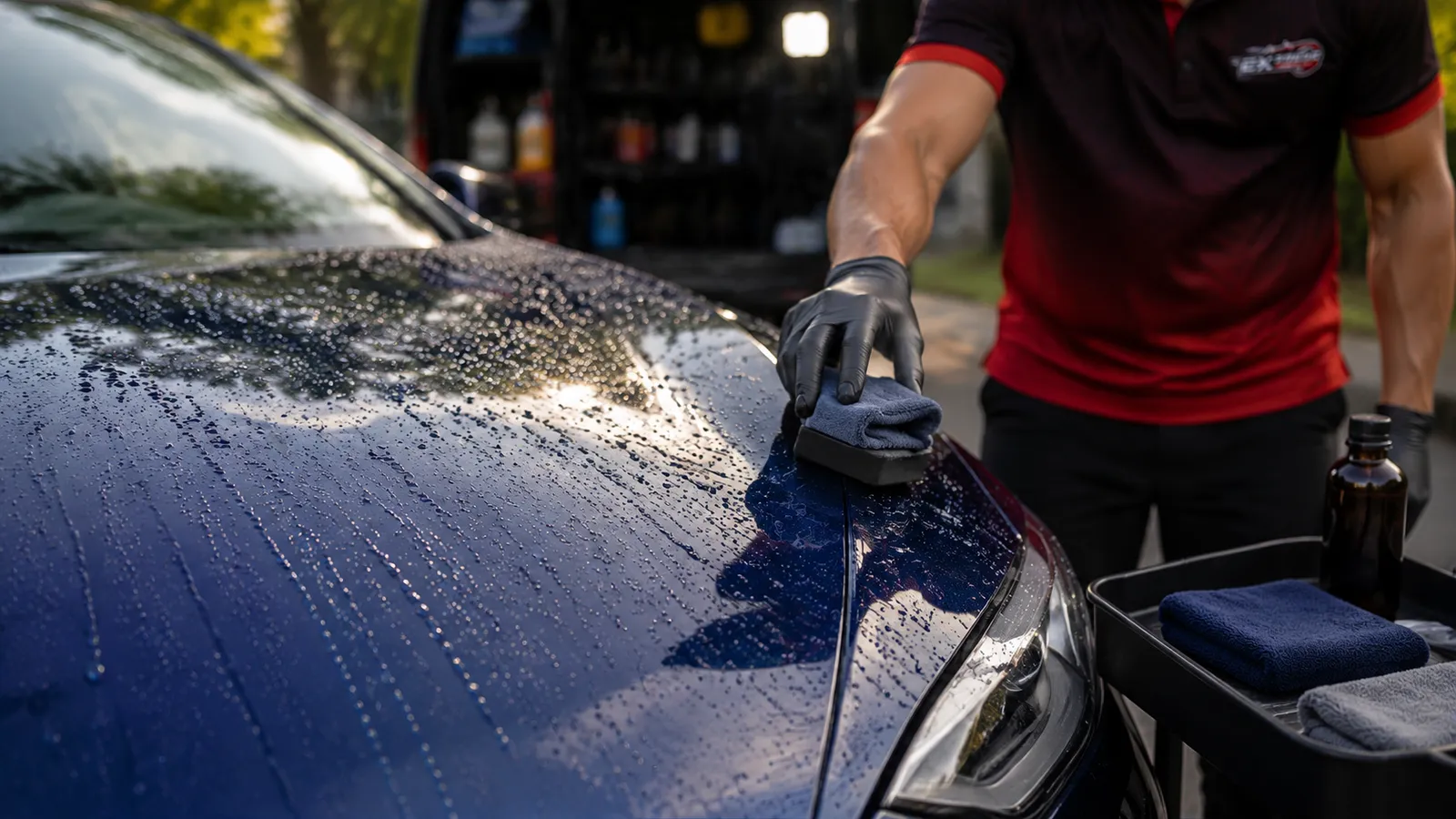
The vehicle never leaves your driveway
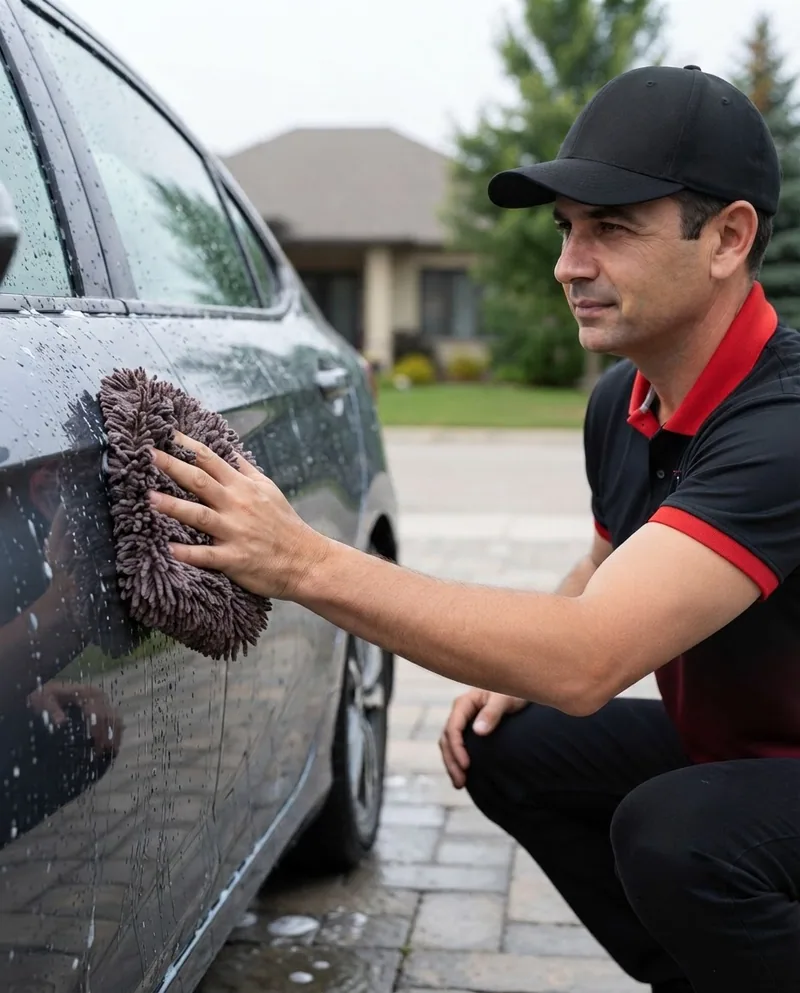
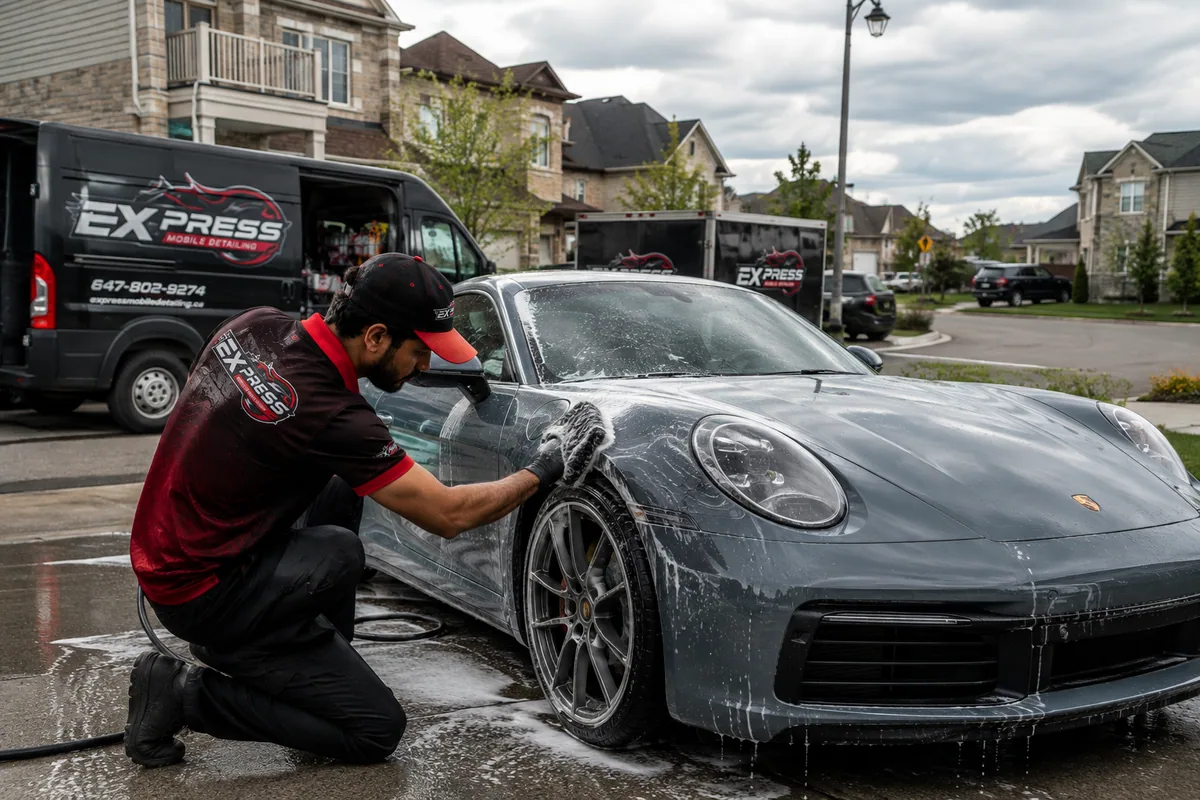
No drop-off, no waiting room, no arranging a lift home and back. The technician works around the vehicle exactly where it already sits, and walks the finished result with you before leaving — so anything missed is put right on the spot rather than on a second visit.
How a Pickering appointment actually works.
The practical detail — how far we travel, what the day needs from you, and when in the year it is worth booking in Durham Region.

Where we travel from, and to
Pickering is inside the regular Durham Region round rather than a special journey, and Ajax and Whitby are covered on the same runs. That mix of detached housing and short distances is why Pickering appointments tend to run to time — there is rarely a long leg between one address and the next.
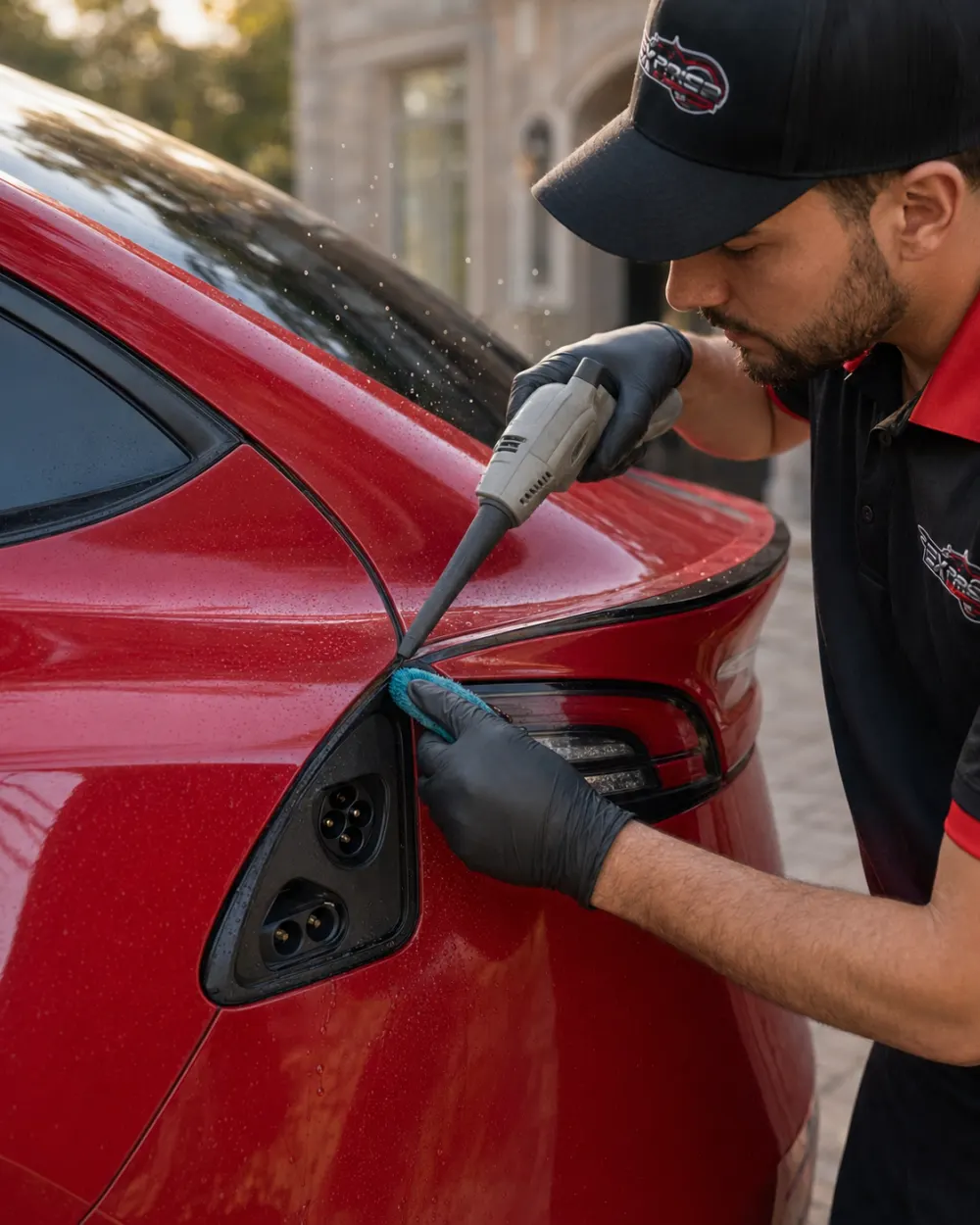
What the vehicle needs on the day
Somewhere the technician can walk fully around it, which a Pickering driveway almost always allows. You do not need to be home for the whole appointment, only to hand over access.
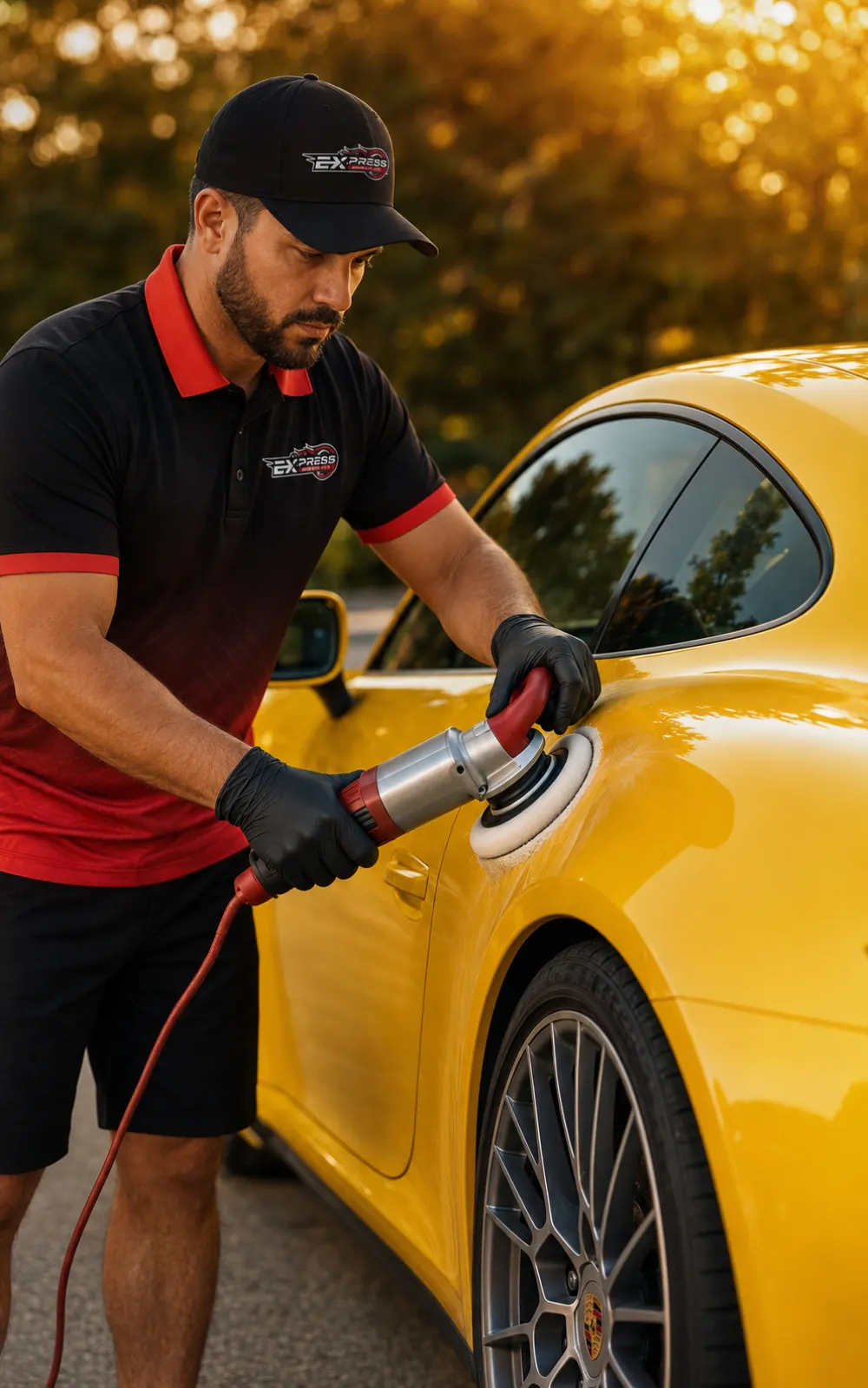
When it is worth booking here
Twice a year is the rhythm that actually holds: once when the roads are cleared and the winter's residue is still in the seams, and once in autumn so the protection is on before the salt is. On a Highway 401 vehicle the spring one matters most, because there is simply more on it.
Exterior Detailing as it actually runs.
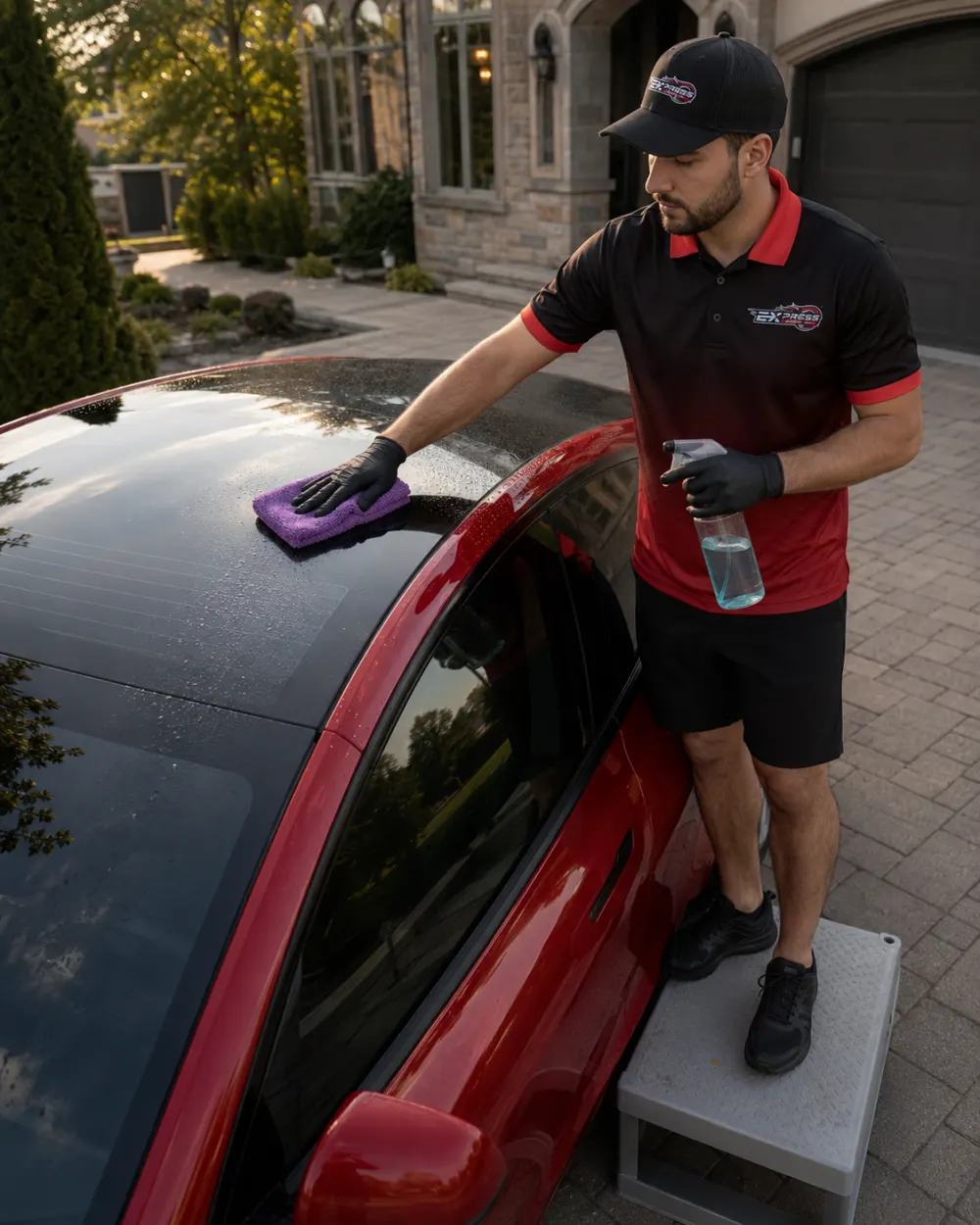
Where we work in Pickering.
Detached and semi-detached housing with a driveway is the norm here, which is the easiest case — the technician works around the vehicle where it already sits. The exceptions worth flagging are the newer condo and townhouse developments, where parking is assigned or visitor-only. One point specific to exterior work here: salt is laid pre-emptively on main roads and each route takes hours to come round, so the film is usually more bonded than a single storm would explain.
Pickering, on the day.
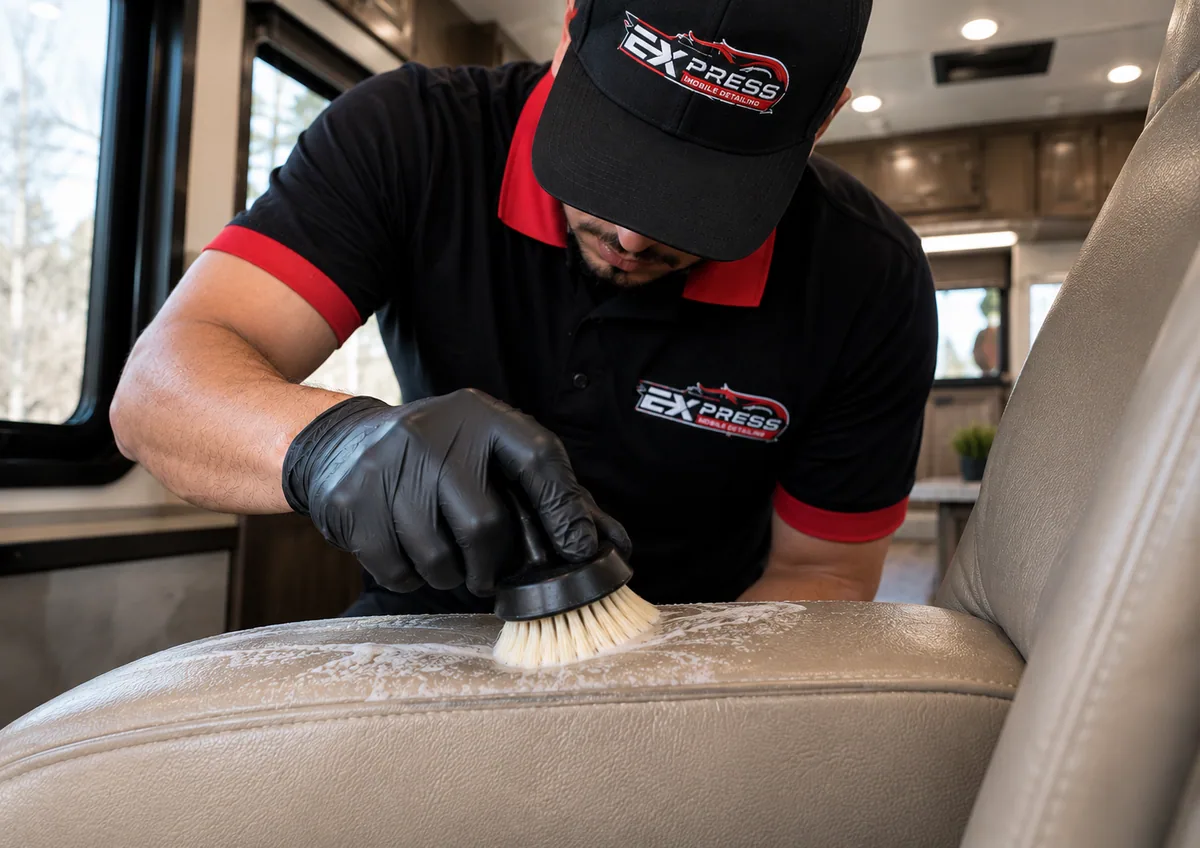
Recent work from our vans across Durham Region — exterior detailing and everything that travels with it.