Mobile detailing in St. Thomas
Every service below is carried out at your address in St. Thomas — home, office or yard — with the vehicle staying exactly where it already sits. St. Thomas sits on Highway 401, and that mileage is what shows up on the paint. Sustained highway speed drives grit into the front bumper and the leading edge of the bonnet far harder than town driving does, and it lays a bonded road film across the lower panels that an ordinary wash lifts off the surface while leaving the rest keyed in. Cars here need decontaminating more often than their mileage alone suggests.
Every service, at your address in St. Thomas.
Ten services, each with its own page. Nothing on this page repeats what those pages already explain — it tells you what is different about having them done in St. Thomas.
Interior Detailing
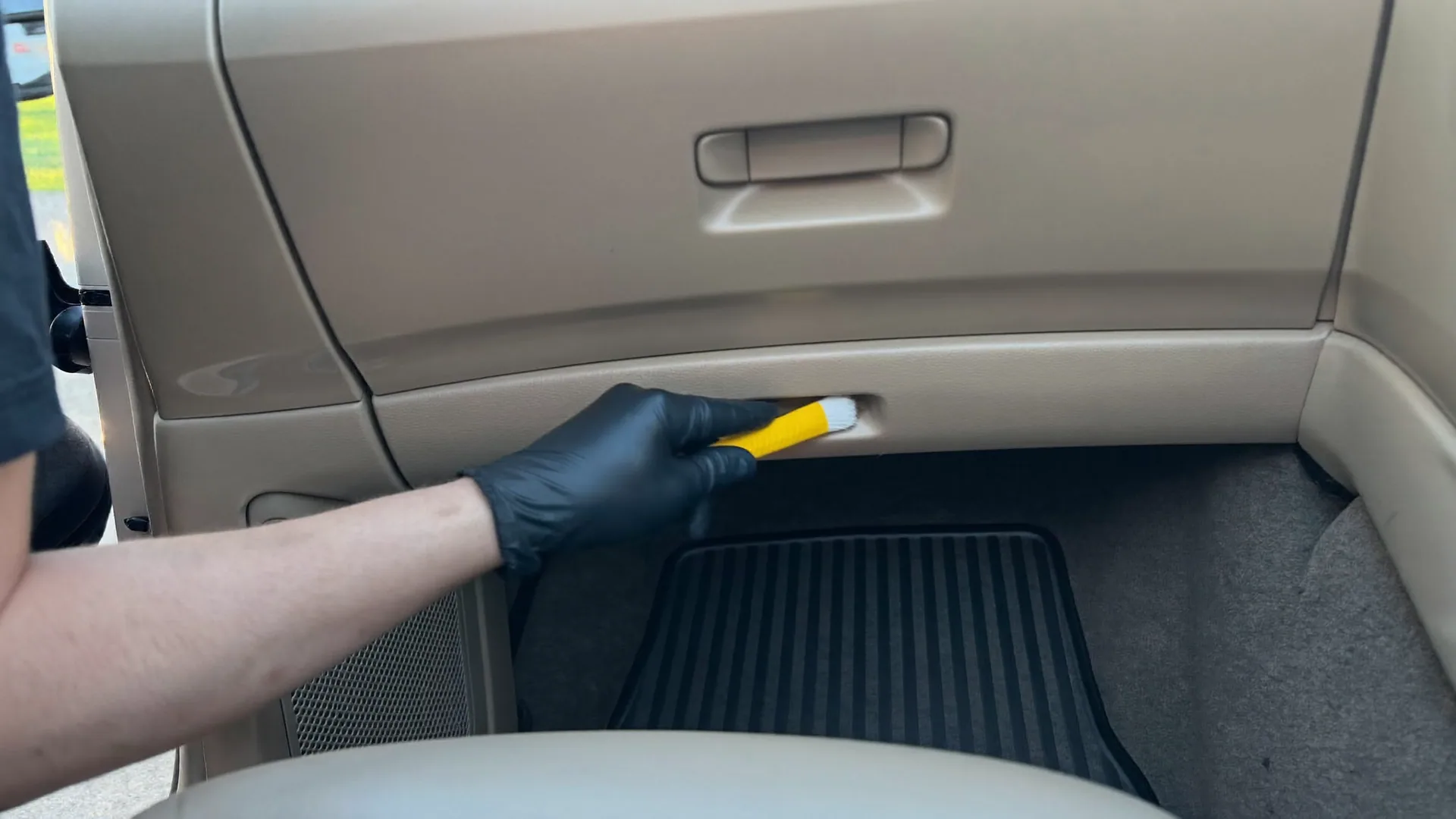
Seats, carpets, vents and glass, extracted and finished at your address.
See interior detailing →Exterior Detailing
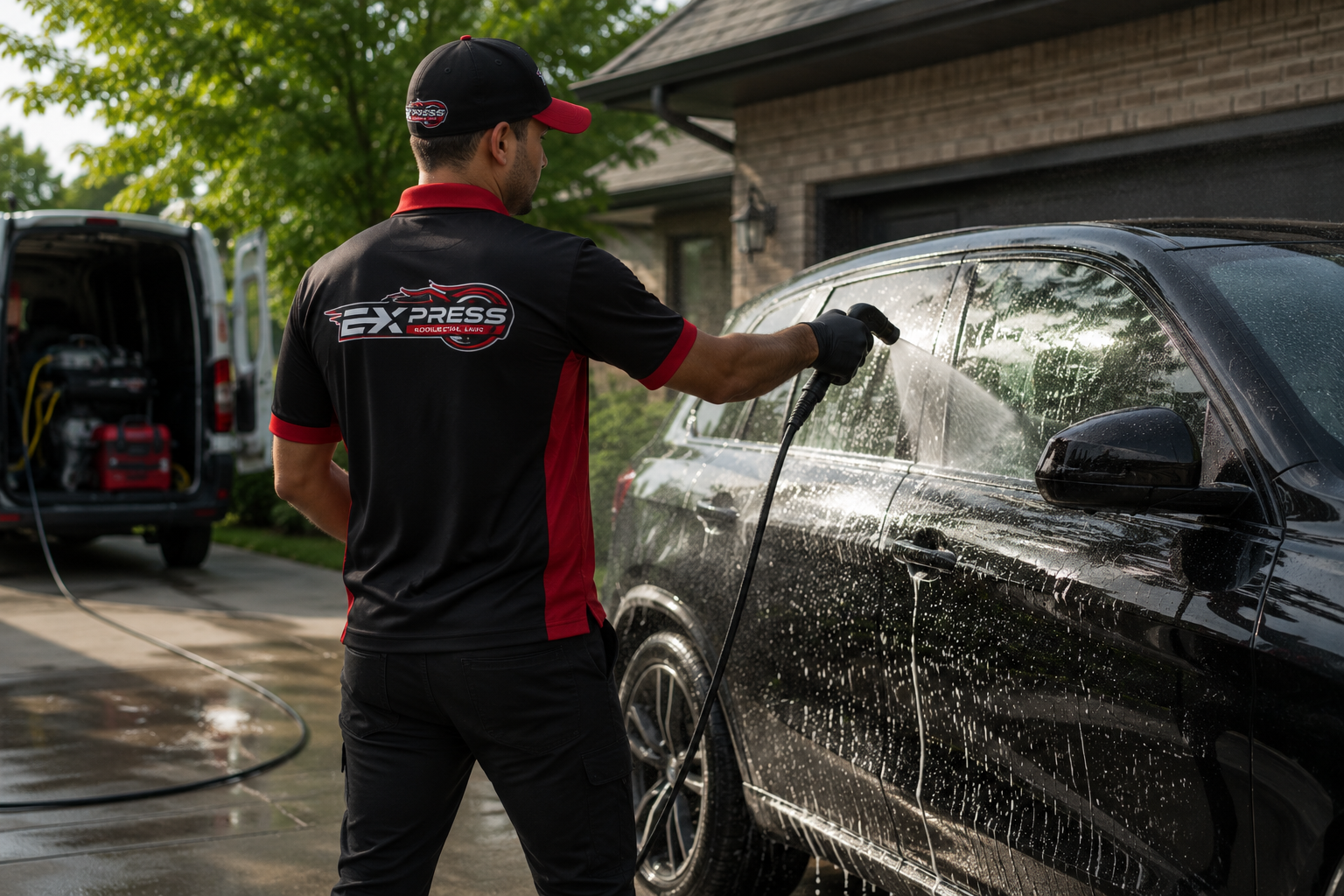
Two-bucket contact wash, decontamination, wheels and a protective sealant.
See exterior detailing →Full Detailing
Interior and exterior in one appointment, in the order that makes the result last.
See full detailing →Ceramic Coating
A coating applied and levelled by hand, after the paint has been prepared for it.
See ceramic coating →Paint Correction
Machine polishing that removes swirls and light scratches rather than filling them.
See paint correction →Paint Protection Film
Film fitted to the panels that take the stone chips first.
See paint protection film →RV Detailing
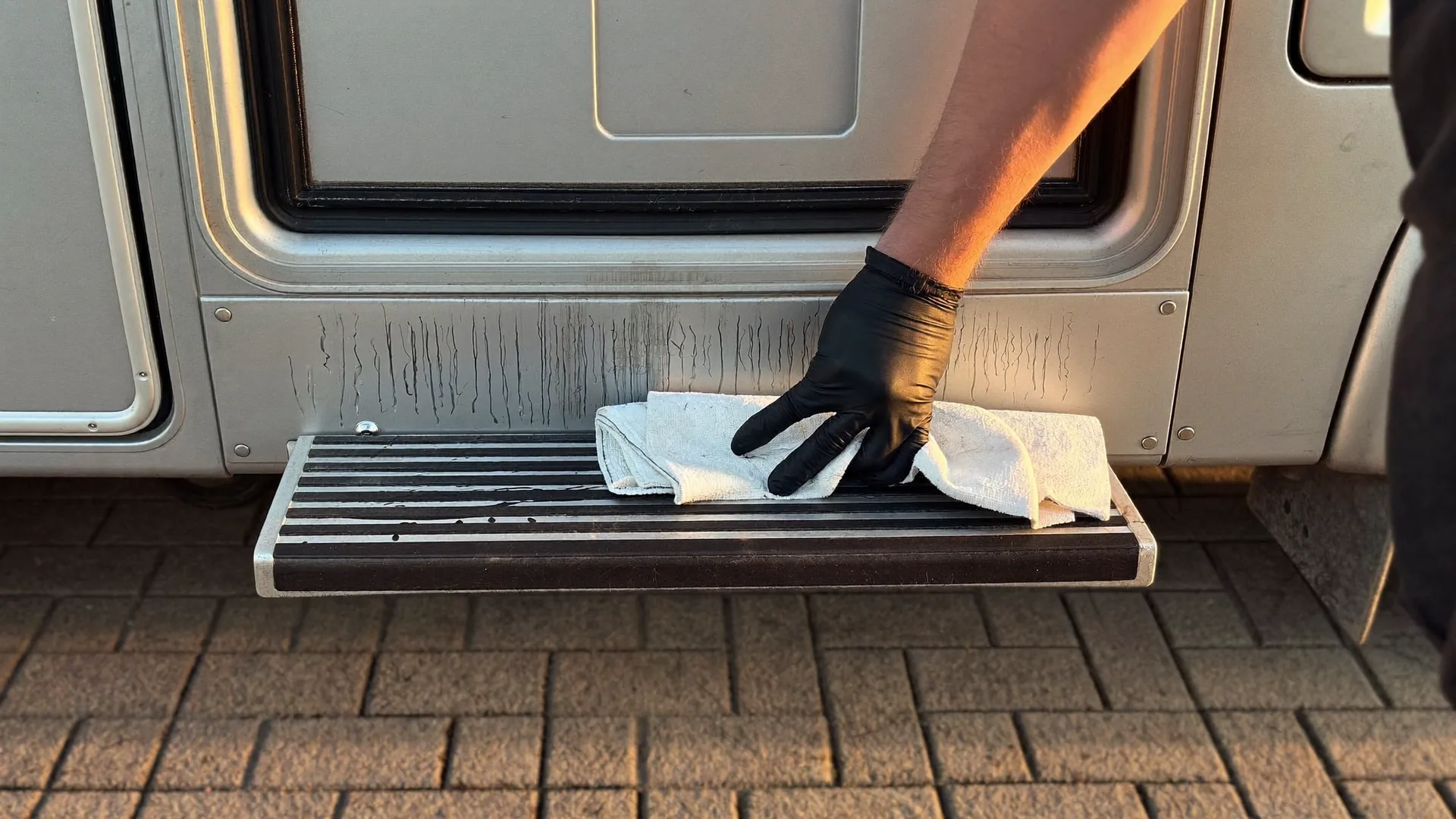
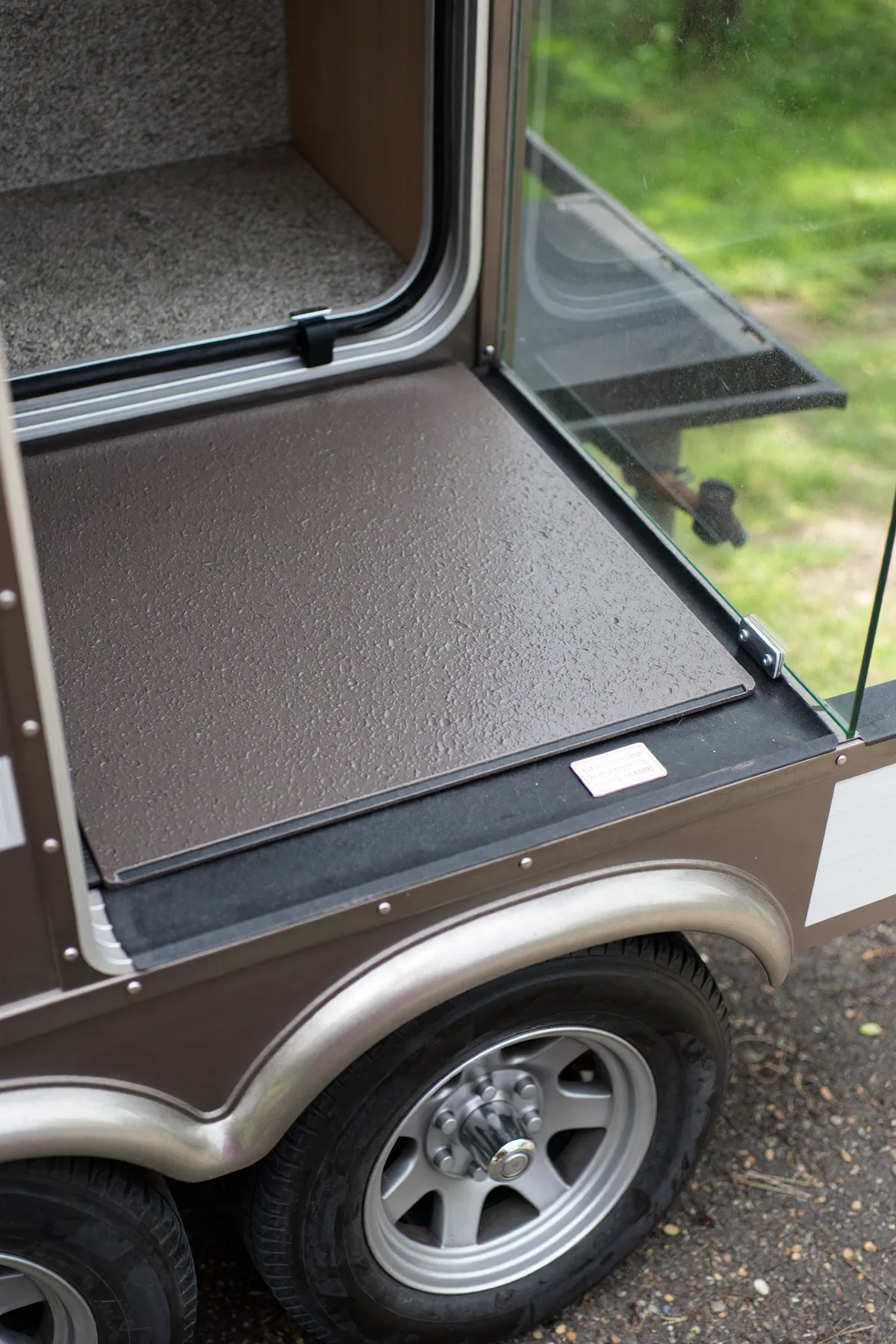
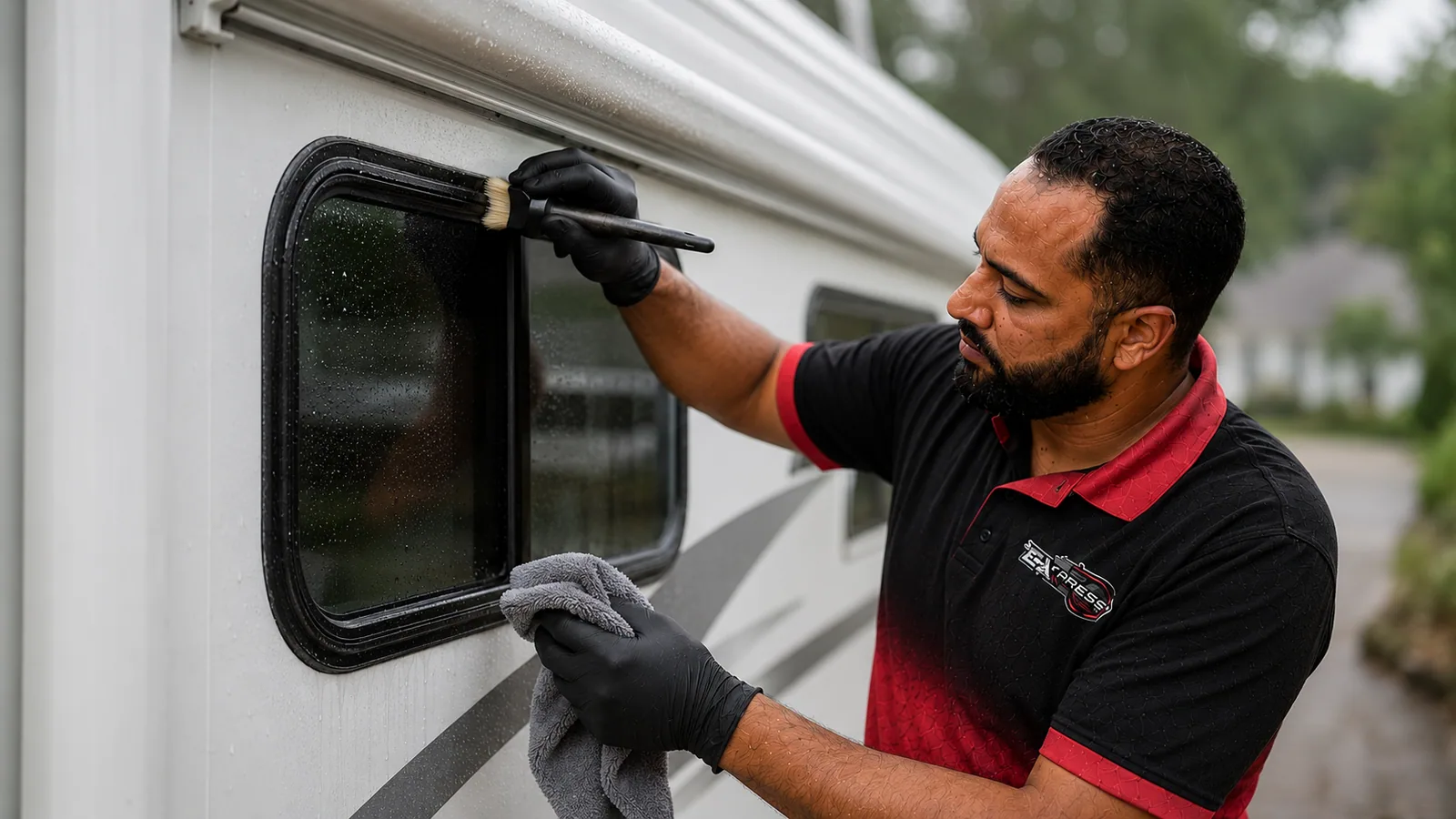
Roof, sidewalls and the living space, quoted by the foot.
See rv detailing →Boat Detailing
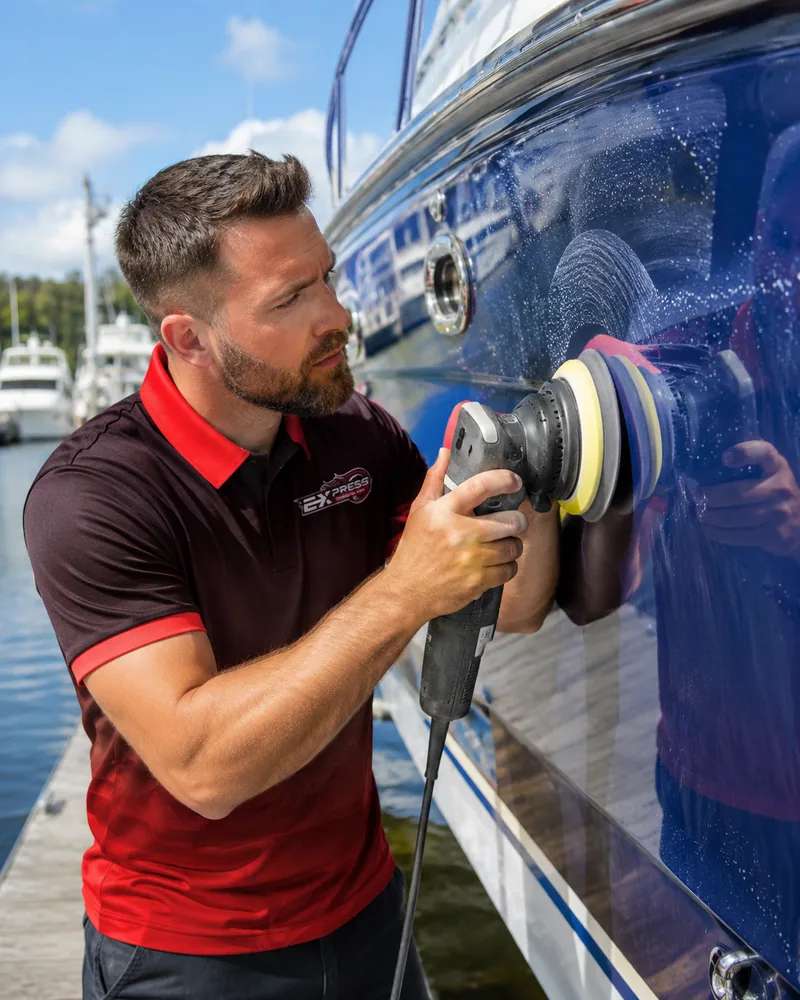
Gel coat, vinyl and the cabin, on the trailer or at the slip.
See boat detailing →Truck Detailing
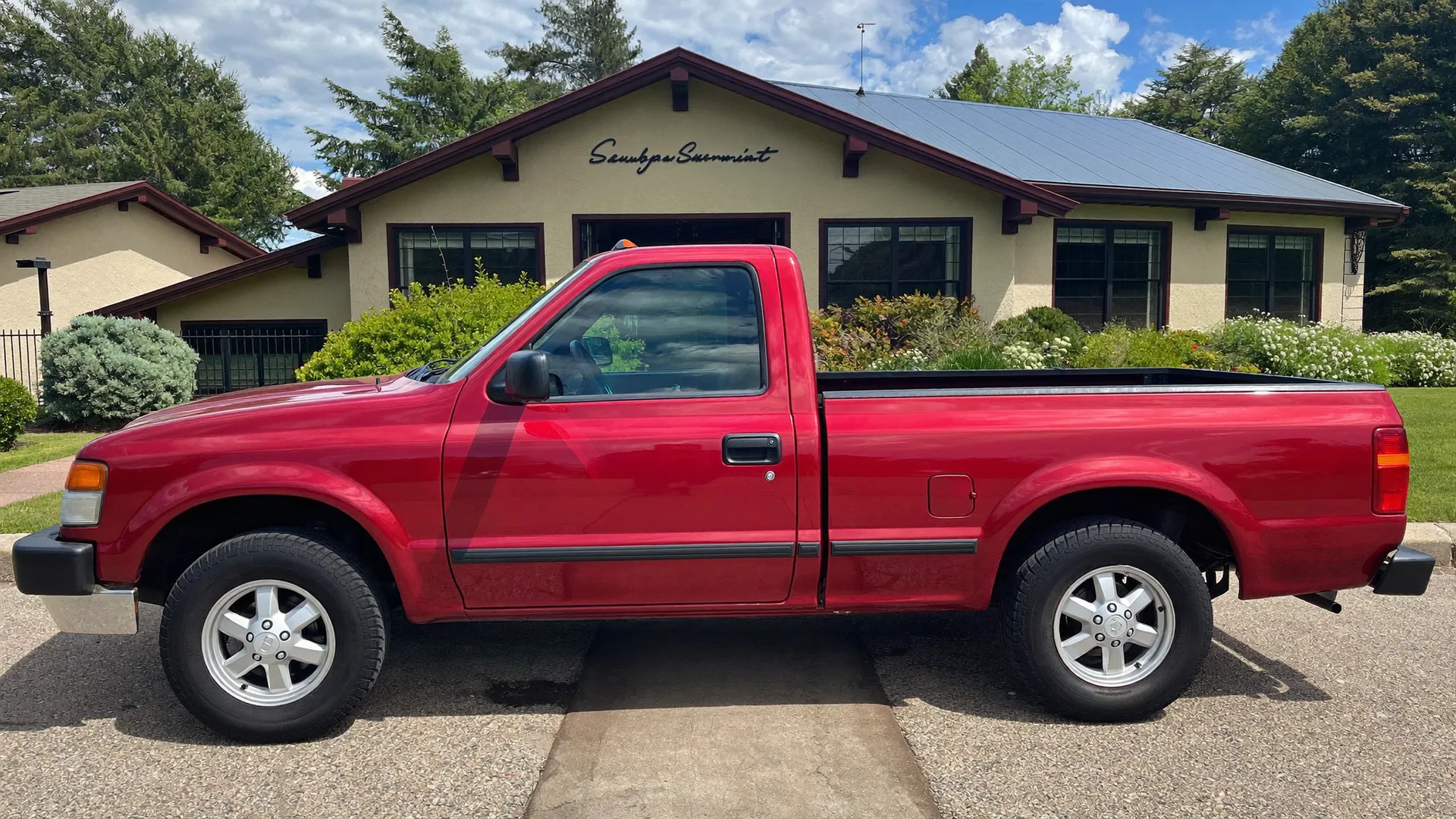
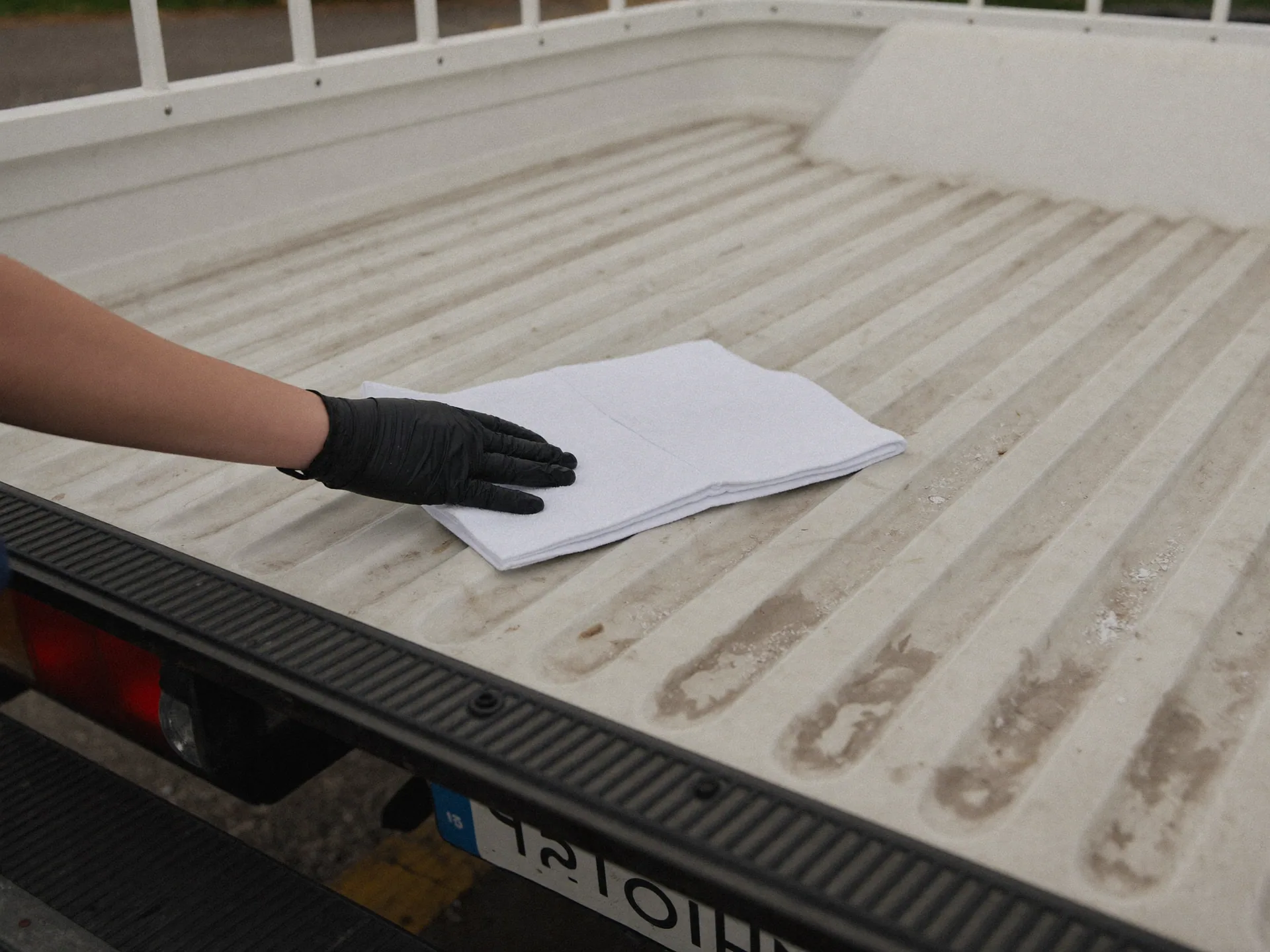
Cab, sleeper and exterior, sized by cab type rather than by vehicle class.
See truck detailing →Fleet Detailing
Scheduled work across a yard, priced per vehicle and per visit.
See fleet detailing →Each service, written for St. Thomas
Nine pages, one per service, covering what is different about having it done here — access, conditions and the local rules that decide how an appointment is planned.
Which service fits a vehicle here.
The services are the same everywhere. What changes between places is which one is overdue first, and why.
Highway miles, so decontamination before protection
Highway 401 exposure means bonded road film and brake dust rather than loose dirt, and protection applied over that traps it. The order that works here is exterior detailing first, then ceramic coating or paint protection film once the paint is actually clean.
Damp air, so interiors need extraction and drying time
St. Thomas sits in the Lake Erie hinterland, and damp air is why a cabin here can smell before it looks dirty. Interior detailing uses extraction and the drying time that goes with it, which is worth allowing for when you pick a slot.
Vehicles that are not cars
The same visit logic applies to RVs, boats and trucks in St. Thomas — they are quoted differently (by the foot, or by cab type) but they are still done where the vehicle stands. On October 15, 2024 St. Thomas Council approved the Lower Driveway Boulevard Parking Program for a period of two years, a pilot programme described on the City's Overnight Parking page. For more than one vehicle at a time, that is fleet detailing.


What St. Thomas does to a vehicle.
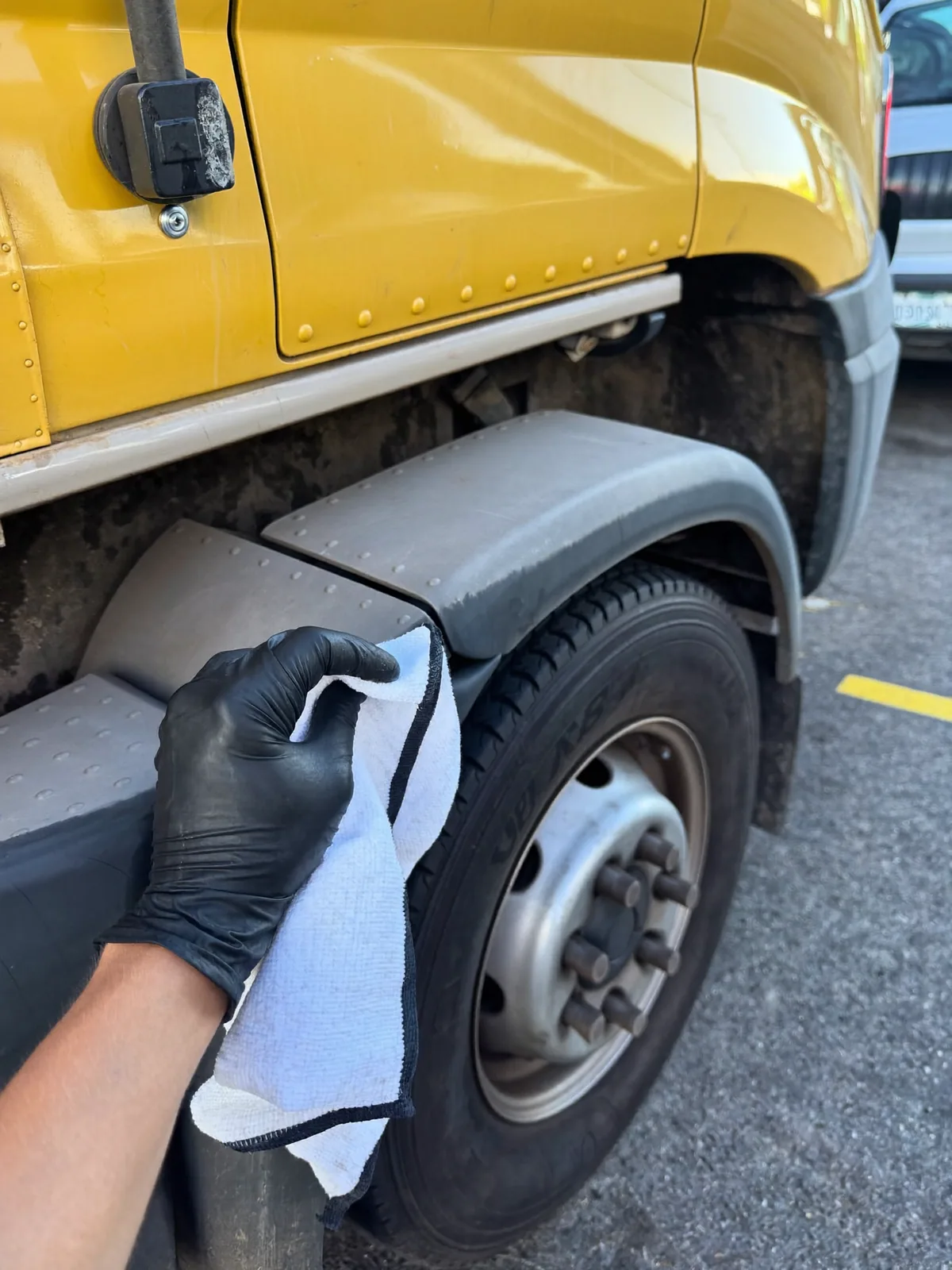
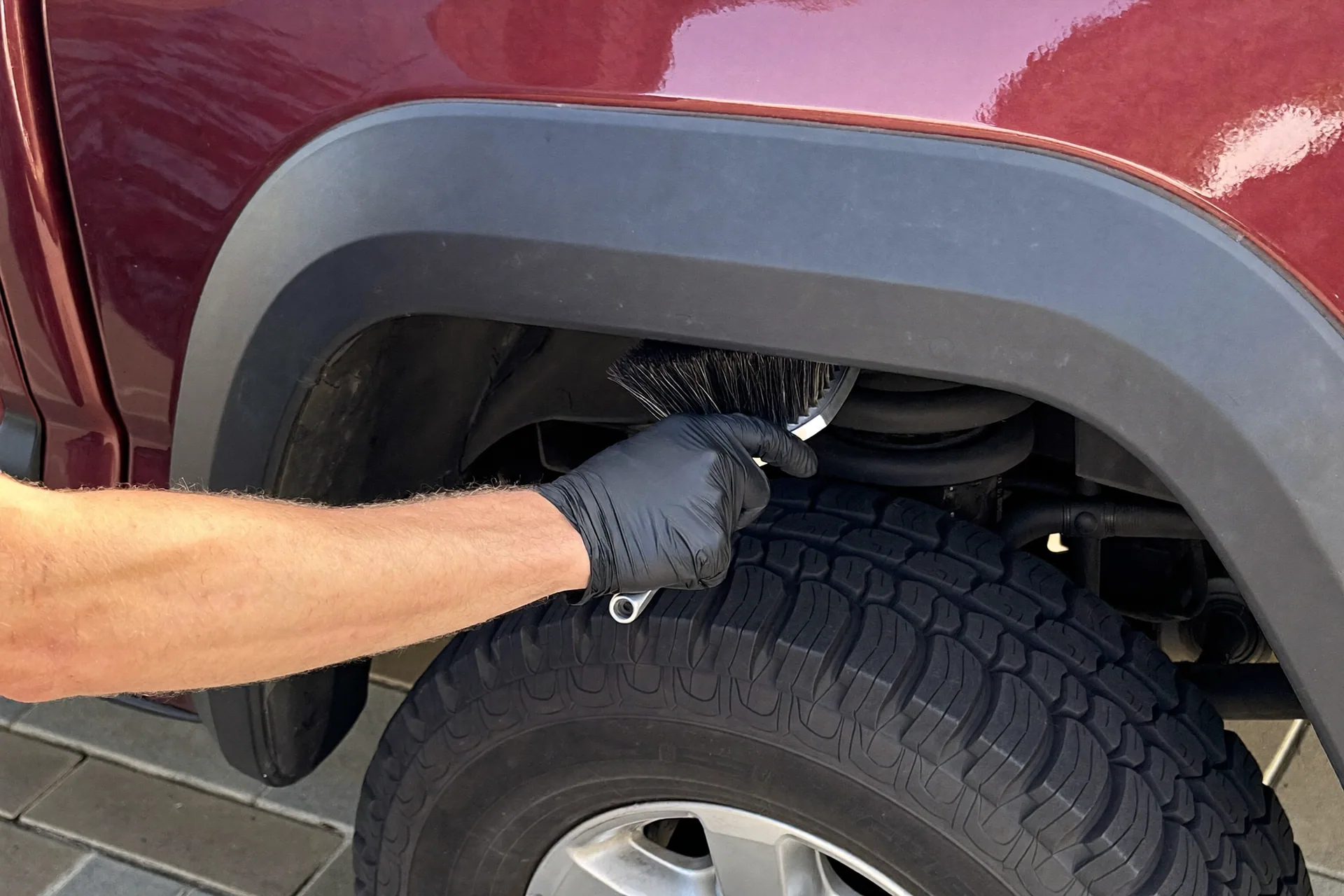
Winter salt, and the weeks after it. Ontario salts heavily and Elgin County gets a full season of it. Salt does its worst work where nobody inspects — inside the wheel arches, along the lower valance, in the seams under the doors — and it keeps working through the first warm weeks after the roads are clear, which is when most people assume the risk has passed. On a vehicle doing motorway miles all winter that is a corrosion timeline rather than a cosmetic one.
Check availability in St. Thomas →
The vehicle never leaves your driveway
Housing in St. Thomas usually means a driveway rather than a garage, so paint takes UV through the summer and freeze-thaw through the winter without a break. That is what dulls a clear coat over three or four years, and it is why protection applied here earns its keep faster than it would on a garaged car.
Booking in St. Thomas.
Book the slot
Pick the service and tell us where the vehicle will be in St. Thomas. Driveways and private parking are the norm here and access is rarely the constraint. What is worth confirming is simply where the vehicle will be on the day, since we are covering a wider area between appointments and the schedule is built around travel.
We arrive equipped
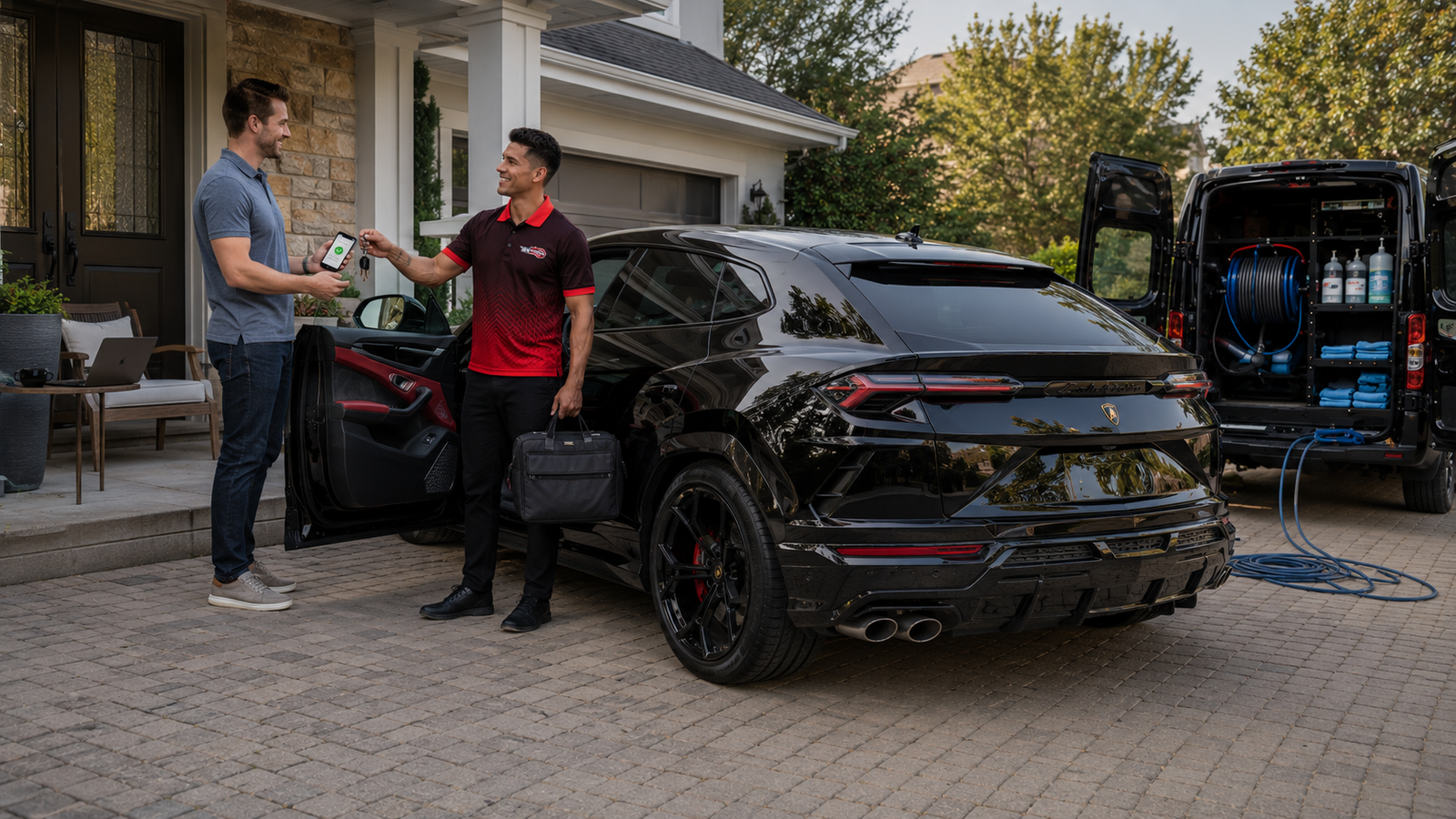
The technician arrives with professional equipment and works around the vehicle where it stands — nothing is driven anywhere.
Walk the result
Anything missed is put right on the spot rather than on a second visit.
Coming to St. Thomas
St. Thomas is inside our regular Ontario coverage, so a technician comes to the address you book. The service price itself is the same wherever we work.
What is specific to St. Thomas.
These come from the municipality's own pages, linked so you can check them rather than take our word for it.
The City of St. Thomas states that overnight parking on city streets is allowed from March 15 to December 1 on the streets listed in Schedule III of Parking and Traffic By-law 45-89, and that overnight parking on City Streets is prohibited during the winter months from December 1 through to March 15 between the hours of 2:00 a.m. to 6:00 a.m., with a note that Parking and Traffic By-law 45-89 is to be updated to reflect the new date of December, previously November 15. Separately, the City's Winter Maintenance page states that City of St. Thomas Traffic By-Law 45-89 prohibits parking on all City streets from 3:00 am to 5:00 am from November 15 to March 15. Overnight Parking Permits are available to residents whose property meets the eligibility criteria set out in By-law 45-89, with applications accepted after October 15 each year.
Two City pages currently describe this differently — the policy page gives December to mid-March, two until six in the morning, while the winter page still quotes the older by-law wording of mid-November onward, three until five. Until the by-law text catches up, we plan around the wider of the two rather than betting on the narrower.
Overnight Parking — City of St. Thomas — accessed 2026-08-20
On October 15, 2024 St. Thomas Council approved the Lower Driveway Boulevard Parking Program for a period of two years, a pilot programme described on the City's Overnight Parking page.
Council approved a two-year pilot here covering parking on the lower driveway boulevard, which for some properties changes where a vehicle can legitimately stand — worth checking whether yours is covered before we plan a long appointment.
Overnight Parking — City of St. Thomas — accessed 2026-08-20
The City of St. Thomas states that its Snow and Ice Control Plan has been designed to achieve the following objectives: to meet or exceed Municipal Act Regulation 239/02; to reduce the hazards of icy road conditions to motorists; to reduce economic losses to the community and industry caused by workers not being able to get to their jobs on time; to facilitate the handling of emergencies by fire, police and ambulance officials; and to maintain as safe as possible all school bus and public transit routes.
The City's stated aims for winter control are about keeping people able to get to work and keeping emergency and bus routes open — safety and movement rather than a clean road surface, which is a fair description of what a car here is actually parked on in February.
Winter Maintenance — City of St. Thomas — accessed 2026-08-20
The City of St. Thomas states that a 2015 review by staff and Council assessed existing practices and compared them to peer Cities, and that throughout the previous 15 years of growth in St. Thomas there was no increase in winter maintenance equipment or operators, with the City spending significantly less than peer municipalities although meeting legislated standards. There was a community desire to increase the level of service primarily based on a large snow accumulation in 2015.
The City has published its own review candidly: through fifteen years of growth the winter fleet did not grow with it, and it was spending less than comparable cities while still meeting the legislated standard. That is worth knowing because it shapes how long a residential street stays as it is after a fall.
Winter Maintenance — City of St. Thomas — accessed 2026-08-20
The City of St. Thomas explains that ploughs push most of the accumulated snow along the roadway but some snow normally moves to the side of the plough blade, and as the plough moves past driveways that snow falls to one side forming a windrow; it states that it is up to the home owner to clear this snow left behind by the plough. The City also notes Section 181 of the Highway Traffic Act prohibits depositing snow or ice on a roadway, Section 170(12) prohibits parking so as to interfere with the clearing of snow from the highway, and Section 170(15) provides for the removal of offending vehicles at the owner's expense. Where there is excess snow it is usually hauled to some other location.
The City is straightforward about how the ridge forms: most snow is pushed along the road but some escapes past the side of the blade and drops across each driveway as the plough passes. Clearing it is the owner's job, and pushing it back into the roadway is prohibited under the Highway Traffic Act.
Winter Maintenance — City of St. Thomas — accessed 2026-08-20
The City of St. Thomas states that it may declare a significant weather event when the weather forecast or actual weather conditions meet a certain criteria, and that as per the Ontario Municipal Act a municipality may declare a significant weather event when a weather hazard, either forecasted or occurring, has the potential to pose a significant danger to users of the roadways. The City publishes a Current Snow Plow Status page giving details on ploughing, sanding and salting efforts during a snow event.
A significant weather event here can be declared on the forecast rather than on what has already fallen, and the City publishes a live ploughing, sanding and salting status through an event — so it is genuinely possible to check where things stand before deciding whether a slot will work.
Winter Maintenance — City of St. Thomas — accessed 2026-08-20

Also served across Elgin County.
Every place listed here is quoted by the same booking calculator.
St. Thomas, on the day.
Recent work from the vans that cover St. Thomas and the rest of Elgin County.


St. Thomas, answered.
Do you actually come to St. Thomas?
Yes. St. Thomas is inside the regular Elgin County service area, which is why the booking calculator quotes it directly instead of asking for a custom quote.
Do you cover St. Thomas?
St. Thomas is inside our regular Ontario coverage, so you can book it directly. Your full quote is confirmed before you approve the booking, so the quote you see is the quote you pay.
Where can the vehicle be parked while you work in St. Thomas?
The City of St. Thomas states that overnight parking on city streets is allowed from March 15 to December 1 on the streets listed in Schedule III of Parking and Traffic By-law 45-89, and that overnight parking on City Streets is prohibited during the winter months from December 1 through to March 15 between the hours of 2:00 a.m. to 6:00 a.m., with a note that Parking and Traffic By-law 45-89 is to be updated to reflect the new date of December, previously November 15. Separately, the City's Winter Maintenance page states that City of St. Thomas Traffic By-Law 45-89 prohibits parking on all City streets from 3:00 am to 5:00 am from November 15 to March 15. Overnight Parking Permits are available to residents whose property meets the eligibility criteria set out in By-law 45-89, with applications accepted after October 15 each year. Two City pages currently describe this differently — the policy page gives December to mid-March, two until six in the morning, while the winter page still quotes the older by-law wording of mid-November onward, three until five. Until the by-law text catches up, we plan around the wider of the two rather than betting on the narrower. A driveway, a private lot or a building's parking level all work; tell us which when you book so the slot is not spent moving the vehicle.
When is the best time to book exterior work in St. Thomas?
Straight after the salt season ends is the appointment that does the most good — that is when the winter's residue is still sitting in the arches and seams and has not had a summer to set into the finish. A second visit before winter, to put protection on ahead of the salt, is the other one that genuinely pays for itself in Elgin County.
Why does my interior smell even though it looks clean?
Because odour lives in the fabric rather than on the surfaces. Spills soak into carpet and upholstery and stay there, and a vehicle that looks tidy can still be holding months of it. Extraction reaches what wiping and vacuuming cannot.
Book a detail in St. Thomas
Pick the service, tell us where the vehicle is, and the full quote is shown before you confirm.
Start your booking