Mobile Car Exterior Detailing in London
Exterior Detailing at your home or office in London, Ontario. We cover London and the rest of Middlesex County as part of our regular service area — Strathroy included.
Why Mobile Car Exterior Detailing in London is different
What this place does to a vehicle, and what that changes about the work.
Highway 401 does most of the damage.
London sits on Highway 401 and Highway 402, and that mileage is what shows up on the paint. Sustained highway speed drives grit into the front bumper and the leading edge of the bonnet far harder than town driving does, and it lays a bonded road film across the lower panels that an ordinary wash lifts off the surface while leaving the rest keyed in. Cars here need decontaminating more often than their mileage alone suggests.

Winter salt, and the weeks after it.
Ontario salts heavily and Middlesex County gets a full season of it. Salt does its worst work where nobody inspects — inside the wheel arches, along the lower valance, in the seams under the doors — and it keeps working through the first warm weeks after the roads are clear, which is when most people assume the risk has passed. On a vehicle doing motorway miles all winter that is a corrosion timeline rather than a cosmetic one.

Some of it parks underground.
A good proportion of vehicles in London live in underground or covered parking, which is genuinely protective — less UV, less freeze-thaw, less bird and sap damage. It also means the vehicles that DO live outside here are the ones taking the full load, and the difference between two cars of the same age in the same postcode can be dramatic.

If you drive significant streets, it is salt. If you drive local, it is not.
The City is explicit that it uses a minimal amount of salt and applies it only to significant streets and core pedestrian areas. Local streets get sand instead, and only at intersections, curves and hills. So the answer to what is on your car depends entirely on which category of street it spends its time on, and the two produce quite different films — one chemical and even, the other coarse and patchy.
If it is sand, note that the whole road is not treated.
The City states plainly that typically it does not sand the entire road. Material is placed at the points where traction is needed rather than spread along the length, which means a local street is treated in patches. A car crossing those patches picks up concentrated deposits at intervals rather than a continuous film, and those deposits are gritty rather than dissolved.
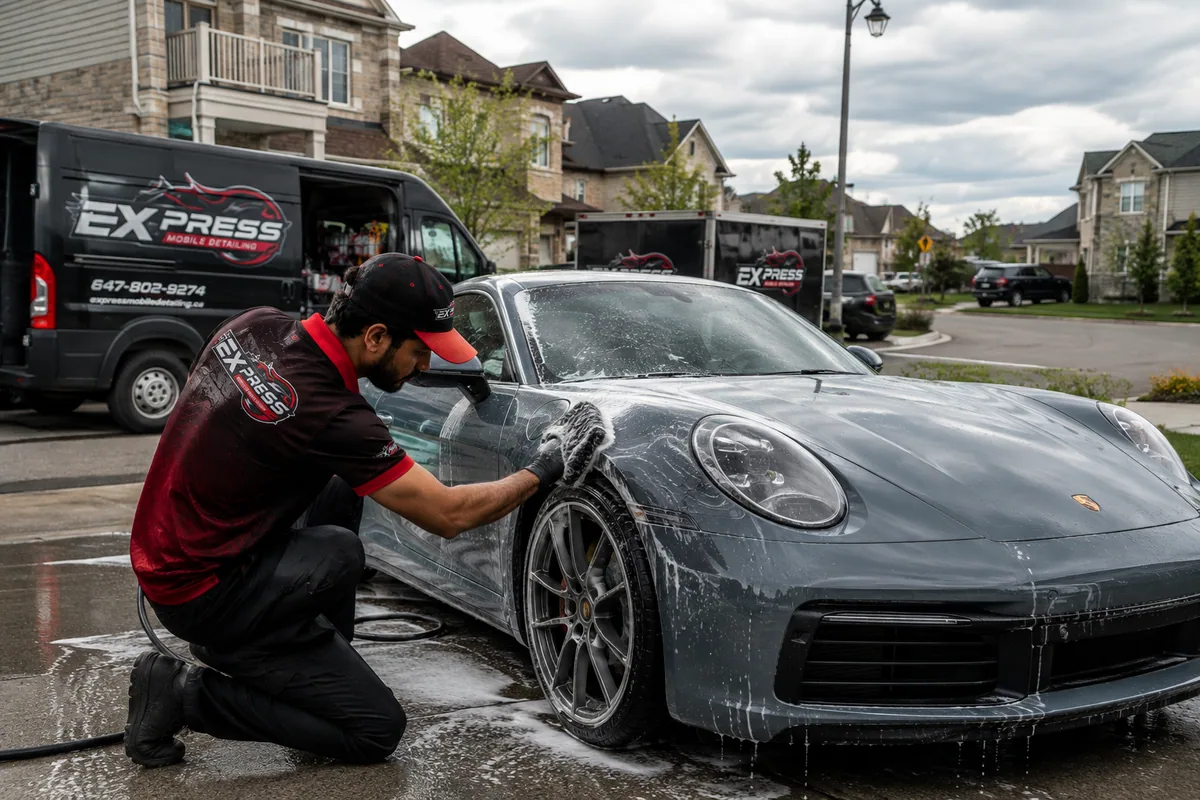
Either way, the first stage is the same and it is not pressure.
Coarse patchy material has to be lifted off before anything touches the panel, because dragging it is exactly how a clear coat gets marked. An even chemical film needs dwell time and the right product rather than force. We work out which one dominates on the vehicle in front of us before choosing an approach — it takes a few minutes and it is the difference between cleaning paint and scratching it.
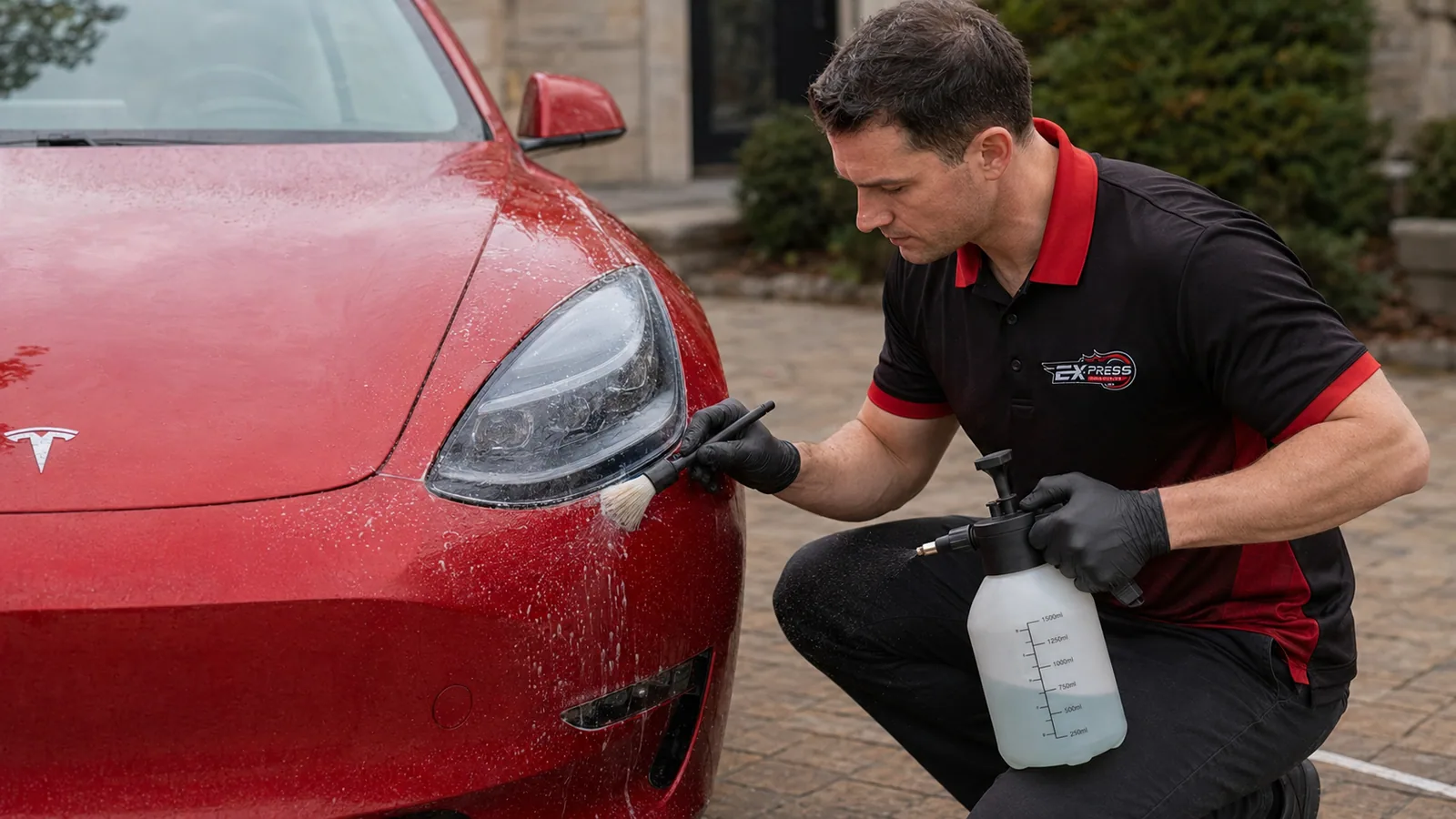
If a storm is coming, the road is treated before it arrives.
The City uses anti-icing technology to prepare streets ahead of a storm, specifically to stop snow and ice sticking to the road surface. That means treatment is present before any snow falls, and a vehicle driven on a clear, cold morning ahead of a forecast storm is already collecting material. It is one of the reasons a car here can look reasonable and be carrying considerably more than the weather would suggest.
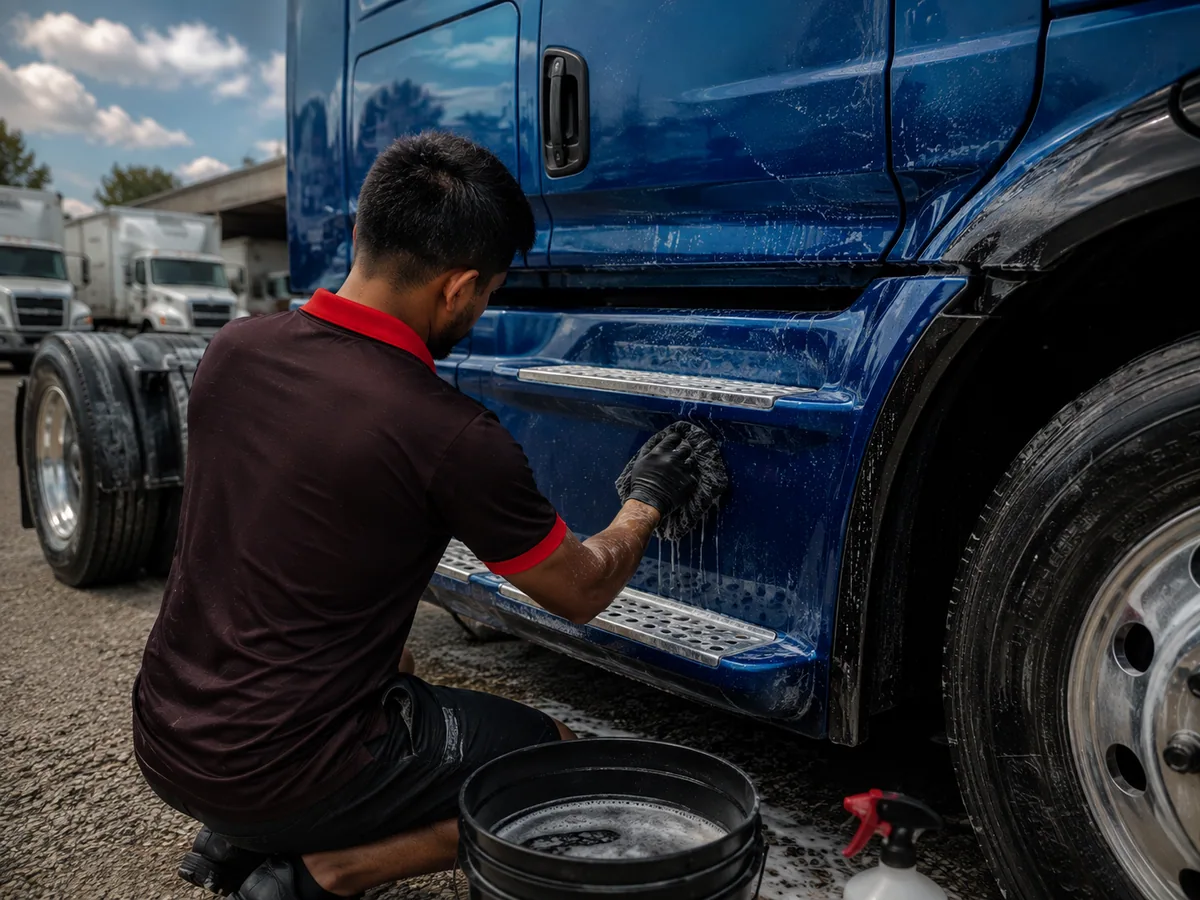
Four moments worth booking for.
The work is the same either way — these are the times it makes the most difference in London.
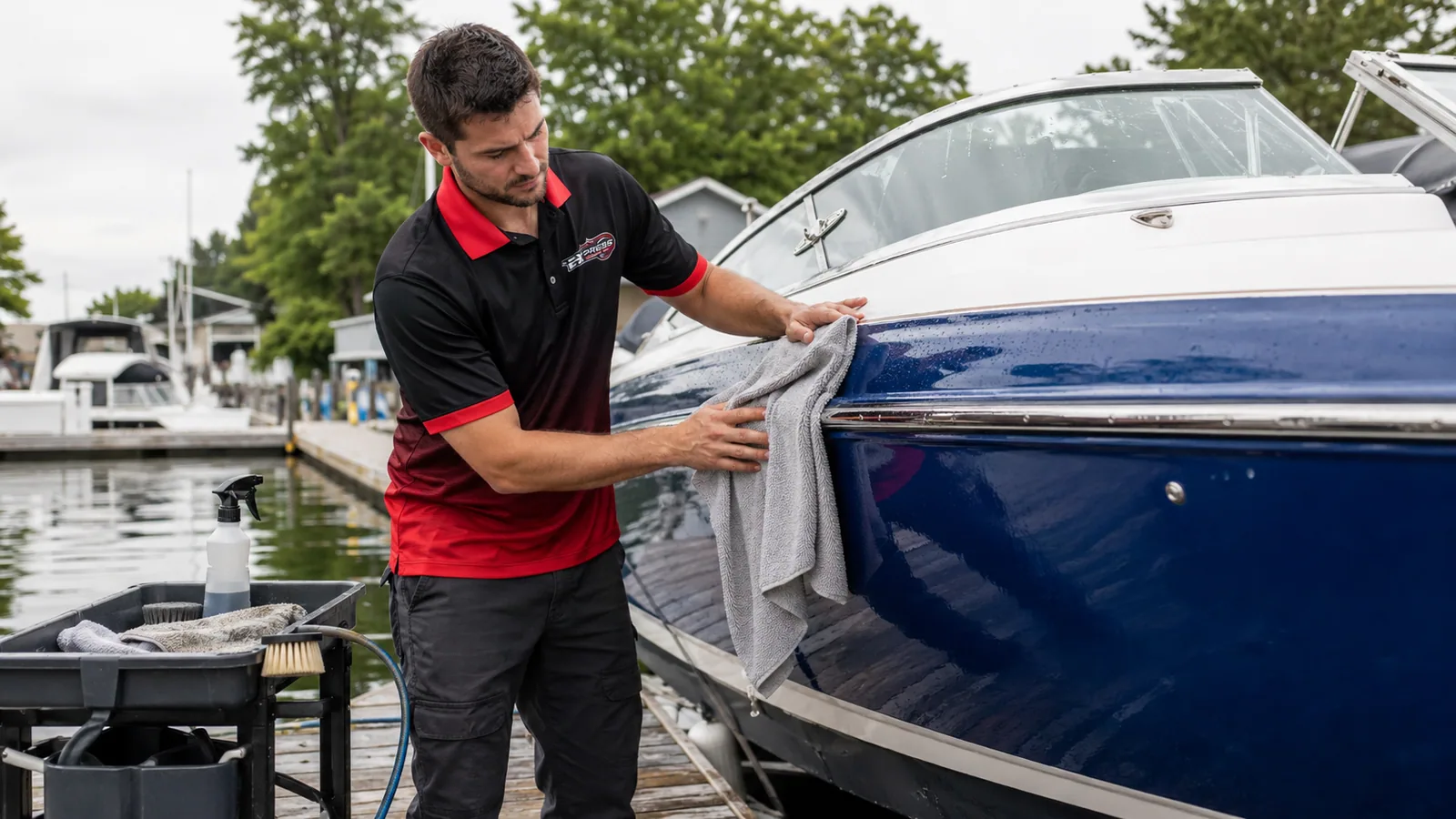
The roads have just been cleared
The best appointment of the year in Middlesex County, and the one most people miss. The winter's residue is still in the arches and the door seams, working long after the roads look clean. On a Highway 401 vehicle there is simply more of it.
Book the spring appointment →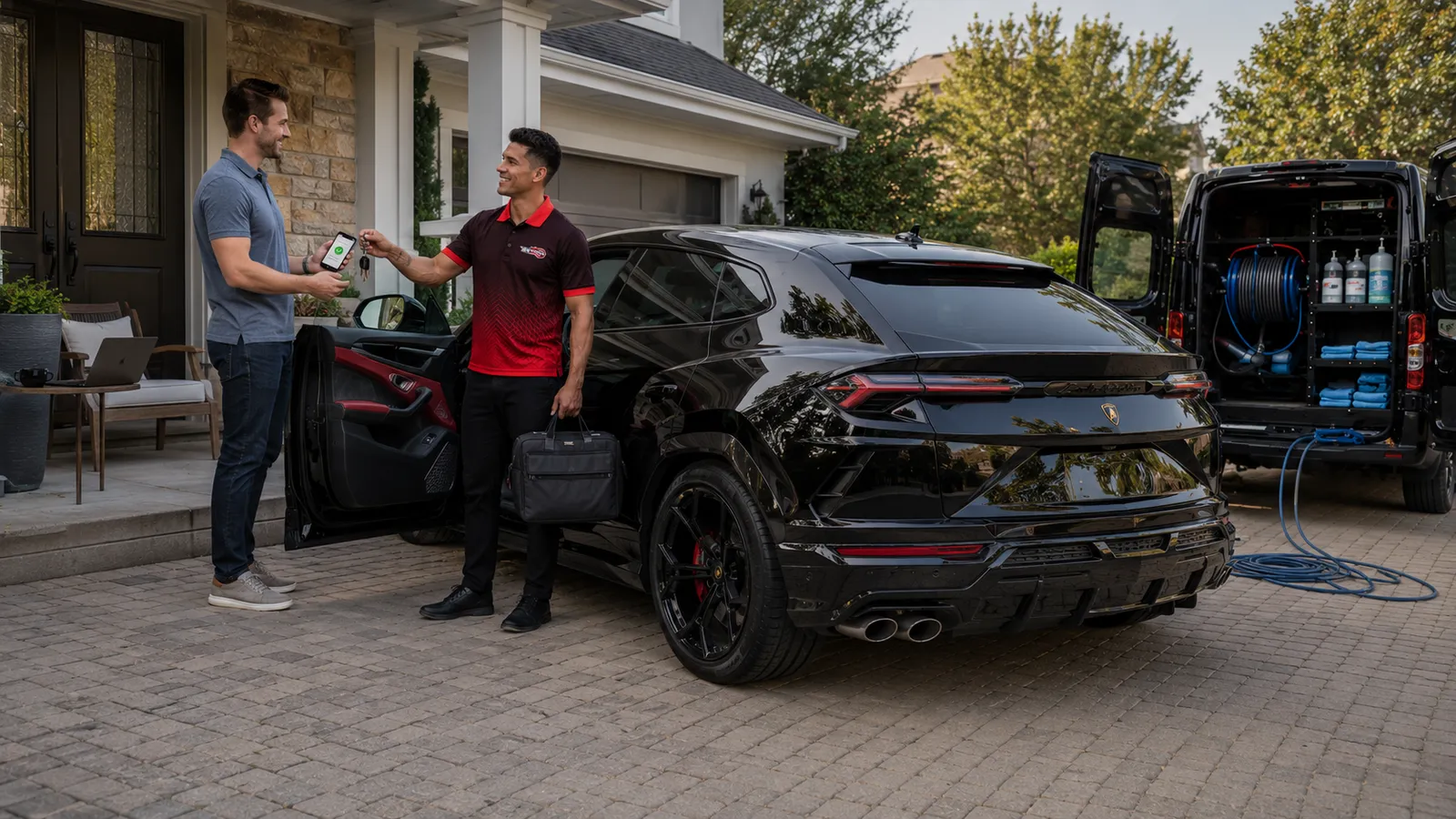
You do not have a driveway
Access is the variable that matters most in London — height limits and time-limited visitor bays are the commonest reason a city appointment is rescheduled. Settled at booking, it is a non-issue.
Check access and book →
Yours is one of the ones parked outside
Plenty of vehicles in London live in covered parking, so the ones that do not are taking the full load with none of the shelter. Which is why decontamination and protection twice a year is the rhythm that actually holds here.
Book protection →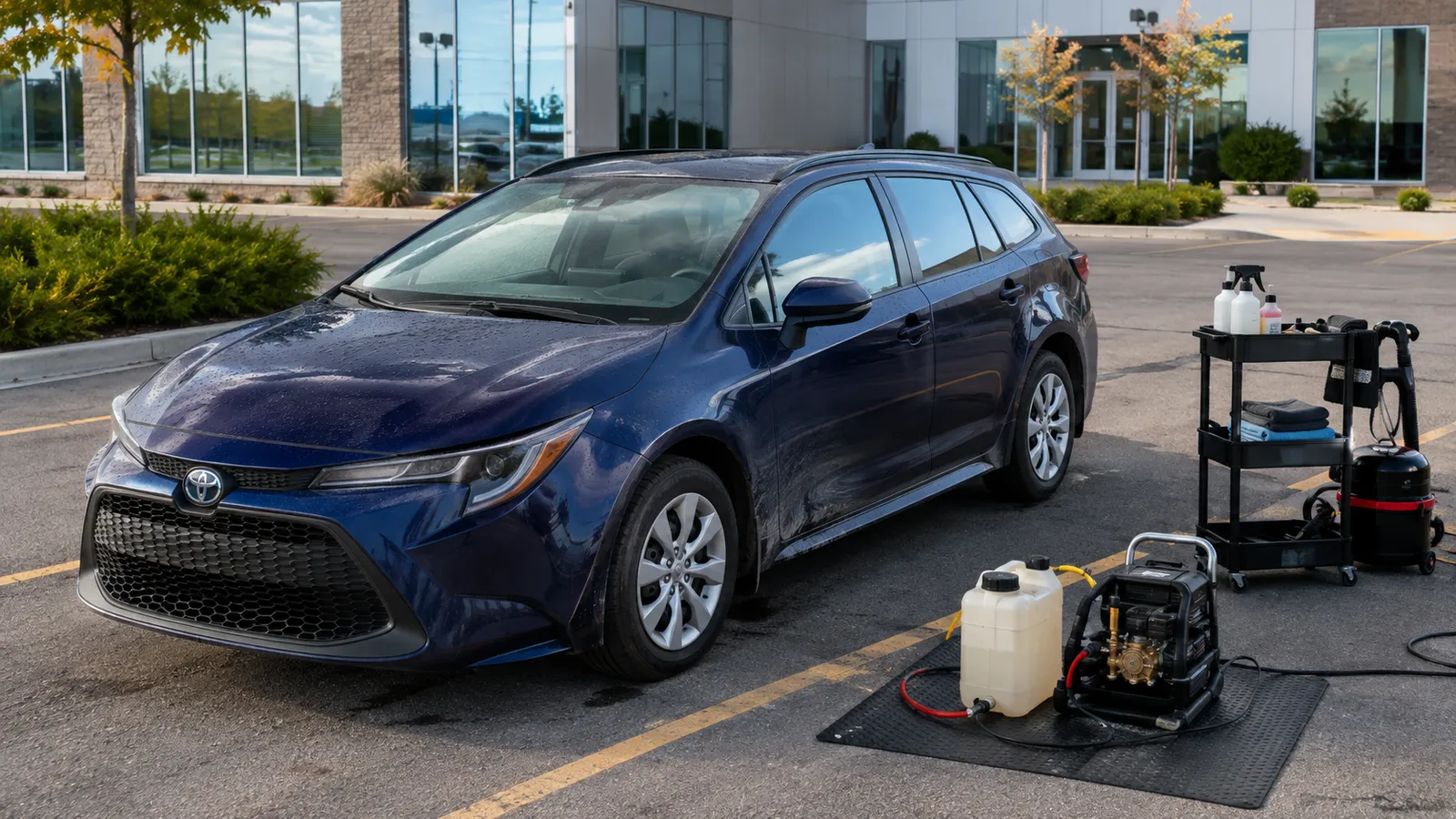
You just bought it and don't know its history
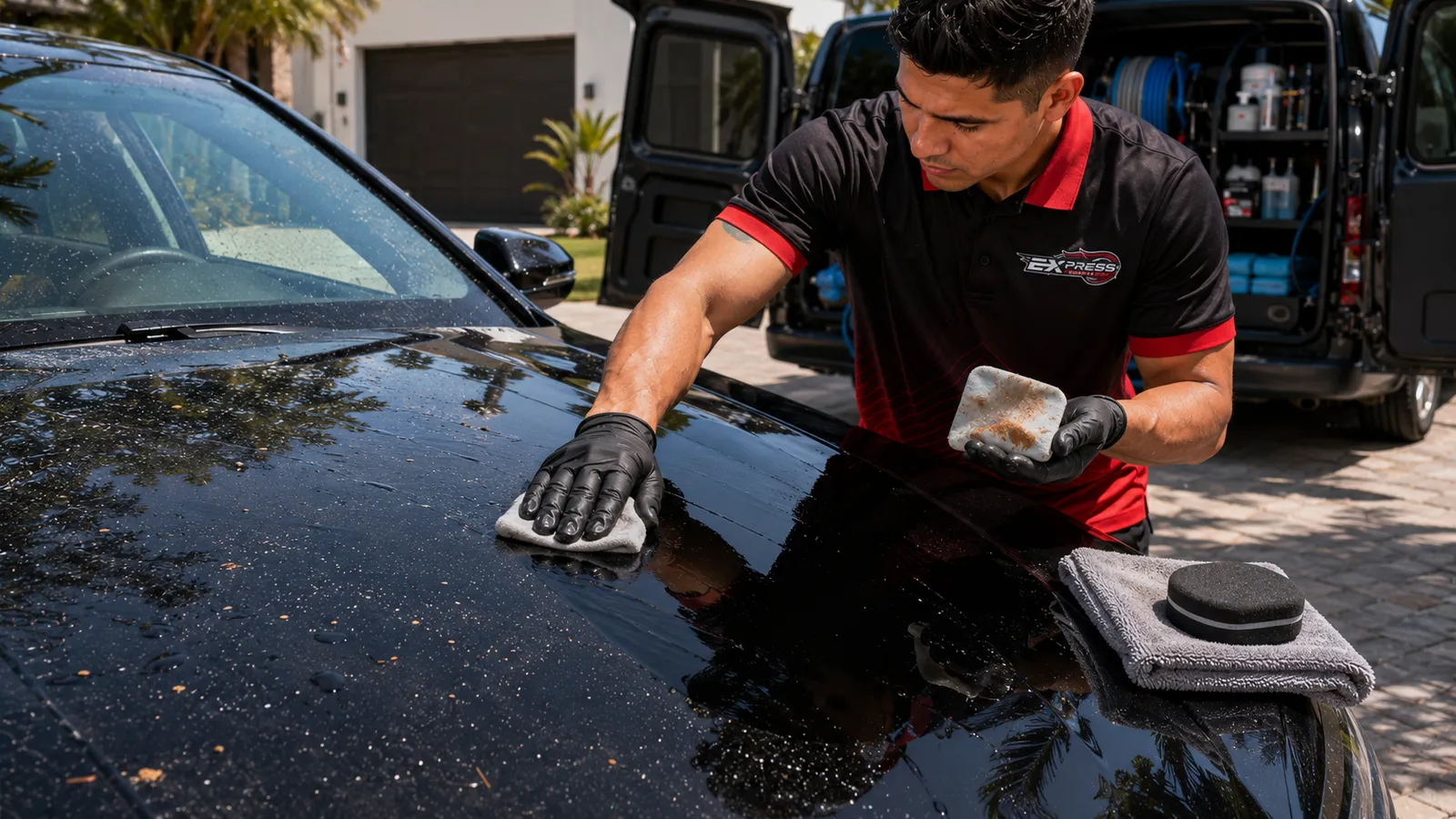
A used car almost never arrives decontaminated, and there is usually bonded film across the lower panels that feels like paint until clay comes off it black. Doing this first tells you what the paint in front of you actually is — before you spend anything on protecting or correcting something you have not properly seen.
Start with a proper wash →What Mobile Car Exterior Detailing in London looks like up close
Access is the variable that matters most here. A lot of vehicles live in underground or shared parking with height restrictions and time-limited visitor bays, and that is worth settling when you book rather than on the day — it is the single most common reason a city appointment has to be rescheduled. One point specific to exterior work here: the City uses minimal salt and sands only at intersections, curves and hills, so the load is patchy and coarse rather than an even film.

Stay out of the tunnel
This matters more than anything else on this list. One trip through an automatic wash with spinning brushes undoes months of careful work and starts the swirl marks that eventually need machine correction to remove.
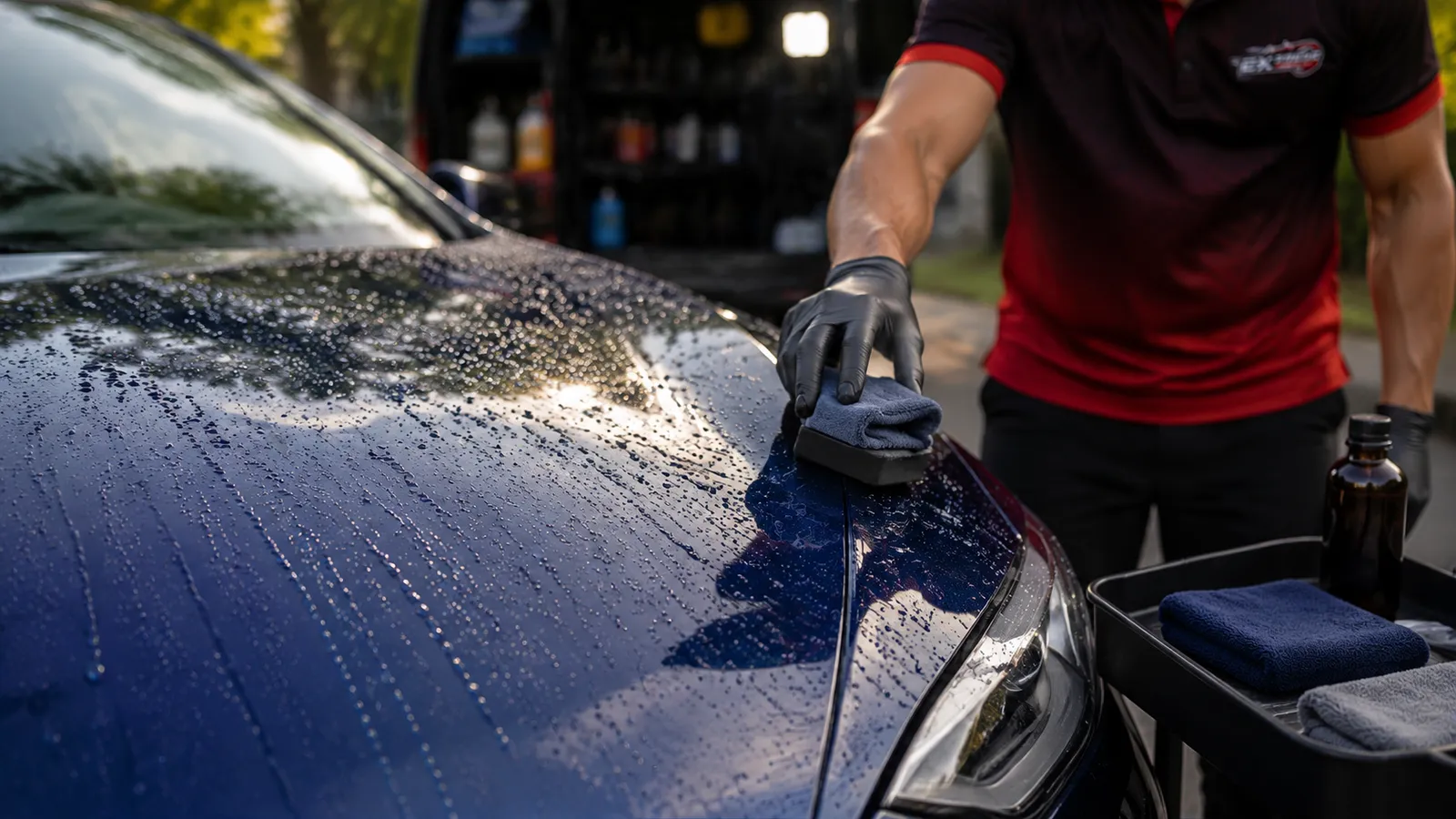

Highway 401 is why the tunnel is not enough.
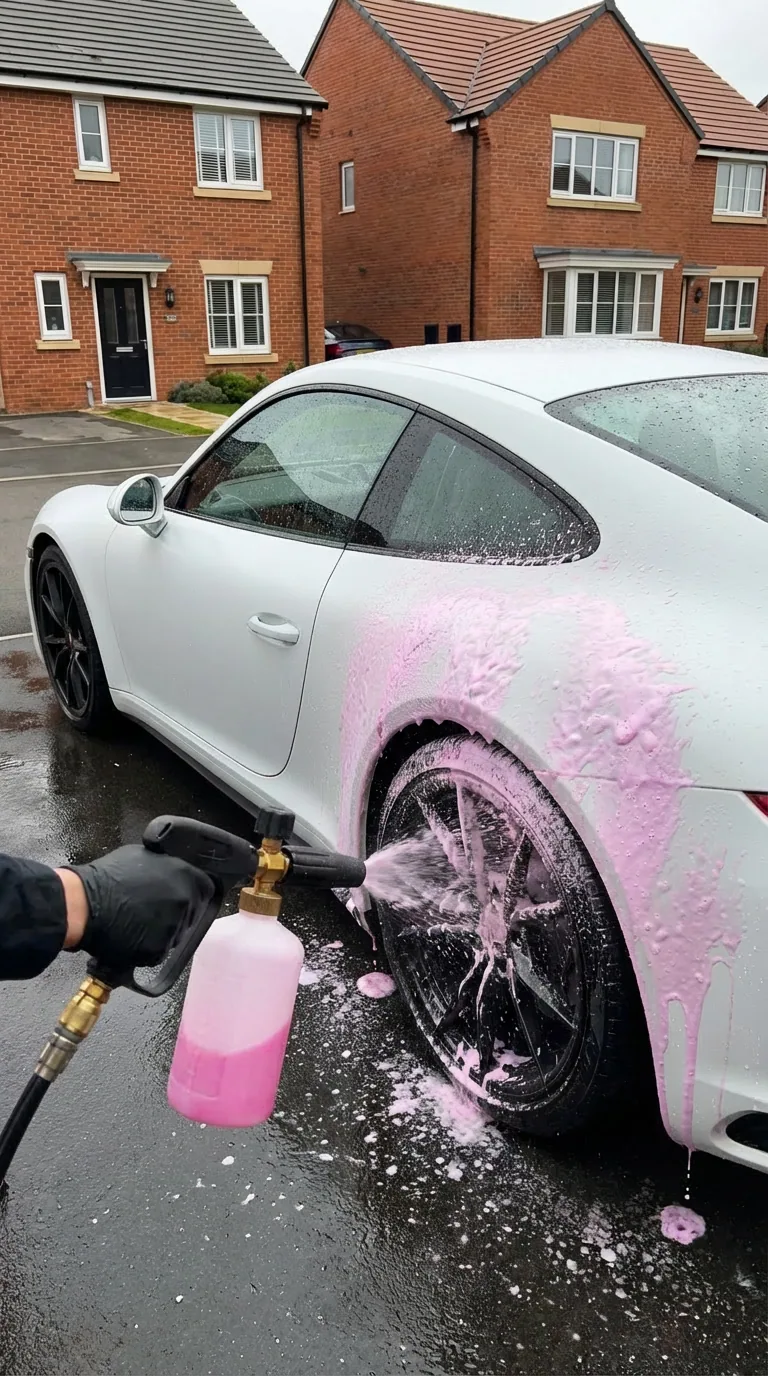
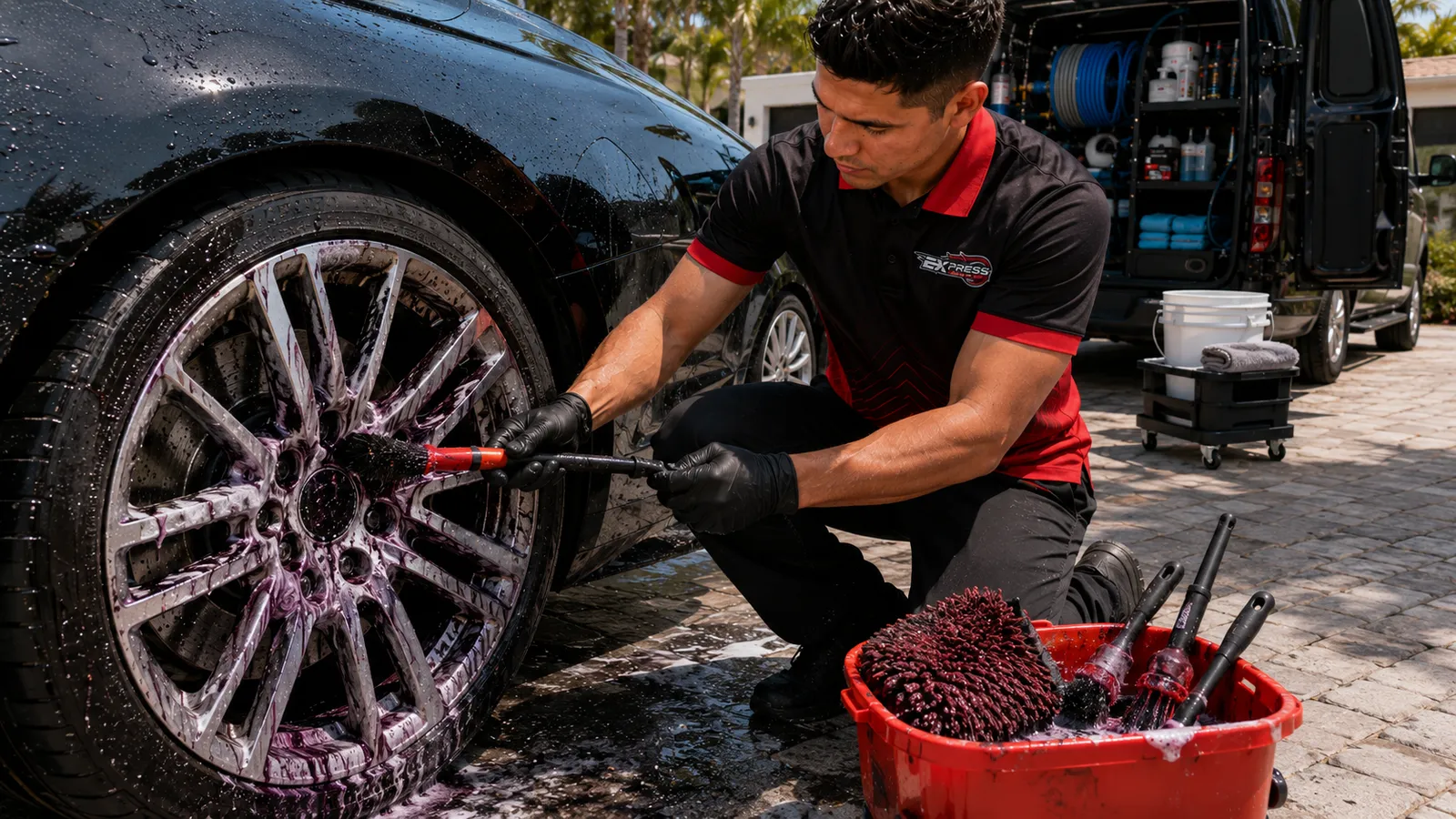
An automatic wash removes loose dirt and it is genuinely fast. What it cannot do is separate the grit it just collected from the next car's paint, and it cannot touch anything chemically bonded — which on a Highway 401 vehicle is most of what is actually on it. Sustained highway speed lays road film across the lower panels continuously, and that needs a pre-rinse, two buckets and clay to remove.
Book in London →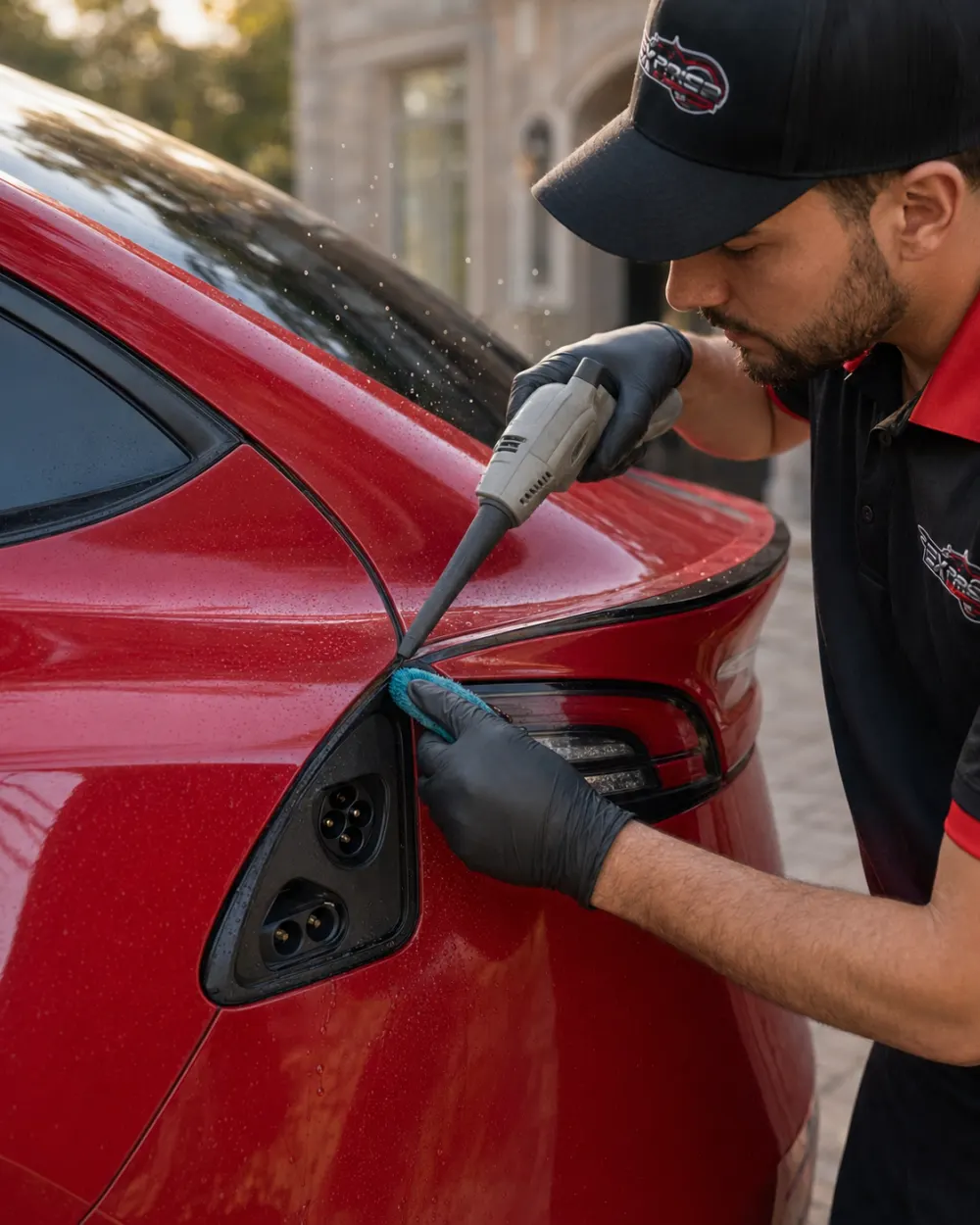
We come to the bay, not the other way round
The alternative in London is a drop-off, a fare each way and half a day gone. We work in the space the vehicle already occupies. Height limits and time-limited visitor bays are the two things worth naming when you book — settled in advance they are a non-issue, discovered on the day they cost the appointment.
How a London appointment actually works.
The practical detail — how far we travel, what the day needs from you, and when in the year it is worth booking in Middlesex County.

Where we travel from, and to
London is inside the regular Middlesex County round rather than a special journey, and Strathroy are covered on the same runs. Density helps: appointments are close together, so a same-week slot is usually available and the window we quote is a narrow one.
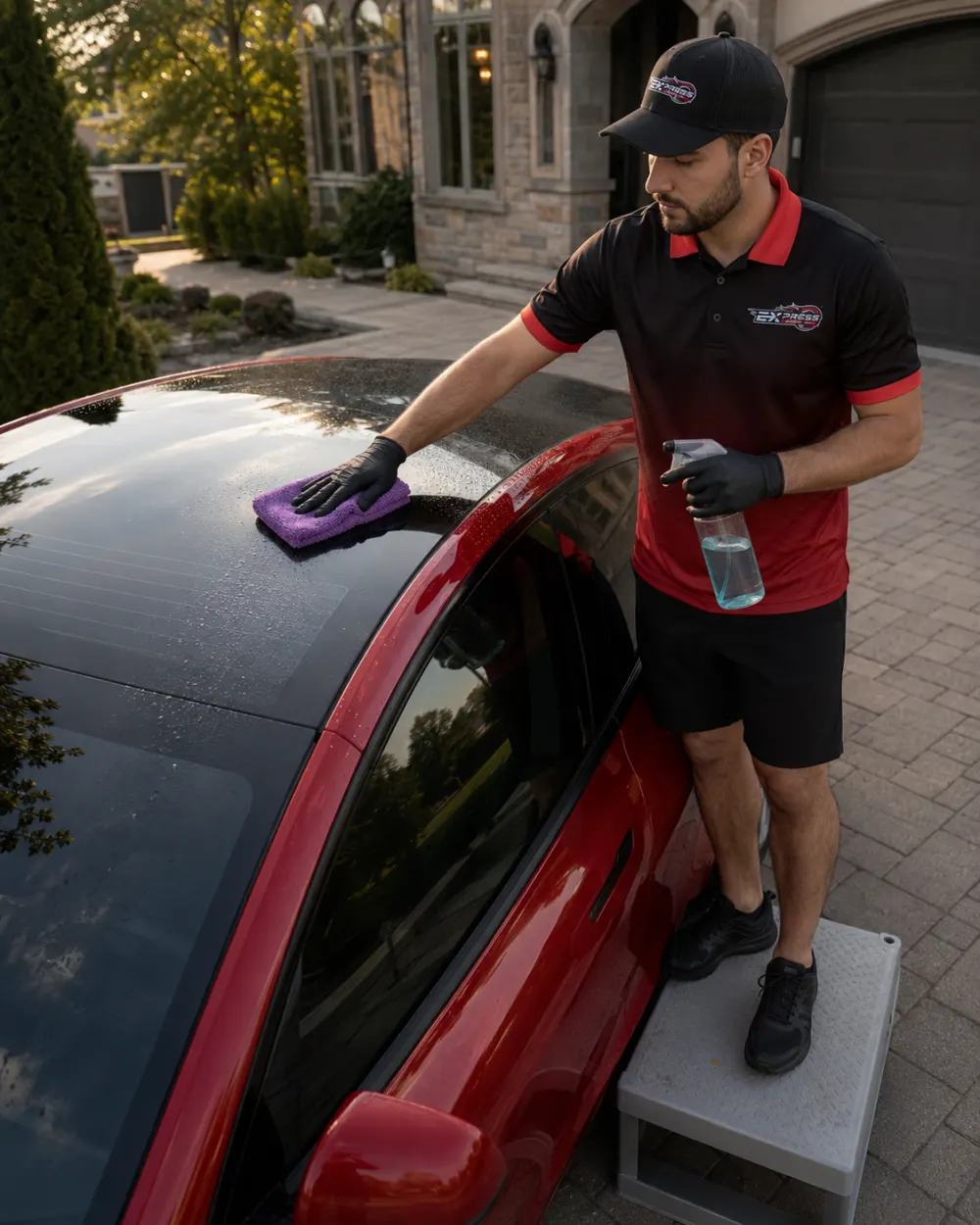
What the vehicle needs on the day
A bay we can reach and stand beside. Underground height limits and time-limited visitor parking are the two things worth naming when you book — they are the commonest reason a London appointment moves.
When it is worth booking here
Twice a year is the rhythm that actually holds: once when the roads are cleared and the winter's residue is still in the seams, and once in autumn so the protection is on before the salt is. On a Highway 401 vehicle the spring one matters most, because there is simply more on it.
Exterior Detailing as it actually runs.
Where we work in London.
Access is the variable that matters most here. A lot of vehicles live in underground or shared parking with height restrictions and time-limited visitor bays, and that is worth settling when you book rather than on the day — it is the single most common reason a city appointment has to be rescheduled. One point specific to exterior work here: the City uses minimal salt and sands only at intersections, curves and hills, so the load is patchy and coarse rather than an even film.
London, on the day.
Recent work from our vans across Middlesex County — exterior detailing and everything that travels with it.